Certified Mold Remediation in Concord, NC — Protecting Cabarrus County Homes From the Ground Up
Mold Remediation Concord, NC is essential if you have found mold in your Concord home or business, or you suspect it is growing somewhere out of sight, professional remediation is not something to delay. Mold spreads fast in Cabarrus County’s climate, damages structural materials that are expensive to replace, and exposes the people inside your property to allergens and mycotoxins that affect respiratory health, immune function, and overall quality of life. Our IICRC certified remediation specialists serve Concord and all of Cabarrus County, including Harrisburg, Kannapolis, Midland, Mount Pleasant, and Cox Mill. We handle every stage of the process thorough inspection, independent laboratory testing, full containment, safe material removal, EPA registered antimicrobial treatment, structural drying, and third-party post-remediation clearance testing, so you are never left wondering whether your property is actually safe when the job is done. Call us today to schedule a free mold inspection in Concord, NC and get a straight, honest answer from a certified local team.
Why Concord, NC Has a Mold Problem That Most Homeowners Underestimate
Concord sits in a transitional zone between Charlotte’s urban heat pocket and the more rural Piedmont terrain of Cabarrus County. The result is a local climate that produces persistently elevated humidity throughout the spring, summer, and fall months, punctuated by heavy rainfall events that regularly overwhelm older drainage infrastructure in established neighborhoods throughout the city.
The clay soil common throughout Cabarrus County expands when it rains and contracts during dry spells, creating cracks that let moisture seep in. Combined with North Carolina’s high humidity levels, this creates a recipe for musty odors, mold growth, and energy loss. For homeowners in Concord, this geological reality means that moisture intrusion is not an occasional event, it is a year-round pressure that your home’s foundation, crawl space, and building envelope are constantly managing.
Most homes in the Concord area were built with vented crawl spaces following older building practices. While that construction approach made sense under building codes of earlier decades, it is fundamentally incompatible with the humidity load that Concord homes face. Vented crawl spaces draw warm, moisture-laden outdoor air directly into the space beneath your home during summer months, creating conditions where mold colonization on wood framing, floor joists, and subfloor sheathing is virtually inevitable without active moisture management.
Add to this the reality that Concord has experienced significant population and housing growth driven in part by its proximity to Charlotte, the presence of Charlotte Motor Speedway, and the economic development activity throughout northeast Cabarrus County. Many newer developments in areas like Afton Village, Christenbury, and the neighborhoods surrounding Concord Mills were built quickly during growth periods when construction moisture was not always managed carefully before structures were closed in. This is a documented risk factor for early-stage mold development inside wall cavities that owners often do not discover until years after purchase.
The Most Common Places We Find Mold in Concord Homes
Understanding where mold establishes itself in Concord-area properties is the foundation of any effective remediation strategy. After inspecting homes throughout Cabarrus County, these are the locations where we consistently identify active mold growth.
Crawl Spaces
The crawl space is the single most common location for serious, advanced-stage mold infestation in Concord residential properties. Moisture from the ground below rises up and becomes trapped within the foundation under the home, creating ideal conditions for mold growth. By the time a homeowner notices a musty smell coming up through the floors or finds that allergy symptoms are worse at home than anywhere else, the mold colonies in the crawl space have typically been growing for months or years. In Concord, this problem is compounded by the clay soil moisture dynamics described above, which keep the ground beneath vented crawl spaces significantly wetter than homeowners realize.
Attics
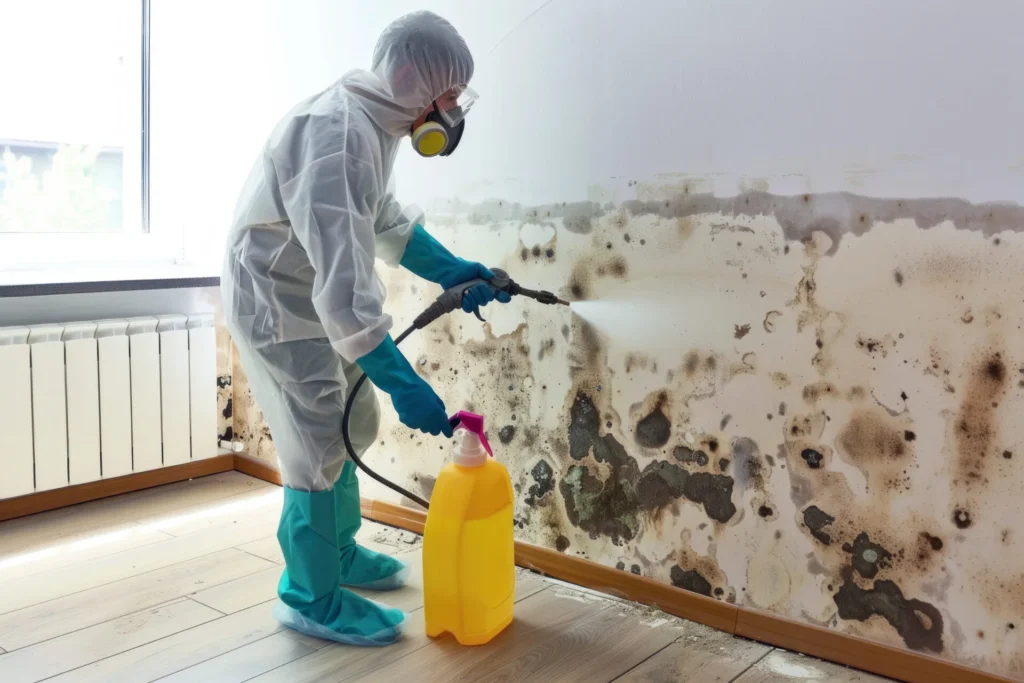
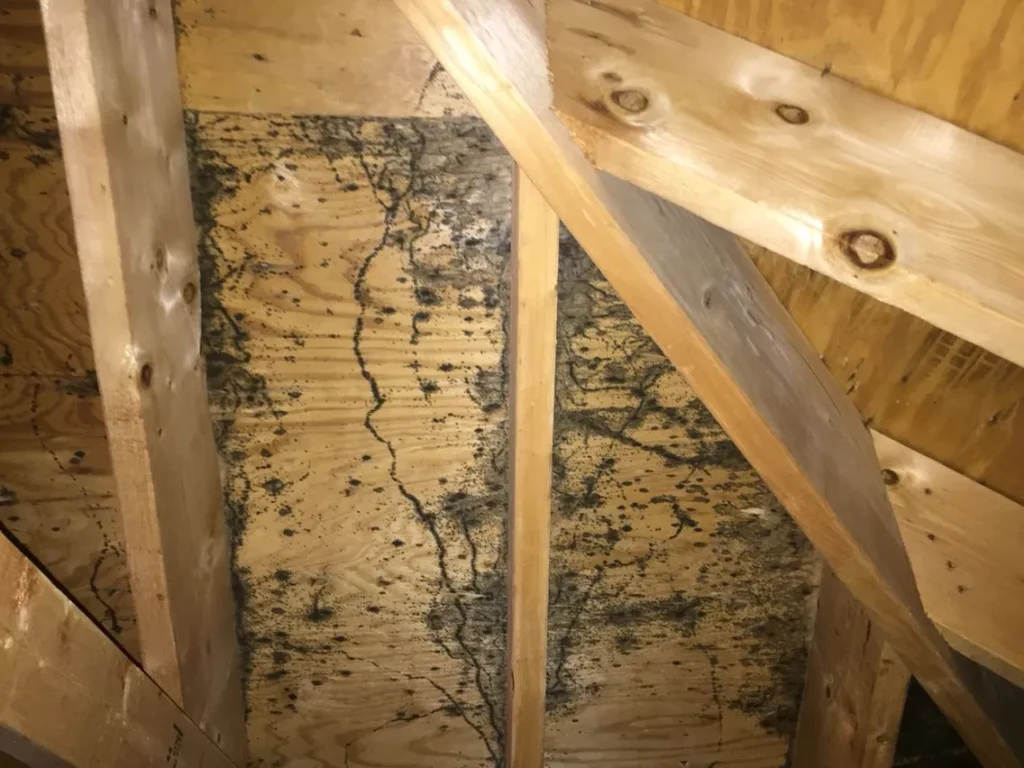
Poor attic ventilation, inadequate soffit-to-ridge airflow, and roof leaks from storm damage create hidden mold environments that most Concord homeowners never discover until a real estate inspection or a renovation reveals widespread contamination across the roof decking, rafters, and insulation. Concord’s summer temperature differentials between the hot attic space and the air-conditioned living area below generate condensation on roof sheathing during certain weather conditions that sustains mold growth without any active roof leak being present.
Basements and Below-Grade Spaces
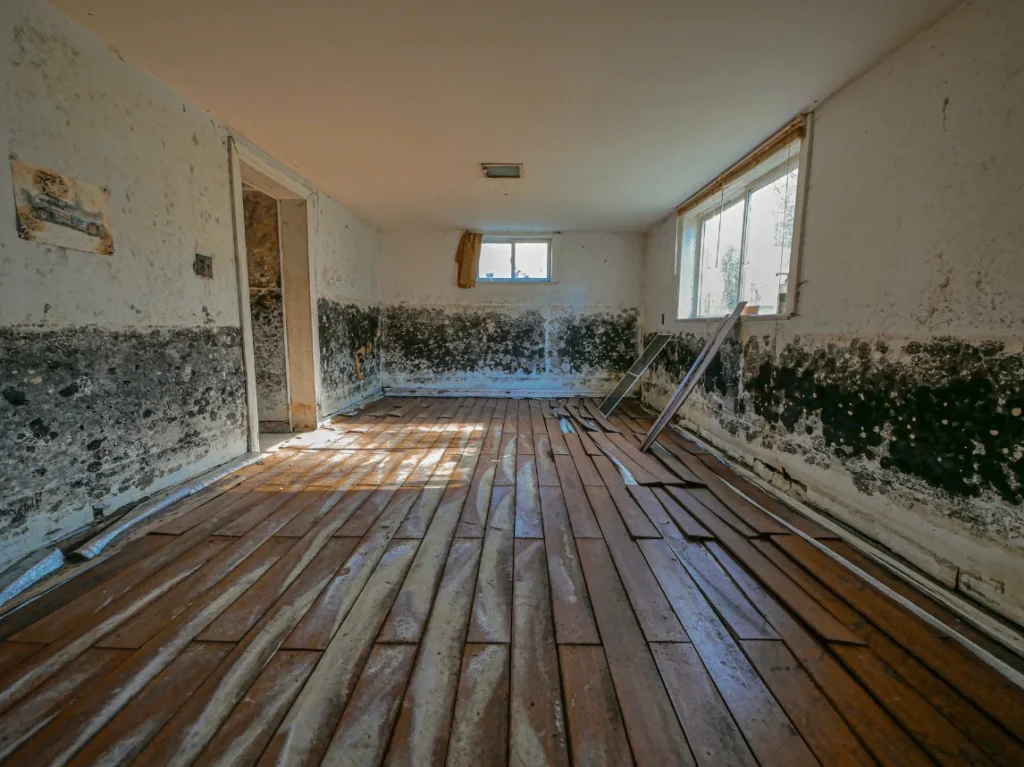
While true basements are less common in Cabarrus County than in other parts of the country, partially below-grade spaces and finished lower levels in Concord homes face persistent hydrostatic pressure from the clay-heavy soil surrounding their foundations. Water seeping through foundation walls creates the sustained moisture that mold requires to establish and spread on drywall, carpet, and wood framing in these spaces.
HVAC Systems and Ductwork
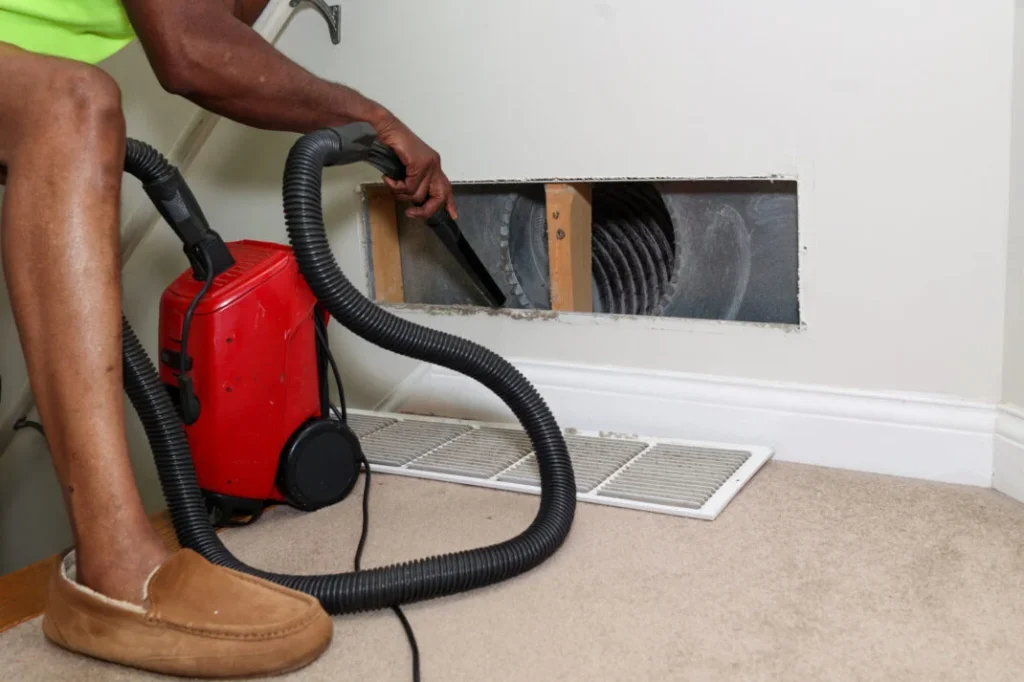
Mold growing inside ductwork uses your own air distribution system to spread contamination throughout every room in the building. Given Concord’s summer humidity loads, evaporator coils and condensate drain pans in HVAC systems are frequently the origin point for mold that then spreads into connected duct runs. If you notice a musty smell that appears specifically when your system turns on, that is the most reliable indicator that your HVAC system has a mold problem rather than a surface issue somewhere in the house.
Bathrooms, Kitchens, and Laundry Areas
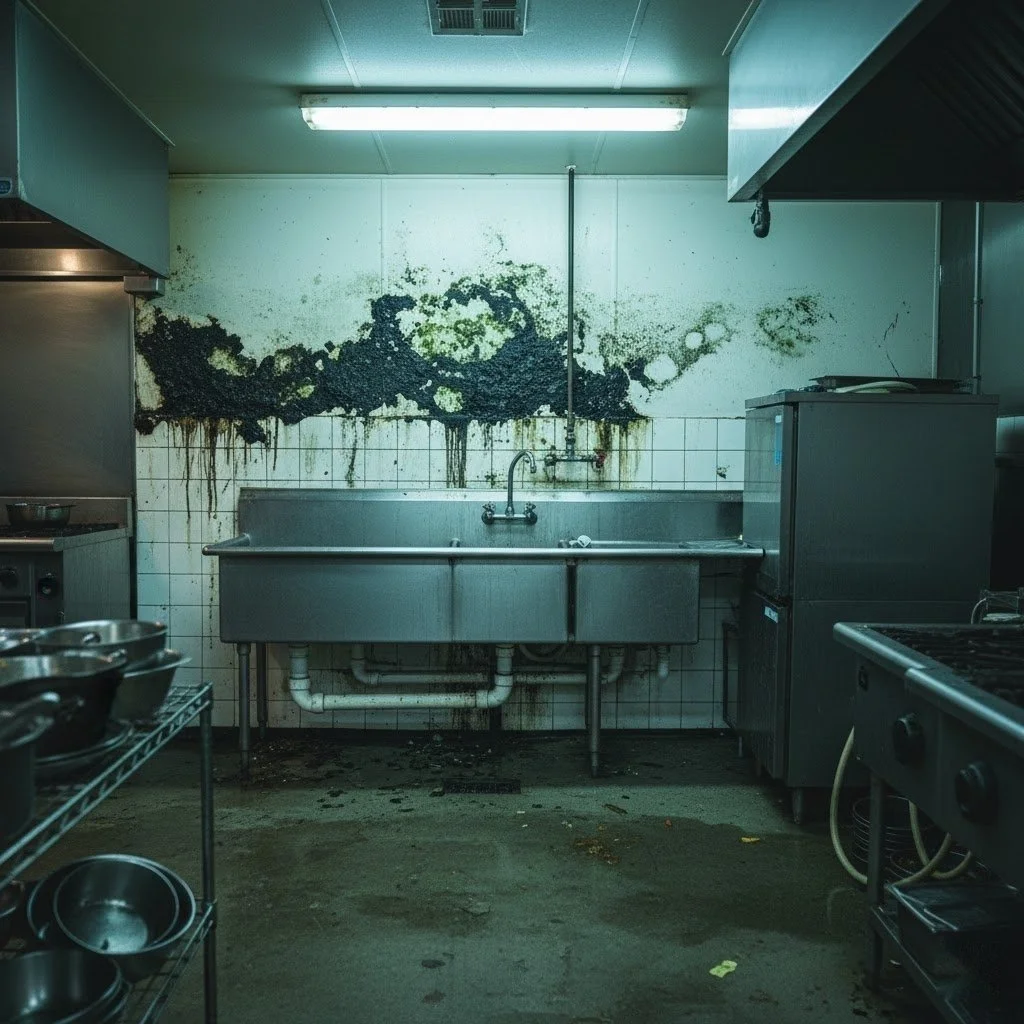
Chronic moisture from inadequate exhaust ventilation allows mold to develop behind tiles, under flooring, inside wall cavities adjacent to plumbing, and around fixtures where it remains completely invisible until the contamination becomes extensive enough to produce visible staining or a persistent odor.
Around Windows and Exterior Walls
Concord’s rainfall patterns and the prevalence of older wood-framed homes with degraded caulking and flashing around window frames create points of chronic water intrusion that sustain mold growth inside wall cavities that appears on the surface only as discoloration or paint bubbling.
Warning Signs Concord Property Owners Should Never Ignore
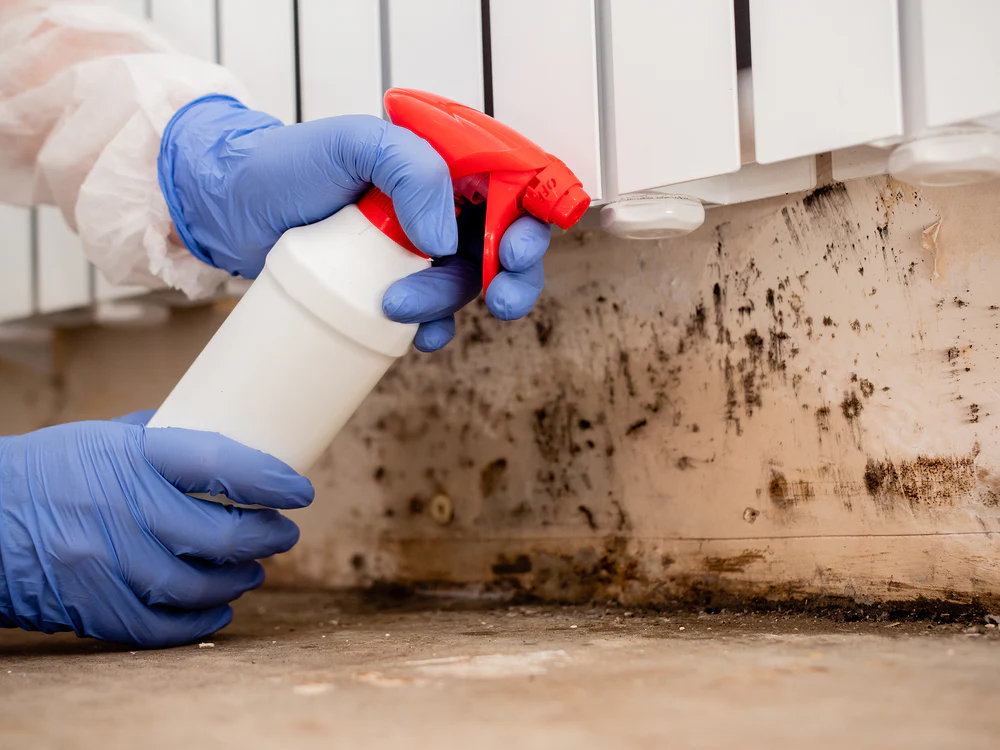
You do not need to see mold to have a mold problem. These are the signs in Concord homes and commercial properties that should prompt a call for a professional inspection without delay.
Musty or earthy odor
A persistent musty, earthy, or sour smell in any room, closet, lower level, or that seems to travel through the air system when the HVAC runs is one of the clearest indicators that active mold growth is present somewhere in the structure.
Visible mold growth on any surface.
Visible dark patches, green or black spots, white fuzzy growth, or unexplained staining on walls, ceilings, baseboards, around windows, or under sinks are obvious indicators but they typically represent only the surface manifestation of contamination that extends further than what you can see.
Respiratory Mold Symptoms
Respiratory symptoms including persistent coughing, sneezing, nasal congestion, throat irritation, or worsening asthma that are consistently worse at home than when you are outside or away from the property point toward airborne mold spore exposure inside your living environment.
Moisture Intrusion Risks
A recent water event including a burst pipe, roof leak, appliance overflow, sewage backup, or any flooding scenario creates conditions where mold can establish within 24 to 48 hours. If you experienced water intrusion in your Concord home and did not have the affected materials professionally dried and assessed within that window, there is a meaningful probability that mold has already begun to develop.
Mold Risk During Home Sales
If you are buying or selling a home in Concord and a mold inspection has not been completed as part of the due diligence process, you are taking on an unknown risk in a market where crawl space and attic mold is genuinely common. A pre-purchase mold inspection is one of the most cost-effective protections a buyer can put in place.
Our Mold Remediation Process in Concord, NC
We follow a complete, structured remediation protocol that aligns with guidelines from the Environmental Protection Agency, the Institute of Inspection Cleaning and Restoration Certification, and the American Conference of Governmental Industrial Hygienists. Here is exactly what we do from the moment you contact us to the moment your property receives final clearance.
Comprehensive Mold Inspection
Our certified inspectors conduct a thorough walkthrough of your entire property using moisture meters, thermal imaging cameras, borescope cameras for crawl space and duct inspection, and hygrometers to measure relative humidity throughout the structure. We identify both visible and hidden mold, map the full extent of contamination, and trace the moisture source that is driving the problem. No remediation plan is designed until this inspection is complete, because treating mold without understanding its source is the reason so many mold problems return after remediation.
Professional Mold Testing
Where species identification and spore concentration data are needed, our specialists collect air samples, surface swab samples, and tape lift samples from affected areas and submit them to an independent accredited laboratory. The results tell us precisely which species are present, at what concentrations, and how far spores have traveled through the indoor air. This baseline data is what post-remediation clearance testing is compared against to verify that the job was actually completed successfully.
Containment
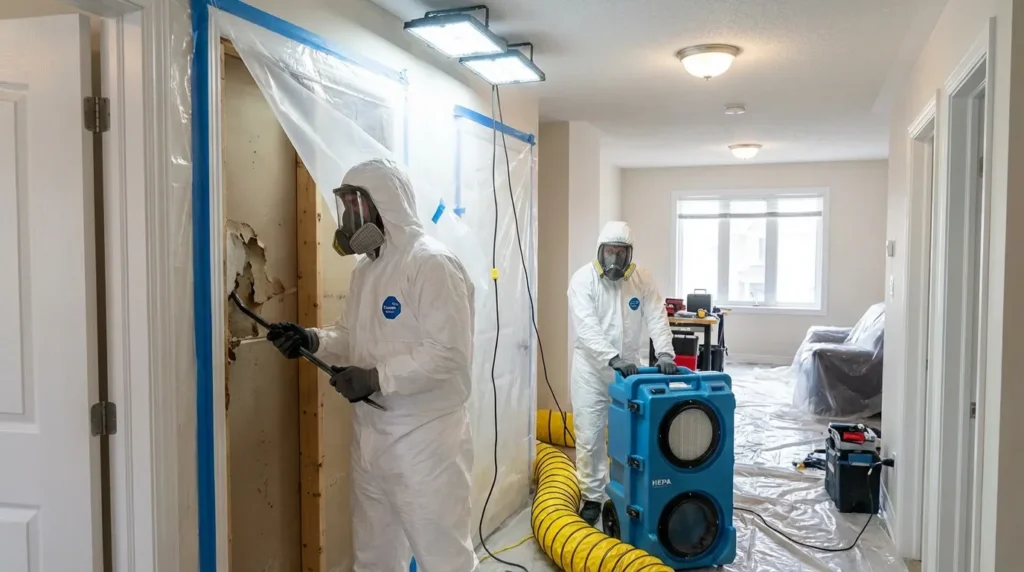
Before any physical removal work begins, we seal off all affected areas using polyethylene sheeting and establish negative air pressure using HEPA-filtered negative air machines. This containment step is non-negotiable. It prevents mold spores dislodged during remediation from becoming airborne and migrating to unaffected areas of your property.
HEPA Air Filtration
Commercial-grade air scrubbers with HEPA filtration run continuously throughout the entire project. These machines capture airborne spores, mycotoxins, and fine particulate matter and maintain controlled air quality while our technicians work within the containment zone.
Mold Removal and Safe Material Disposal
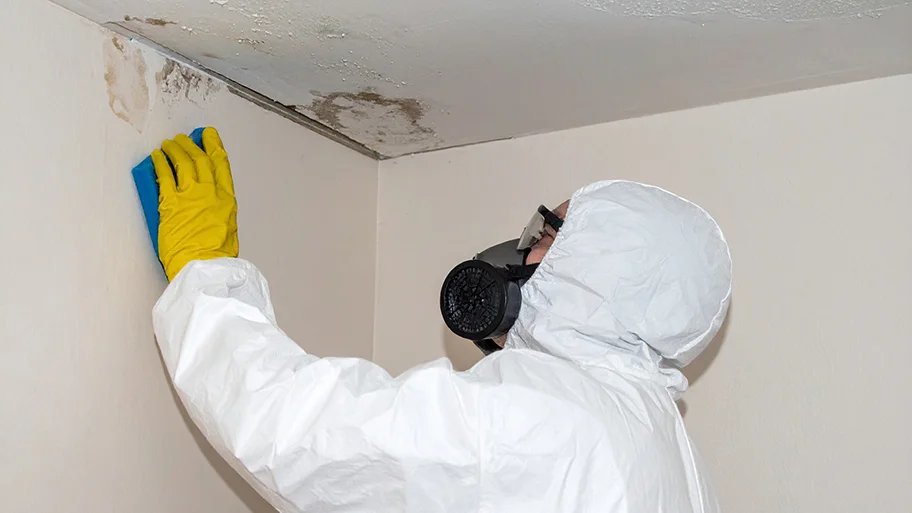
All mold-infested porous materials, drywall sections, insulation, wood framing where necessary, carpeting, ceiling tiles are carefully removed, double-bagged, and disposed of in accordance with Cabarrus County regulations. Non-porous surfaces including concrete, metal, and glass are treated in place with EPA registered antifungal products. This step eliminates the contamination physically rather than coating over it.
Antimicrobial Treatment
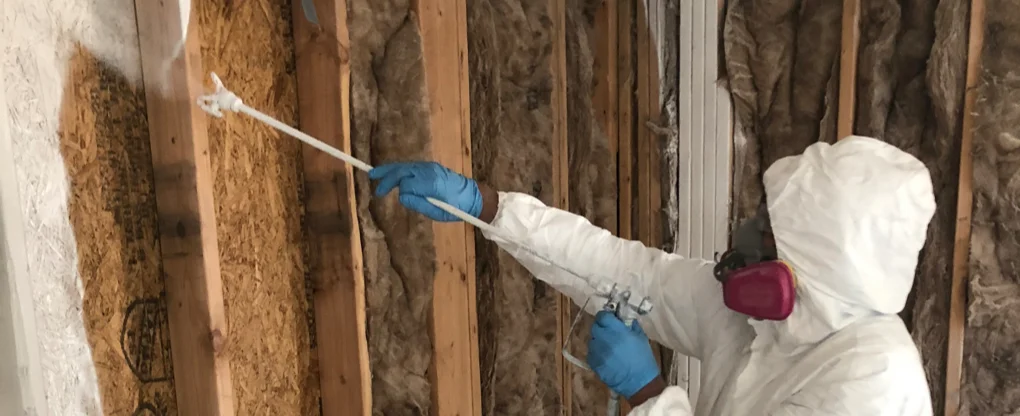
After physical removal, all treated surfaces receive EPA registered antifungal and antimicrobial solution application. This kills residual mold at the root structure level and provides a protective treatment layer that inhibits future colonization at the remediated surfaces.
Structural Drying and Moisture Source Resolution
This is the step that separates a genuine remediation from a cosmetic cleanup. We resolve the root moisture source — whether that is a plumbing leak, foundation crack, inadequate crawl space vapor barrier, blocked HVAC condensate drain, or insufficient attic ventilation — and bring the property's relative humidity down to the EPA-recommended range of 30 to 50 percent using industrial dehumidifiers before the project is closed. Mold remediation that does not fix the moisture problem is a temporary measure that will produce the same result in a matter of months.
Post-Remediation Clearance Testing
When all remediation and treatment work is complete, we collect final air and surface samples and submit them to the independent laboratory. We issue clearance documentation only when laboratory results confirm that mold spore concentrations have returned to normal baseline levels and no elevated concentrations of the target species remain. This third-party verified clearance is the objective proof that the work actually achieved what it was supposed to achieve. It is not optional, and it is included in every project we complete.
Services We Provide Throughout Concord and Cabarrus County

Residential Mold Remediation
From single-family homes in established Concord neighborhoods to newer construction in surrounding Cabarrus County communities, we protect families from the health consequences and structural damage that unchecked mold growth causes. Every residential project receives the same rigorous protocol regardless of property size or value.
Commercial Mold Remediation
Mold in a commercial property in Concord creates liability exposure, potential health code issues, and the kind of employee or customer health complaints that no business owner wants to manage. We serve offices, retail spaces, restaurants, medical facilities, schools, warehouses, and multi-tenant commercial buildings throughout Cabarrus County, working efficiently and professionally to restore safe conditions while minimizing operational disruption.

Crawl Space Mold Remediation and Encapsulation
Given how frequently and severely crawl space mold affects Concord properties, we treat this as a specialized service category. We combine thorough physical mold removal with crawl space encapsulation — the installation of a heavy-duty polyethylene vapor barrier across the entire crawl space floor and up the foundation walls — to create a sealed, conditioned environment that denies mold the moisture it needs to return. For properties with significant ground moisture, we also install commercial-grade crawl space dehumidifiers as part of a complete long-term moisture management solution.
Attic Mold Remediation
We remove existing mold contamination from attic decking, rafters, and insulation materials, apply antimicrobial treatment to all surfaces, and evaluate the ventilation system to correct the airflow deficiencies that allowed mold to develop in the first place. Attic mold remediation without ventilation correction is a temporary fix.
Black Mold Removal
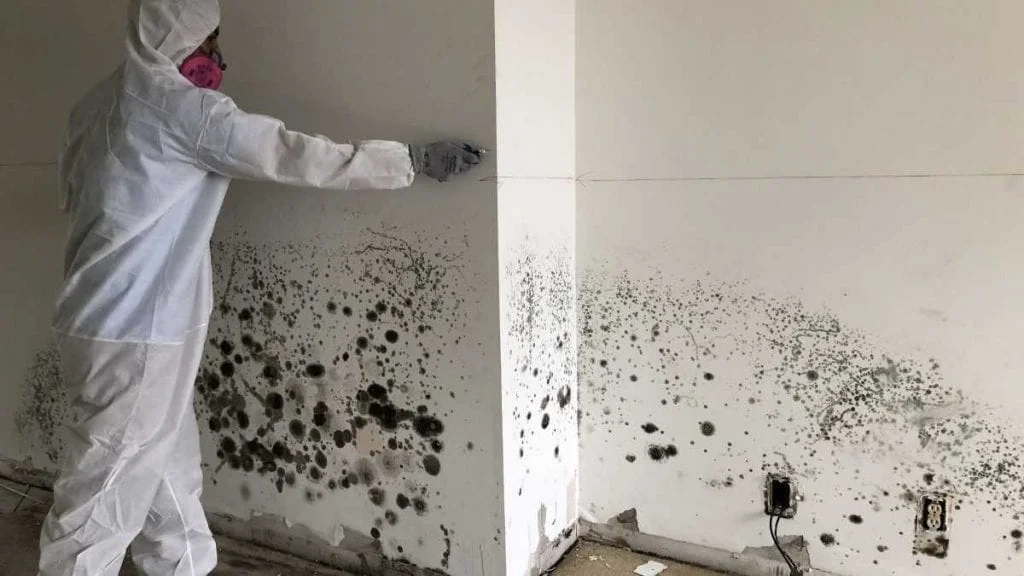
Stachybotrys chartarum requires a heightened remediation approach that includes full personal protective equipment for all technicians, strict containment, careful material handling and disposal, and verified clearance testing. There is no shortcut when black mold is involved, and we do not take one.
HVAC and Ductwork Mold Remediation
Mold inside your HVAC system distributes contaminated air throughout your entire property every time the system runs. Our HVAC mold remediation process includes full inspection of the air handler, evaporator coil, drain pan, and accessible ductwork, physical removal of contamination, EPA registered antimicrobial fogging treatment, moisture source resolution, and clearance testing to verify the system is genuinely clean.
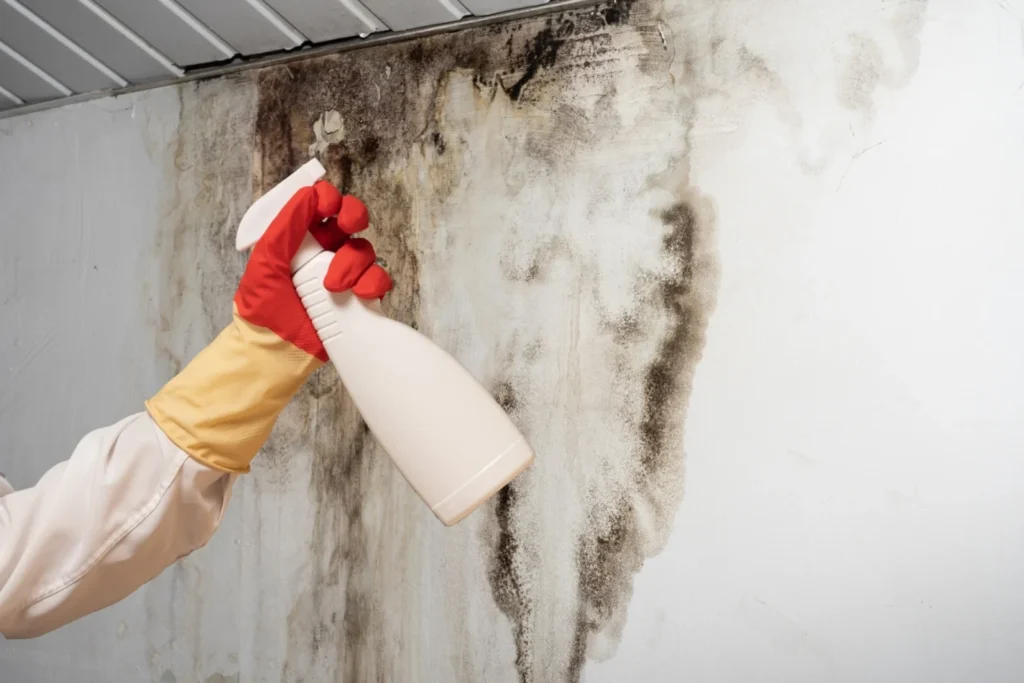
Emergency Mold Removal
Mold situations do not follow business hours. We offer emergency response for urgent situations across Concord and Cabarrus County, with rapid deployment to address contamination before it spreads further and the cost of remediation compounds.
Pre-Purchase Mold Inspections
Before you finalize a home purchase in Concord, a professional mold inspection gives you objective information about the property’s condition that a general home inspection does not provide at the level of detail that mold assessment requires. We provide written inspection reports and laboratory results that are suitable for use in real estate negotiations.
What Competitors in Concord Miss and Why It Matters to Your Property
After reviewing what other mold remediation providers operating in Concord currently offer, a clear pattern emerges. Most focus their content and their service descriptions on the process of removing visible mold. Very few emphasize what happens after the physical work is done, and fewer still make independent post-remediation clearance testing a standard, non-negotiable part of every project.
This gap matters enormously to property owners. A company that removes mold, applies a spray treatment, and walks away without laboratory verification has no objective basis for telling you the job succeeded. The only way to know with certainty that a remediation project achieved normal indoor air quality is to collect air and surface samples after the work is complete and have them analyzed by an independent laboratory that has no financial interest in the outcome of the result. We build this step into every single project we complete, and we do not issue clearance documentation until the results support it.
The second gap common among Concord providers is the failure to address moisture at the source. Mold is a symptom of a moisture problem. Physical removal of the symptom without diagnosing and correcting the underlying moisture condition produces a property that will develop the same mold problem again within months. We treat moisture resolution as a required component of the remediation project, not an optional add-on service.
Mold Species Commonly Found in Concord, NC Properties
Cladosporium
is the most frequently identified species in Concord homes, thriving on building materials, accumulated dust inside ductwork, and surfaces exposed to moderate humidity. Chronic exposure contributes to allergic rhinitis and asthma exacerbation.
Aspergillus
Aspergillus is commonly found in crawl spaces, on insulation materials, and in HVAC drain pan areas. Certain Aspergillus species produce aflatoxins classified as human carcinogens by the World Health Organization.
Penicillium
Penicillium grows readily on insulated ductwork liner, drywall facing, and stored organic materials in basement and attic environments. It is a recognized trigger for hypersensitivity pneumonitis in susceptible individuals.
Stachybotrys chartarum
Stachybotrys chartarum, known widely as black mold, requires sustained moisture saturation of cellulose-containing materials to establish. In Concord properties, it is most frequently found in crawl spaces with long-term moisture intrusion, in wall cavities adjacent to chronic plumbing leaks, and in attic areas affected by persistent roof leaks. Its mycotoxins are associated with severe respiratory distress, neurological symptoms, and immune suppression with repeated exposure.
Chaetomium
is a less commonly discussed but frequently discovered species in Concord homes that have experienced water damage events. It has a characteristic musty odor and grows aggressively on drywall, producing enzymes that digest the cellulose and gypsum of the material it colonizes.
How Much Does Mold Remediation Cost in Concord, NC?
The honest answer is that cost depends on what your specific property actually needs, and no reputable company can give you a meaningful number before completing an inspection. What we can tell you is the factors that determine cost.
The size of the contaminated area is the primary driver. A contained bathroom mold problem involving a small section of drywall and tile costs significantly less to remediate than a full crawl space infestation involving structural framing, insulation removal, and encapsulation installation. Location within the property matters as well crawl space and attic remediations typically involve more labor and material than above-grade accessible areas.
The species present affects the protocol and therefore the cost. Black mold remediation requires additional containment measures, personal protective equipment, and handling procedures that add to project cost compared with remediating less hazardous species. Whether structural material removal is required determines whether a general contractor will need to be involved for post-remediation repair work. And whether moisture source correction involves plumbing repair, foundation crack sealing, vapor barrier installation, or HVAC system service affects the overall investment.
Based on general industry ranges in the Concord and greater Charlotte metro market area, minor mold problems typically start in the several-hundred-dollar range. Full crawl space or attic remediations with encapsulation, structural material removal, and clearance testing range into the several-thousand-dollar range depending on the scope involved. We provide written, itemized estimates after the initial inspection so you have complete pricing clarity before any work begins.
Based on general industry ranges in the Concord and greater Charlotte metro market area, minor mold problems typically start in the several-hundred-dollar range. Full crawl space or attic remediations with encapsulation, structural material removal, and clearance testing range into the several-thousand-dollar range depending on the scope involved. We provide written, itemized estimates after the initial inspection so you have complete pricing clarity before any work begins.
Mold Prevention Guidance for Concord, NC Homeowners
The most cost-effective mold remediation is the one you never need. These are the steps that matter most for Concord properties given the specific moisture conditions the city’s climate and soil produce.
Have your crawl space professionally assessed if it is vented and you have not had it inspected recently. In Cabarrus County's climate, a properly encapsulated crawl space with a vapor barrier and either a conditioned air supply or a dedicated dehumidifier is the most impactful single structural improvement a Concord homeowner can make for long-term mold prevention.
Maintain indoor relative humidity between 30 and 50 percent year-round. A whole-home or supplemental dehumidifier in lower levels and the crawl space is a practical investment given Concord's humidity profile.
Run bathroom exhaust fans during and for at least 20 minutes after every shower. An exhaust fan that vents into an attic space rather than to the exterior is a building defect that needs to be corrected — it puts exactly the moisture load into your attic that creates attic mold.
Inspect your roof, gutters, and downspout extensions at least twice per year and within a week of any significant storm. Downspouts that deposit water against the foundation rather than directing it several feet away are one of the most common contributors to crawl space moisture problems in Concord-area homes.
Address any plumbing leak immediately regardless of how minor it appears. A slow drip inside a wall cavity can produce significant mold growth within two to three weeks under Concord's humidity conditions.
Have your HVAC system serviced annually, ensure the condensate drain line is clear, and inspect the drain pan for standing water or biological growth. Replace air filters on the manufacturer's recommended schedule. If your system is oversized for your home, a common issue in Concord's housing stock from certain construction periods, short cycling creates excessive condensation that contributes to mold risk inside the system and in adjacent materials.

Serving Concord and All of Cabarrus County
Our certified remediation team serves Concord and the surrounding communities throughout Cabarrus County, including Harrisburg, Kannapolis, Midland, Mount Pleasant, Cox Mill, Odell, Georgesville, and the communities along the Lake Norman corridor. We are also the team Charlotte homeowners in nearby Mecklenburg County trust for certified mold remediation — giving our Concord clients the assurance that we operate at the same standard that serves one of the most competitive remediation markets in the Carolinas.
Schedule Your Free Mold Inspection in Concord, NC Today
A mold problem that is caught early costs far less to remediate, causes far less structural damage, and exposes your family to far less health risk than one that is discovered after months or years of unchecked growth. In Concord’s climate, with the crawl space conditions and soil moisture dynamics that the Cabarrus County environment creates, early professional assessment is genuinely valuable in a way that it might not be in drier parts of the country.
Call us today to schedule your free professional mold inspection in Concord, NC. Our IICRC certified specialists will walk your property thoroughly, explain clearly what they find, and give you an honest remediation plan with complete pricing transparency and no pressure. Same-day and emergency appointments are available for situations that cannot wait.
Concord families deserve a home where the air is actually clean. Let us help make that happen.