Certified Mold Remediation in Huntersville , NC — Protecting Cabarrus County Homes From the Ground Up
Mold Remediation Huntersville, NC is essential if you have found mold in your Huntersville NC home or business, or you suspect it is growing somewhere out of sight, professional remediation is not something to delay. Mold spreads fast in Cabarrus County’s climate, damages structural materials that are expensive to replace, and exposes the people inside your property to allergens and mycotoxins that affect respiratory health, immune function, and overall quality of life. Our IICRC certified remediation specialists serve Concord and all of Cabarrus County, including Harrisburg, Kannapolis, Midland, Mount Pleasant, and Cox Mill. We handle every stage of the process thorough inspection, independent laboratory testing, full containment, safe material removal, EPA registered antimicrobial treatment, structural drying, and third-party post-remediation clearance testing, so you are never left wondering whether your property is actually safe when the job is done. Call us today to schedule a free mold inspection in Concord, NC and get a straight, honest answer from a certified local team.
Why Huntersville Properties Face a Distinct and Serious Mold Risk?
Huntersville occupies a position that creates a specific set of environmental pressures that most generic mold remediation content does not acknowledge. Situated about 15 miles north of Uptown Charlotte in northern Mecklenburg County, the town sits at the southern edge of Lake Norman, the largest manmade lake in North Carolina. The lake’s surface area generates elevated localized humidity that compounds the already significant moisture load produced by the region’s broader humid subtropical climate.
Huntersville has been one of the fastest-growing municipalities in Mecklenburg County for over two decades. Rapid residential development throughout communities like Birkdale, Skybrook, Ramsay Creek, Vermillion, Macaulay, and the neighborhoods spreading west toward the Catawba River has produced large volumes of housing built during periods when construction schedules were compressed and moisture management during the building process was sometimes inconsistent. Homes built quickly in humid conditions, closed in before framing moisture had fully dissipated, carry an elevated baseline risk for early-stage mold development inside wall assemblies that owners typically do not discover until years after move-in.
The soils in Huntersville can expand and contract significantly due to fluctuating moisture levels, and areas with inadequate drainage can exacerbate moisture problems in crawl spaces. Huntersville’s climate, with its occasional heavy rains and high humidity, further contributes to moisture accumulation under homes. This dynamic creates persistent lateral pressure on foundation walls and floor systems that drives moisture intrusion in ways that residents in drier climates simply do not experience.
North Carolina’s humid and hot summers make mold and mildew growth and pest infestations in crawl spaces and basements a common occurrence for homeowners in Huntersville. What that general statement does not capture is the degree to which Huntersville’s specific geography, housing stock, and growth trajectory amplify that risk in ways that matter practically to property owners here.
Older housing in Huntersville’s more established areas carries a different set of vulnerabilities. Aging vapor barriers, degraded crawl space venting, and original roof systems that have outlasted their effective waterproofing life create multiple points of chronic moisture entry that sustain mold growth silently for years. In neighborhoods developed before modern building science practices became standard, vented crawl spaces were constructed in a way that was considered acceptable at the time but that pulls warm, moisture-saturated outdoor air directly beneath the home’s floor system every summer, creating conditions where mold colonization on wood framing is essentially a function of time rather than a question of if.
What Competitors in Huntersville’s Mold Market Get Wrong?
After a thorough review of what mold remediation providers currently operating in Huntersville are offering, a consistent pattern of gaps emerges that directly affects the quality of outcomes homeowners receive.
The most significant issue is that most providers operating in this market treat the visible mold as the problem. They focus their service descriptions, their marketing, and their actual project scope on removing what can be seen and treating the surfaces where growth is visible. This approach misses the fundamental nature of mold as a moisture-dependent organism. Removing mold growth without correctly identifying and eliminating the moisture source that enabled it means the remediation is not a solution, it is a temporary measure that will produce the same problem again within months, sometimes less.
The second gap is in verification. Most providers operating in Huntersville describe a remediation process that ends when the physical work is done. They complete the cleaning, apply a treatment product, and issue a completion certificate based on their own visual assessment. This is not adequate. The only objective verification that a mold remediation project actually achieved normal indoor air quality is independent laboratory clearance testing ,air and surface samples collected after the work is complete and analyzed by an accredited laboratory that has no financial relationship with the remediation company. We build this step into every single project as a non-negotiable requirement, not an optional upgrade.
The third gap common among larger franchise operations serving this market is genuine local knowledge. National restoration brands that operate in Huntersville as one of dozens of franchise territories apply standardized protocols to every market they serve. Those protocols are not wrong, but they are generic. Understanding that Huntersville’s proximity to Lake Norman creates elevated localized humidity not present in south Charlotte, that Birkdale-era construction has a specific set of moisture management characteristics, that the drainage patterns in neighborhoods adjacent to Torrence Creek and McDowell Creek produce a predictable seasonal flooding risk that affects crawl spaces in a defined geographic pattern ,this kind of local knowledge shapes how an inspection is conducted and what a remediation plan addresses. We are local, and that specificity is reflected in the quality of our work.
The Most Common Locations Where We Find Mold in Huntersville Homes
Crawl Spaces
High humidity and seasonal rainfall often leave crawl spaces in Huntersville damp and unhealthy. When ground moisture and humid air combine beneath a home, it can lead to mold growth, wood rot, pest infestations, insulation damage, and poor indoor air quality. In our inspections across Huntersville properties, the crawl space is the single most frequent location for serious, advanced-stage mold contamination ,and the one most likely to have gone undetected for a significant period because homeowners rarely access this space directly.
The problem compounds because air from the crawl space does not stay in the crawl space. The stack effect ,the natural pressure differential between a home’s lowest level and its upper floors ,pulls air upward from the crawl space through the floor system and into the living area continuously. Mold spores, mycotoxins, and elevated humidity from a contaminated crawl space travel directly into the rooms where your family spends most of their time. Elevated allergy symptoms, persistent musty odors in lower-level living areas, and unexplained respiratory issues in otherwise healthy households are frequently traced back to crawl space contamination during our inspections.
Attic Spaces With Compromised Ventilation
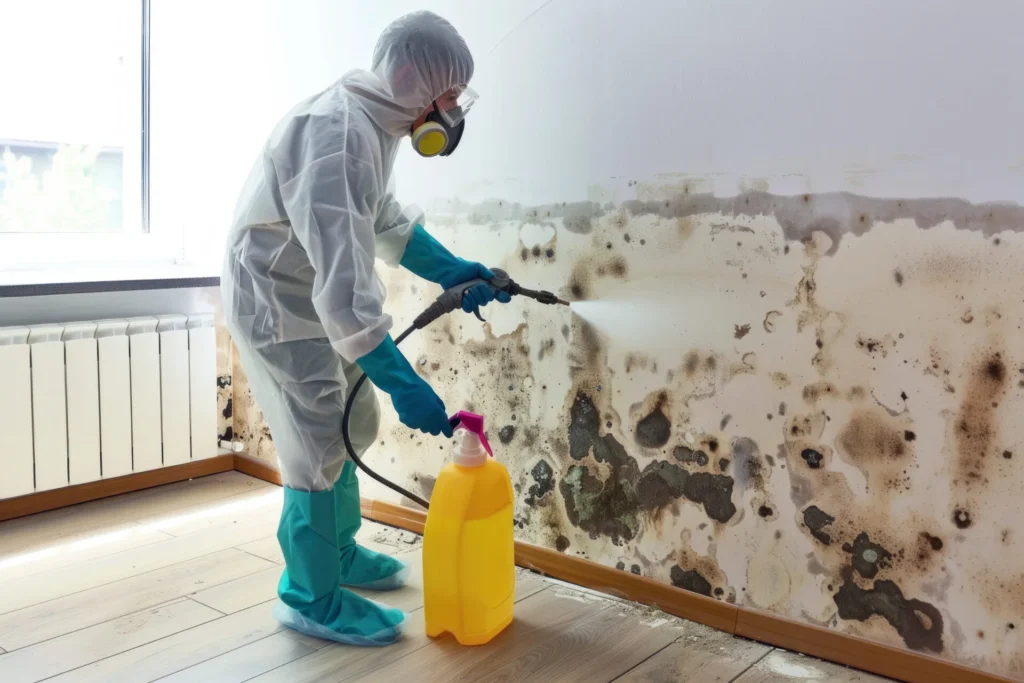
Huntersville’s roofing mix ,combining established neighborhoods with original roof systems and newer developments where attic ventilation was sometimes undersized relative to the actual attic volume ,creates consistent attic mold risk across the community. When soffit-to-ridge airflow is inadequate, warm humid air stagnates against the roof decking. When bathroom exhaust fans terminate into the attic rather than through the roof to the exterior (a building defect more common than most homeowners realize), concentrated moisture loads are deposited directly into the attic environment. The result is mold colonization on roof sheathing, rafters, and blown-in insulation that typically remains entirely hidden until a home inspection, a re-roofing project, or health symptoms bring it to light.
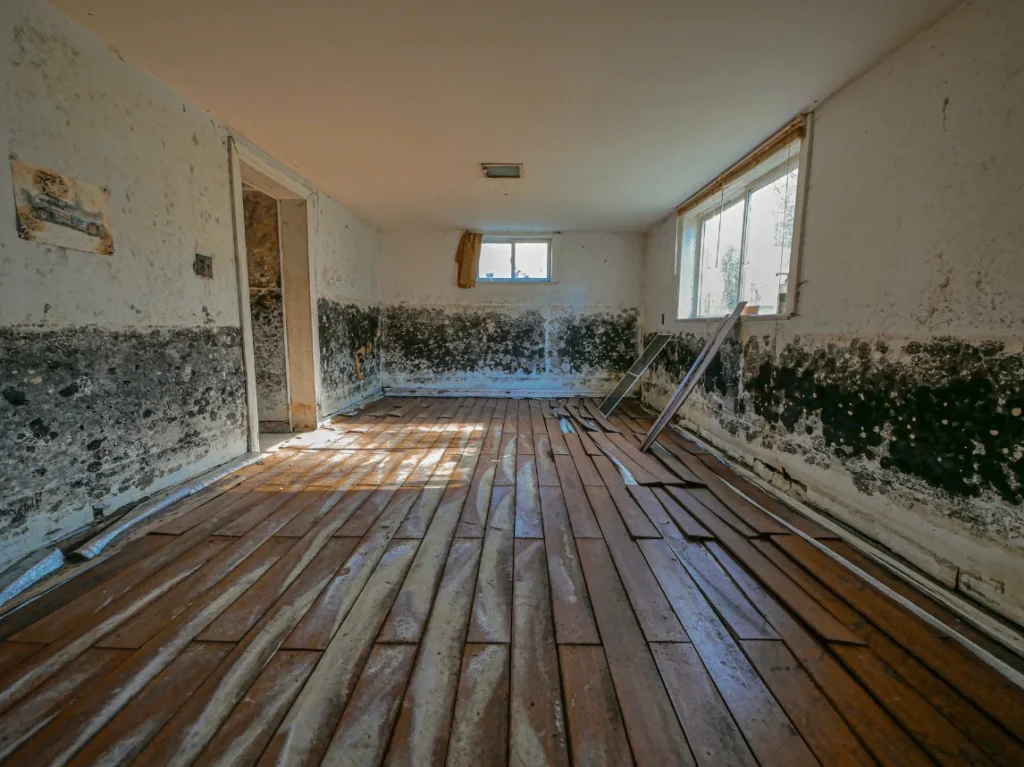
Behind Walls After Water Events
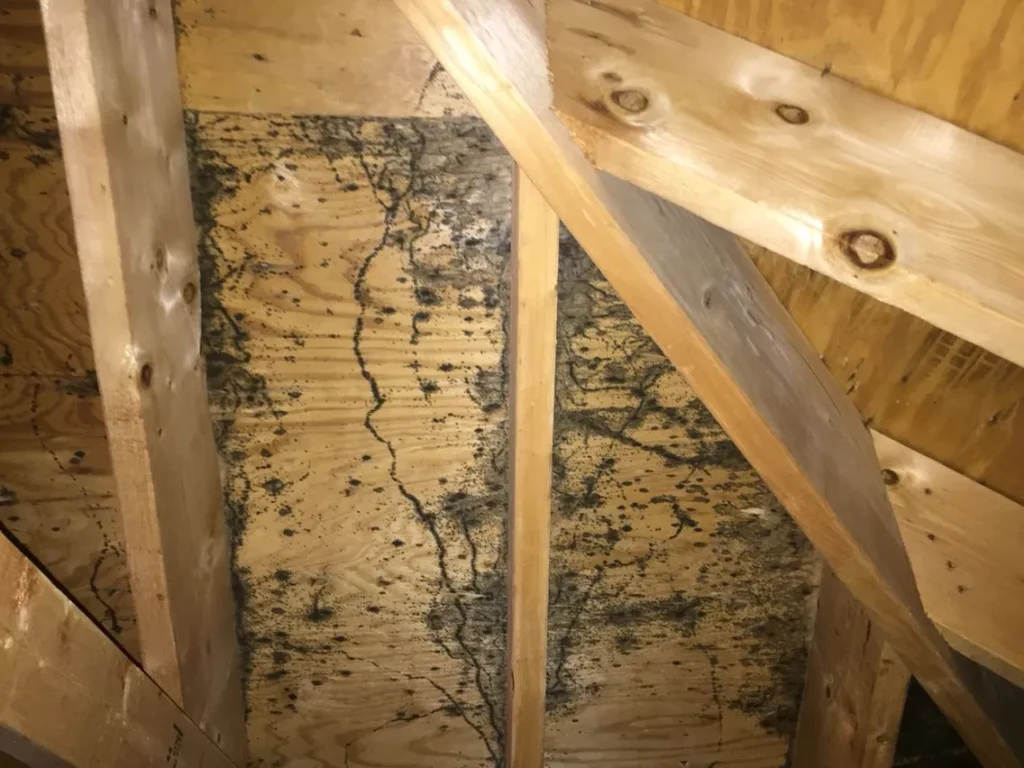
Huntersville’s position within a broader storm system corridor means the community experiences periodic high-rainfall events that test drainage systems, roofing, window flashing, and foundation waterproofing. After any significant water intrusion event ,a burst pipe, a roof leak during a severe storm, an appliance overflow, or flooding in lower-level spaces ,mold can establish inside wall cavities, under flooring, and in insulation within 24 to 48 hours if the affected materials are not professionally dried within that window. Homeowners who attempted to address water events themselves by running fans for a few days and then visually confirmed that surfaces appeared dry are among the most common sources of the more serious mold cases we find during inspections, because the visible surface dried while the material inside the wall assembly retained moisture at levels that sustained mold growth for months.
HVAC Systems and Ductwork
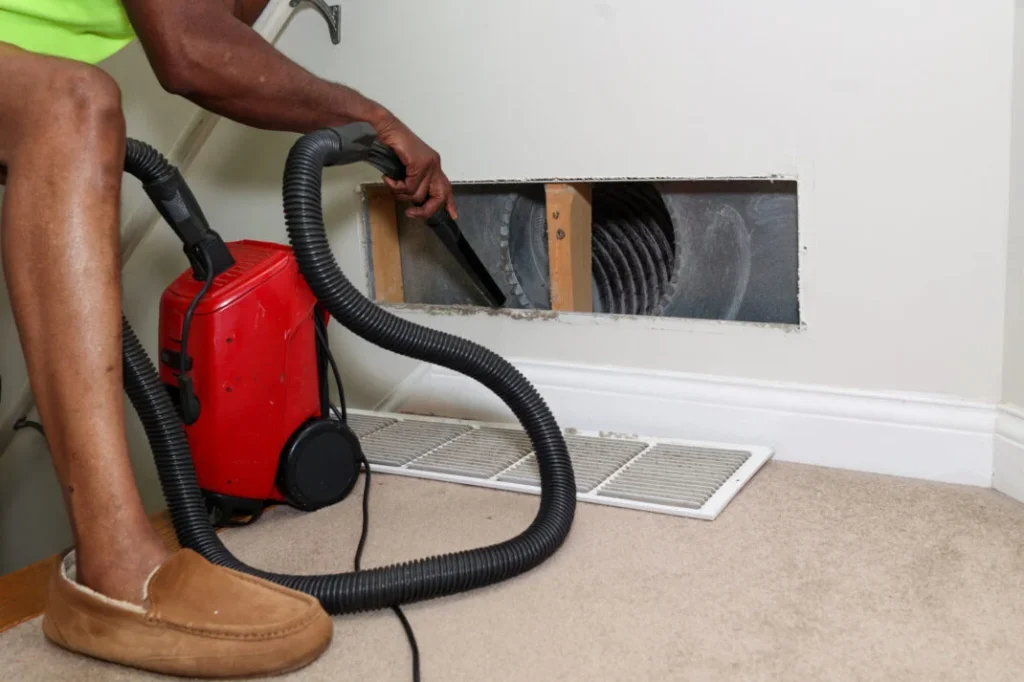
Lake Norman’s proximity creates a specific HVAC mold dynamic in Huntersville that is worth understanding. When the outdoor air reaching a home’s HVAC intake carries higher moisture content than is typical for the broader Charlotte region, the system’s cooling capacity is working against a heavier humidity load. This increases condensation on evaporator coils, raises the risk of drain pan overflow events, and creates conditions inside duct runs where surface condensation allows mold to establish on accumulated organic debris. When mold is inside your HVAC system, every time the system runs it is actively distributing contaminated air throughout every connected room. The musty smell that appears specifically when the system cycles on and disappears when it is off is the clearest diagnostic indicator of this problem.
Bathrooms, Laundry Areas, and Under-Sink Spaces
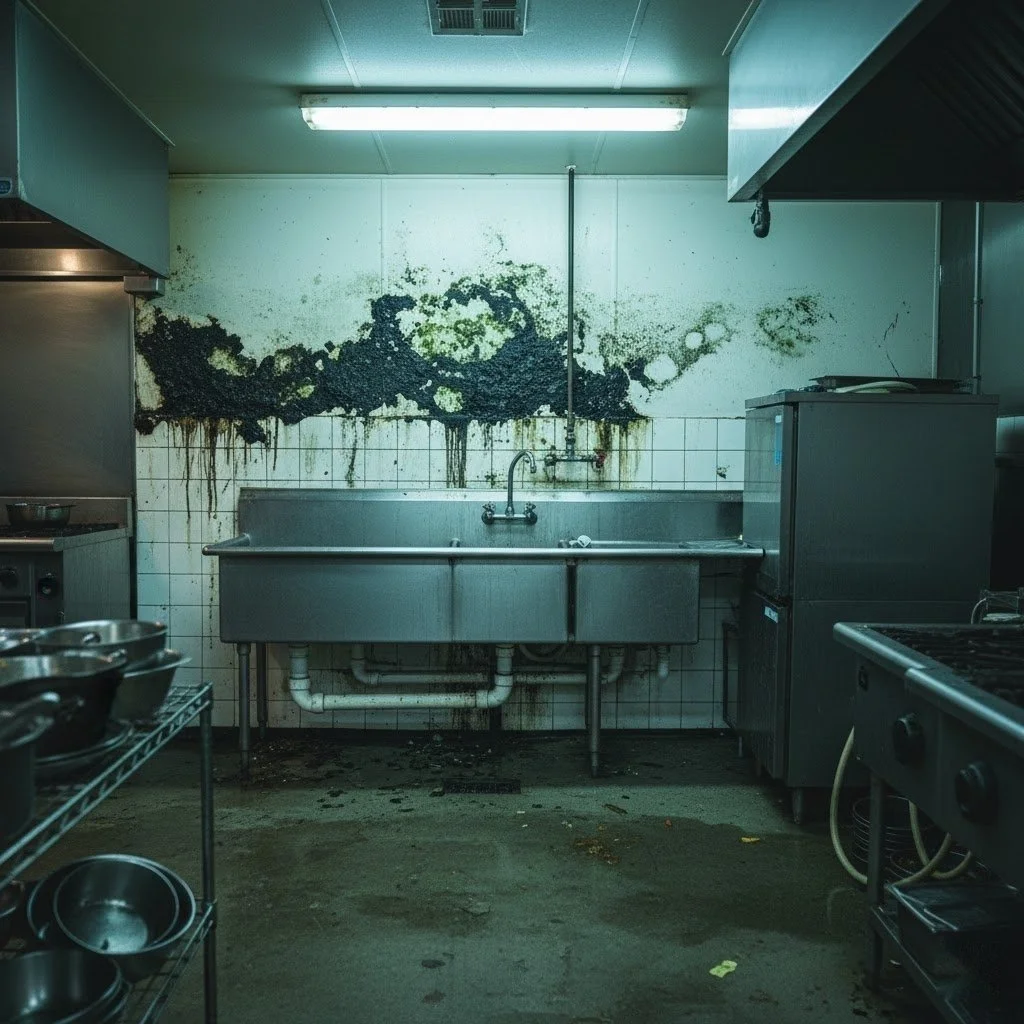
Chronic moisture from inadequate exhaust ventilation, slow plumbing leaks hidden inside cabinetry, and grout failures that allow water penetration behind tile surfaces are consistently among the most productive locations for contained but growing mold problems in Huntersville homes. These situations are frequently manageable when caught early. Left unaddressed, mold behind bathroom tiles or inside the wall cavity adjacent to a leaking supply line can spread to the structural framing and insulation in ways that require substantially more invasive and expensive remediation.
Our Complete Mold Remediation Process for Huntersville Properties
Every project we complete in Huntersville follows the same rigorous, multi-stage protocol aligned with EPA guidance, IICRC standards, and ACGIH guidelines. This is not a simplified version of remediation adapted for marketing convenience. It is the complete process.
Thorough Mold Inspection Using Professional Equipment
Our certified inspectors begin with a comprehensive visual and instrument-assisted assessment of your entire property. Moisture meters map the moisture content of building materials throughout the affected area and identify elevated readings in locations that are not visually obvious. Thermal imaging cameras reveal temperature differentials caused by evaporative cooling from wet materials inside walls, floors, and ceilings ,locating hidden moisture that no visual inspection alone would find. Borescope cameras allow inspection of crawl space structural members, inside wall cavities at key access points, and within HVAC duct runs without the need for destructive investigation in every location. Hygrometers measure relative humidity throughout the property and document the ambient conditions that are sustaining mold growth. We leave the inspection phase with a documented understanding of where the mold is, how far it extends, what is driving the moisture conditions, and what the remediation scope needs to address. No work plan is written and no estimate is provided until this assessment is complete.
Independent Laboratory Mold Testing
Where species identification and quantitative spore concentration data are required ,and in most significant mold situations they are ,our specialists collect air samples, surface swab samples, and tape lift samples from affected areas and submit them to an independent, accredited laboratory. The laboratory has no financial relationship with our company and no interest in any particular outcome of the analysis. The results establish which species are present, at what concentrations, and how widely spores have distributed through the indoor air. These baseline results are the benchmark against which post-remediation clearance testing is compared to verify the project's success.
Strict Containment Before Any Removal Work Begins
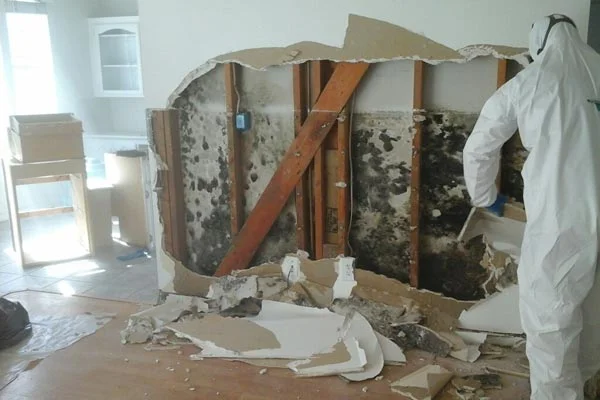
Before a single piece of contaminated material is touched, we establish complete containment of the affected area using polyethylene sheeting sealed to all adjacent surfaces, and we create negative air pressure using HEPA-filtered negative air machines that exhaust to the exterior. This step is not optional. Disturbing mold growth without proper containment sends spores airborne throughout the property, spreading contamination to areas that were previously unaffected and dramatically increasing the scope of the problem. We do not cut corners on containment.
Continuous HEPA Air Filtration Throughout the Project
Commercial-grade air scrubbers with HEPA filtration operate continuously from the moment work begins until the final clearance samples are collected. These machines capture mold spores, mycotoxins, and fine particulate matter at 0.3 microns and larger, maintaining controlled air quality inside the work area while our technicians are actively engaged in removal.
Physical Mold Removal and Material Disposal
All mold-infested porous materials ,drywall, insulation, wood framing sections where contamination has penetrated, carpeting, ceiling tiles ,are carefully removed, double-bagged in 6-mil polyethylene bags, and disposed of in compliance with Mecklenburg County regulations. Non-porous surfaces including concrete block, metal framing, and glass receive direct treatment with EPA registered antifungal products at this stage. Nothing that cannot be adequately cleaned to a verified standard is left in place.
EPA Registered Antimicrobial Treatment
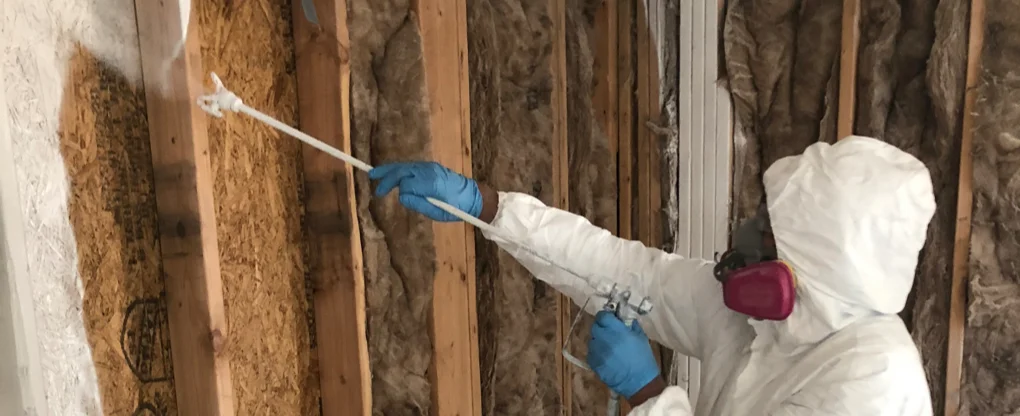
Following physical removal, every remediated surface receives application of EPA registered antifungal and antimicrobial solution. Depending on the geometry of the affected space, this is applied by direct brush or spray application, or by fogging for enclosed cavities and ductwork. This treatment kills mold at the root structure level and provides a protective residual that inhibits future colonization at the treated surfaces.
Moisture Source Resolution ,The Step That Determines Whether Mold Returns
This is where most competing remediation providers in Huntersville fall short, and it is the most critical determinant of whether a remediation project produces lasting results or a temporary cosmetic improvement. We identify and resolve the specific moisture source that created the mold problem, whether that is a plumbing leak, a roof flashing failure, a blocked condensate drain in the HVAC system, inadequate crawl space vapor barrier coverage, foundation wall seepage, or chronic humidity from insufficient ventilation. We then use industrial dehumidifiers to bring the property's relative humidity into the EPA-recommended range of 30 to 50 percent and confirm that it holds at that level before the project is closed. Mold remediation that does not fix the moisture problem is a temporary measure.
Verified Post-Remediation Clearance Testing
When all physical work and moisture correction is complete, we collect final air and surface samples from throughout the affected area and the adjacent living spaces and submit them to the independent laboratory. We issue clearance documentation only after laboratory results confirm that mold spore concentrations have returned to normal outdoor baseline levels and that no elevated concentrations of the target species detected in pre-remediation sampling remain. This third-party verification is the only objective evidence that the work actually succeeded. It is included in every project we complete, and we do not ask you to take our word for it.
Services We Provide Throughout Huntersville and Northern Mecklenburg County
Residential Mold Remediation
From Birkdale Village townhomes to the lakefront estates along Lake Norman’s southern shore, from established neighborhoods in Huntersville’s original core to newer construction in Skybrook and Ramsay Creek, every residential property receives the same rigorous inspection and remediation protocol. Size and value do not determine the standard of the work.
Crawl Space Mold Remediation and Encapsulation
Given the frequency and severity with which crawl space mold affects Huntersville properties, we treat this as a specialized service category. Full mold remediation of the crawl space is combined with professional encapsulation ,installation of a heavy-duty reinforced polyethylene vapor barrier across the entire crawl space floor and up the foundation walls, sealed at all seams and penetrations ,to create a closed, moisture-controlled environment that denies future mold the conditions it requires to establish. For properties with significant ongoing ground moisture or drainage challenges, we also size and install commercial-grade crawl space dehumidifiers as an integrated part of the long-term moisture management solution.
Attic Mold Remediation
Complete removal of contaminated roof decking, rafter, and insulation material, antimicrobial treatment of all surfaces, and a comprehensive evaluation of the attic ventilation system to identify and correct the airflow deficiency that allowed the mold to develop. Attic remediation without ventilation correction is a temporary fix, and we do not offer temporary fixes.
Black Mold Removal
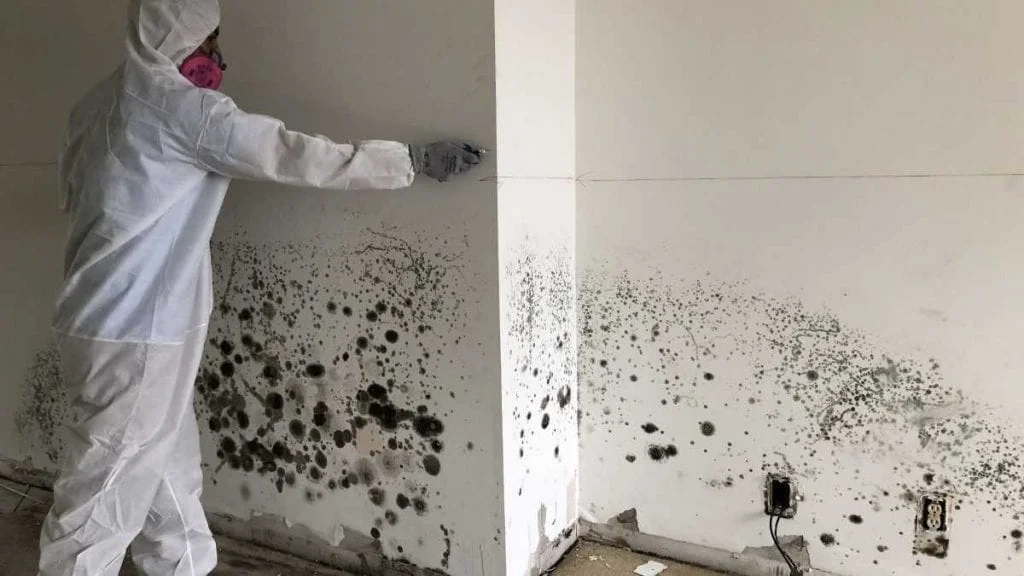
Stachybotrys chartarum requires elevated protective measures that we apply without exception: full personal protective equipment for every technician, reinforced containment, careful material handling and double-bagging at the point of removal, detailed chain-of-custody documentation, and independent clearance testing before we close the project. Black mold in a Huntersville home is a situation we take seriously at every step.
HVAC and Ductwork Mold Remediation
Full system inspection including the air handler, evaporator coil, condensate drain system, and all accessible ductwork. Physical removal of contamination, EPA registered antimicrobial fogging treatment throughout the system, mechanical repair of any condensate management failures that created the moisture condition, and post-remediation clearance testing to verify the system is genuinely clean before it is returned to operation.
Commercial Mold Remediation
Office buildings, retail spaces, medical facilities, restaurants, childcare facilities, schools, and warehouses throughout Huntersville’s growing commercial corridors along Gilead Road, Statesville Road, and the Sam Furr Road corridor. Commercial projects are scheduled to minimize operational disruption while meeting the same rigorous IICRC-aligned protocol and verified clearance standard we apply to residential work.
Emergency Mold Removal
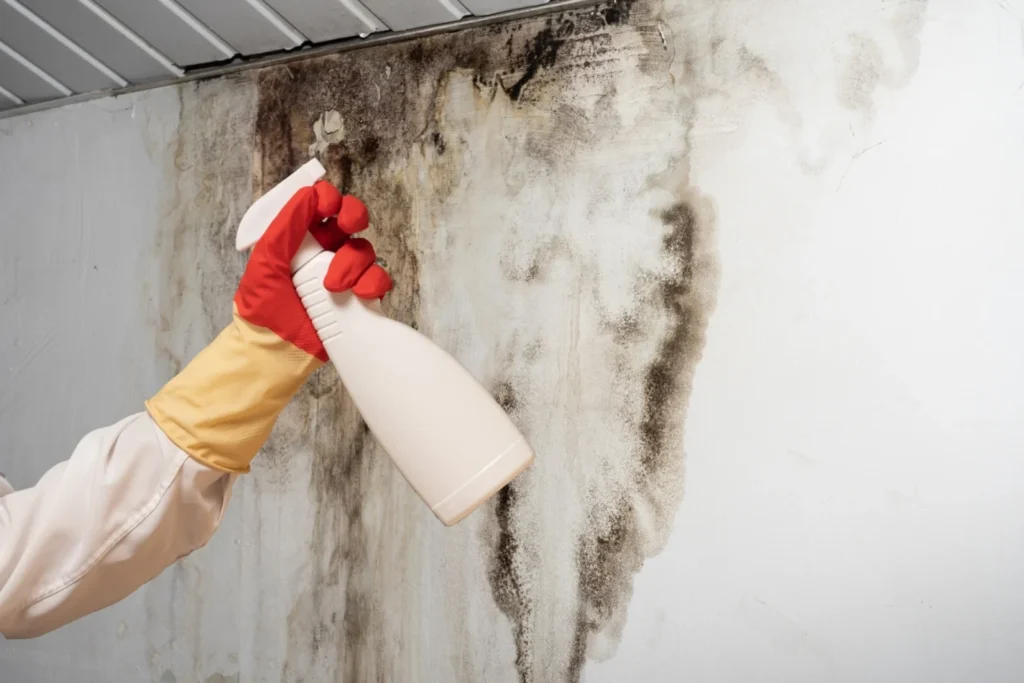
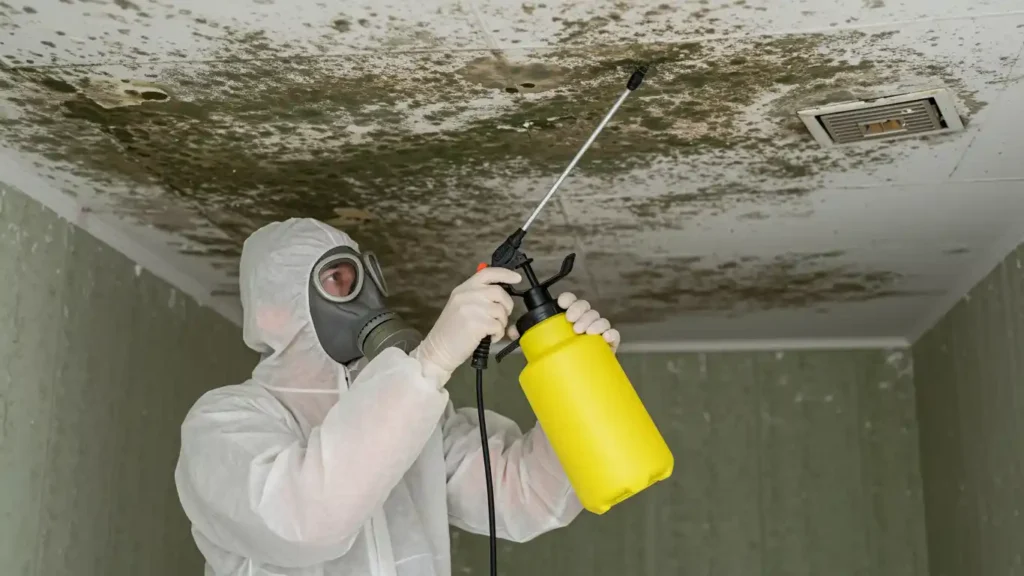
Mold situations escalate on their own timeline, not on business hours. We provide emergency response for urgent situations throughout Huntersville and northern Mecklenburg County, with rapid deployment to contain and begin addressing contamination before it spreads further and the cost of remediation compounds.
Pre-Purchase Mold Inspections
Huntersville’s real estate market has been consistently active, with significant transaction volume in both new construction and resale properties. A professional mold inspection before closing provides objective information about a property’s condition that a general home inspection does not deliver at the level of detail mold assessment requires. We provide written inspection reports and laboratory results suitable for real estate negotiation and documentation purposes.
Mold Species We Commonly Find in Huntersville Homes
Cladosporium
These species most frequently identified in Huntersville properties across both crawl space and HVAC inspections. It thrives on accumulated dust inside duct interiors, on wood surfaces in moderate humidity conditions, and on window frames and sills where condensation is intermittent. Chronic exposure contributes to allergic rhinitis, persistent sinusitis, and asthma exacerbation, and it is frequently present at elevated concentrations in homes where the occupants report feeling generally worse indoors than outdoors without being able to identify a specific cause.
Aspergillus
commonly found on HVAC evaporator coils, in crawl space insulation that has absorbed ground moisture, and on stored organic materials in attic and below-grade spaces. Certain Aspergillus species produce aflatoxins recognized by the World Health Organization as human carcinogens, and repeated exposure at elevated concentrations carries health risks that extend beyond typical allergy symptoms.
Penicillium
grows aggressively on insulated ductwork liner, drywall paper facing, and wood materials exposed to sustained moisture. It is a recognized trigger for hypersensitivity pneumonitis in susceptible individuals and is found frequently in Huntersville homes that have experienced water events affecting insulated wall or ceiling assemblies.
Stachybotrys chartarum
requires sustained moisture saturation of cellulose-containing materials to establish. In Huntersville, we find it most commonly in crawl spaces with long-term ground moisture intrusion, in wall cavities adjacent to chronic plumbing supply line leaks, and in roof sheathing beneath areas of persistent roof leak. Its mycotoxins are associated with severe respiratory distress, neurological symptoms, and immune suppression, and remediation involving this species requires the full protective protocol without exception.
Chaetomium
is a frequently overlooked species that produces a distinctive musty odor and grows aggressively on wet drywall paper, consuming the cellulose substrate and causing material degradation that accelerates structural damage. It is found commonly in Huntersville homes where water intrusion events were addressed without professional drying and material assessment.
What Mold Remediation Costs in Huntersville, NC
The honest answer is that cost is determined by the specific scope of your property’s situation, and any provider who quotes a price before completing a thorough inspection is guessing. What we can tell you is what drives the cost, so you understand what you are paying for and why.
The size of the contaminated area is the primary variable. A contained mold problem in a single bathroom or under a kitchen sink costs substantially less to remediate than a widespread crawl space infestation involving wood framing, subfloor sheathing, and insulation removal across a full footprint.
Location within the property affects both labor complexity and the need for specialized containment. Crawl space and attic remediations involve working in confined and often physically challenging spaces that require different equipment and more time than above-grade accessible areas.


A severe crawl space mold infestation involving black mold protocols, structural wood member damage requiring sistering or partial replacement, complete encapsulation system installation, and commercial dehumidifier installation represents the most comprehensive service level and typically ranges from $6,000 to $15,000 or more depending on crawl space size and the extent of structural remediation required.
A moderate crawl space mold infestation affecting a significant portion of the crawl space including floor joists and subfloor sheathing, requiring comprehensive mechanical removal, antimicrobial treatment, vapor barrier replacement, and standard moisture control installation, generally ranges from $2,500 to $6,000 in the Charlotte market.
Mold Prevention Guidance Specific to Huntersville’s Climate and Housing
Have your crawl space professionally assessed if it has a vented or partially vented configuration. In Huntersville’s humidity environment, particularly in properties adjacent to lake influence and seasonal drainage systems, a properly encapsulated crawl space with a vapor barrier and active dehumidification is the highest-impact structural improvement a homeowner can make for long-term mold prevention and indoor air quality.
Maintain indoor relative humidity between 30 and 50 percent year-round. In summer months when Lake Norman’s moisture influence pushes ambient humidity levels higher than the broader Charlotte metro, supplemental dehumidification in lower levels is a practical necessity rather than a luxury.
Ensure every bathroom exhaust fan is venting to the exterior of the home rather than terminating in the attic. Pull back insulation from the fan housing and visually confirm where the duct terminates. If it ends in the attic, that is a defect that needs correction regardless of how long the home has been operating that way.
Inspect your roof system after every significant storm event. Huntersville’s position in the storm corridor means that wind-driven rain events create opportunity for flashing failures and shingle damage that allows water intrusion before the next interior symptom becomes visible. Catching a roof leak within days rather than discovering it months later when attic mold is extensive is the difference between a minor repair and a major remediation project.
Service your HVAC system annually and specifically ask the technician to inspect the condensate drain line, verify the drain pan is clean and properly pitched, and assess the condition of the evaporator coil. These are the components most directly responsible for moisture management inside the system, and they are the components most likely to be the origin of an HVAC mold problem if maintenance has been inconsistent.
Address any plumbing leak immediately regardless of apparent severity. The combination of Huntersville’s ambient humidity and the confined moisture environment of a wall cavity means that even a slow drip from a supply line connection can produce significant Cladosporium or Penicillium growth within two to three weeks of the leak beginning.

Serving Huntersville and the Surrounding Lake Norman Region
Our certified remediation team operates throughout Huntersville and the surrounding communities of northern Mecklenburg County and the Lake Norman area, including Cornelius, Davidson, Mooresville, Denver, Concord, Kannapolis, and the communities along NC-115 and the Lake Norman shoreline. We also serve the Charlotte neighborhoods immediately south of Huntersville including Highland Creek and University City, providing the same certified, verification-based remediation standard across the full territory.
Huntersville property owners who have already had mold “remediated” by another provider and found it returning are among the most common callers we receive. If that describes your situation, the return of mold after a prior remediation is almost always the result of one of two failures: the moisture source was not correctly identified and resolved, or the remediation was not verified through independent post-remediation clearance testing. Both are problems we address from the start of every project.
Schedule Your Free Mold Inspection in Huntersville, NC Today
Mold in a Huntersville home does not resolve on its own. It spreads, it damages the building materials it colonizes, and it degrades the indoor air quality of the space your family occupies every day. Catching it early is meaningfully less expensive, less disruptive, and less harmful than discovering it after months or years of unchecked growth.
Call us today to schedule your free professional mold inspection in Huntersville, NC. Our IICRC certified specialists will inspect your property thoroughly, explain exactly what they find without exaggeration or pressure, and provide an honest, itemized remediation plan with complete pricing transparency. Same-day and emergency appointments are available for situations that cannot wait.
Huntersville families deserve a home where the air is genuinely clean. That is what we deliver, and we verify it before we leave.