Mold Remediation in Rock Hill, SC – Certified Specialists Ready to Help You Today
Mold Remediation Rock Hill, SC is essential if you are looking for mold remediation near Rock Hill, SC, you are in the right place and you need to act quickly. Mold spreads faster than most homeowners realize. Within 24 to 48 hours of a moisture event, mold colonies begin forming on drywall, wood framing, insulation, and HVAC components. Within a week, what started as a small damp patch behind a wall becomes an infestation that affects air quality throughout your entire home. Our IICRC-certified mold removal team in Rock Hill responds fast, locates every pocket of growth, contains it at the source, and restores your property to a safe, clean, and healthy condition – with post-remediation testing to prove it. We serve Rock Hill and the surrounding York County communities including Fort Mill, Tega Cay, Indian Land, Clover, York, Lake Wylie, Chester, Lancaster, and across the South Carolina and North Carolina state line into the Charlotte metro. Call us now for a free, no-pressure mold inspection.
What Mold Remediation Actually Means – and Why Rock Hill Homes Need It?
Mold remediation is not the same as mold removal, and that distinction matters a great deal. Removing mold means cleaning visible surface growth. Remediating mold means identifying the moisture source driving that growth, physically removing all contaminated materials that cannot be cleaned, containing the work area to prevent spore migration, purifying the air, treating all affected surfaces with EPA-registered antimicrobial agents, and verifying through independent testing that the job is truly done.
Rock Hill sits along the Catawba River in York County, South Carolina. The city’s humid subtropical climate means residents deal with long, warm summers and mild winters that rarely drop cold enough to interrupt mold’s biological activity. Average relative humidity in Rock Hill frequently exceeds 70 to 80 percent during summer months, and the area receives substantial annual rainfall that keeps soil moisture levels elevated around foundations year-round. For any home with a crawl space, inadequate vapor barrier, aging roof, or plumbing system older than 20 years, this climate creates a near-constant invitation for mold growth.
Rock Hill also has a rich mix of housing stock. Historic properties near the downtown district and Cherry Park date back to the mid-1800s. Mid-century homes in established neighborhoods throughout the city were built in an era when crawl space ventilation and moisture control were not engineering priorities. Even newer developments near Winthrop University and out toward Ebenezer Road are not immune, as tight building envelopes trap interior moisture that has nowhere to go. Understanding these local conditions is what separates a true Rock Hill mold remediation specialist from a generic restoration company that sends technicians unfamiliar with your home’s specific vulnerabilities.
Signs You May Need Mold Removal Services Near Rock Hill, SC
Mold is remarkably good at hiding. It thrives in the spaces you rarely look: inside wall cavities, under flooring, in attic sheathing, and deep inside crawl spaces that most homeowners have not entered in years. By the time visible growth appears on a surface you can see, the problem behind that surface is almost always far more advanced. Watch carefully for these warning signs in your Rock Hill home or business:
Musty or earthy odor
A persistent musty or earthy odor that intensifies when the HVAC runs or after rain is one of the clearest indicators of hidden mold. The smell comes from microbial volatile organic compounds released as mold colonies metabolize organic material.
Visible mold growth
Visible dark staining on walls, ceilings, or around window frames, even if the stain looks small, is almost always accompanied by much more growth inside the wall assembly.
Respiratory Issues
Unexplained respiratory symptoms in family members, including nasal congestion, chronic coughing, throat irritation, skin rashes, or eye irritation that improve noticeably when you leave the house, often point to elevated indoor mold spore concentrations.
Moisture Damage Risks
Water damage history is the single strongest predictor of mold. Any roof leak, burst pipe, appliance overflow, flooding event, or sewage backup that was not dried completely within 48 hours has likely generated mold growth somewhere in the affected area.
Hidden Moisture Indicators
Warped, soft, or discolored drywall and ceiling panels, peeling paint without an obvious cause, and buckled or squeaky flooring near bathrooms and kitchens are structural signs that moisture has been present long enough for damage and mold to take hold.
Humidity Warning Signs
Condensation forming regularly on interior windows, walls near exterior corners, or inside closets that share walls with the building exterior points to moisture balance issues that support mold growth.
Our Full Range of Mold Remediation Services in Rock Hill, SC
We handle every phase of mold detection, removal, and restoration for residential and commercial properties across Rock Hill and York County. Every job follows IICRC S520 Standard and Reference Guide for Professional Mold Remediation protocols from start to finish.
Crawl Space Mold Remediation Near Rock Hill
Crawl spaces are the single most common location for serious mold infestations across Mooresville and Iredell County, and the Lake Norman area’s elevated ambient humidity makes the risk here higher than in most inland Piedmont communities. Any crawl space without a properly sealed continuous vapor barrier is essentially an open invitation for ground moisture to evaporate into the space and raise relative humidity to levels where mold on floor joists, subfloor sheathing, and wood blocking becomes a biological certainty over a single humid season.
Our crawl space mold remediation service begins with a complete photographic inspection with moisture readings taken at multiple locations across the space. We remove and bag all contaminated insulation, mechanically scrub affected wood framing with wire brushes and HEPA vacuum extraction, apply EPA-registered antimicrobial treatment across all wood surfaces, install a continuous heavy-duty reinforced vapor barrier across the entire crawl space floor and up the foundation walls, and place a properly sized dehumidifier calibrated to maintain humidity below 55 percent throughout the year. For Mooresville homes with significant lake-area humidity challenges, we also offer complete crawl space encapsulation with sealed foundation vents, rigid insulation on walls, and active dehumidification as a permanent moisture control system.
Attic Mold Removal
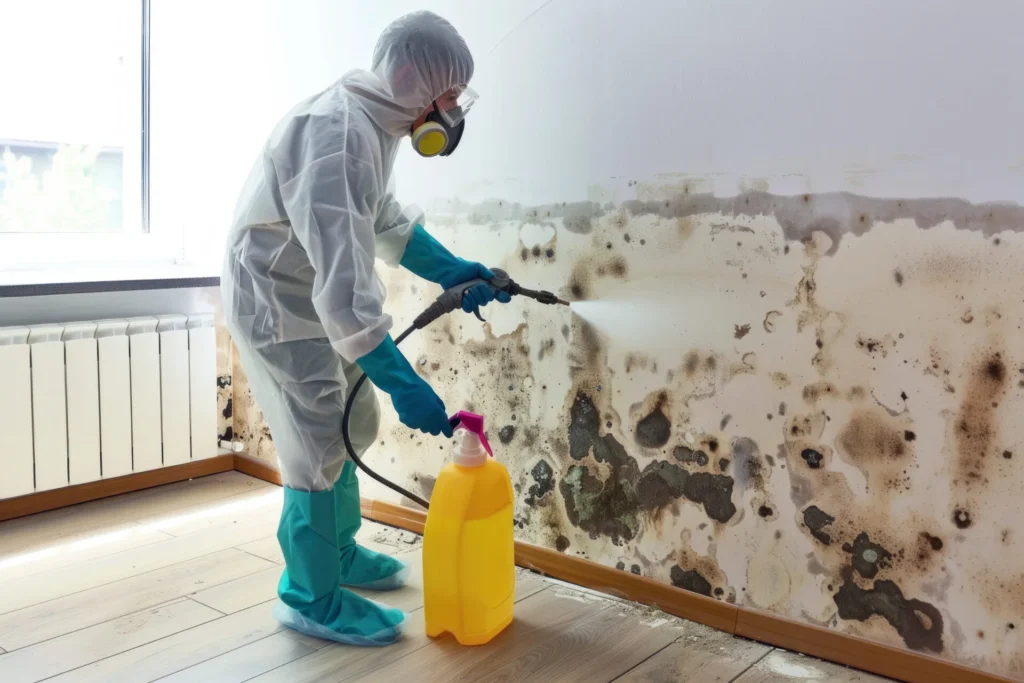
Attic mold in Rock Hill homes is almost always driven by one of three causes: a bathroom or kitchen exhaust fan venting into the attic rather than through the roof, inadequate ridge and soffit ventilation allowing hot moist air to stagnate, or a slow roof leak. We identify and address the root cause, remove all affected insulation, treat the roof sheathing and rafters, restore proper ventilation pathways, and replace insulation with fresh properly rated material.
Water Damage Restoration with Mold Prevention
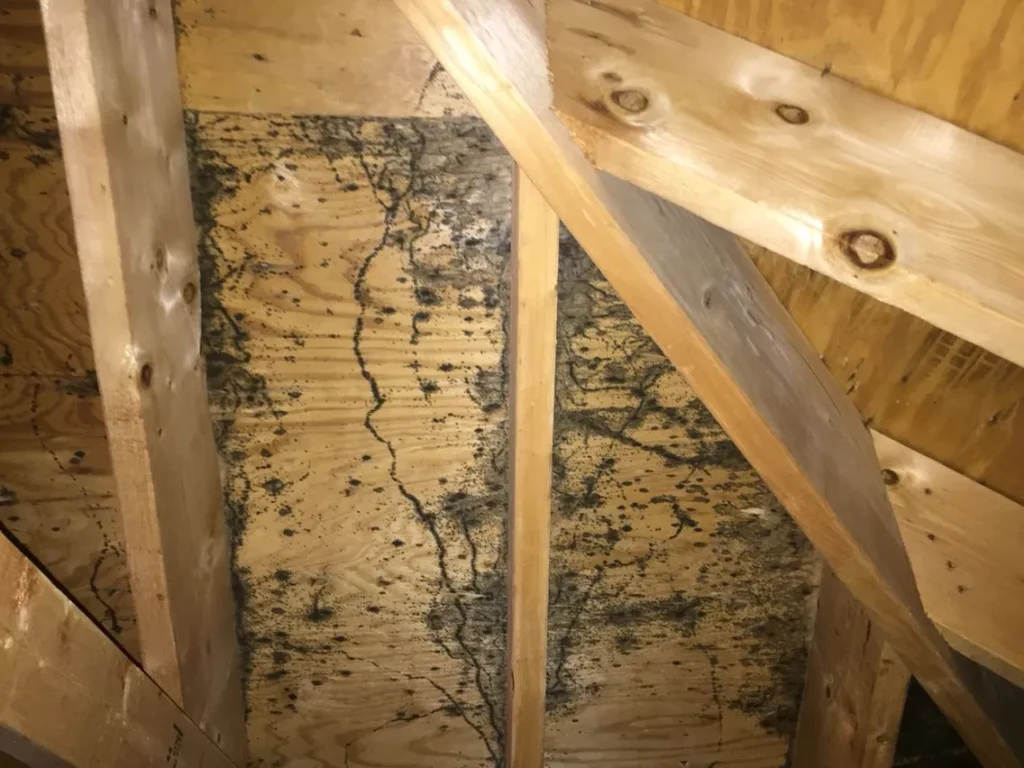
The relationship between water damage and mold is direct and predictable. Water that is not completely removed from wall cavities, subfloors, and framing members within 48 hours will generate mold. We provide complete water damage restoration services including emergency water extraction, thermal imaging to locate hidden moisture, structural drying with industrial air movers and dehumidifiers, and final moisture verification before any repairs begin. We treat water damage and mold prevention as a single integrated process rather than two separate jobs.
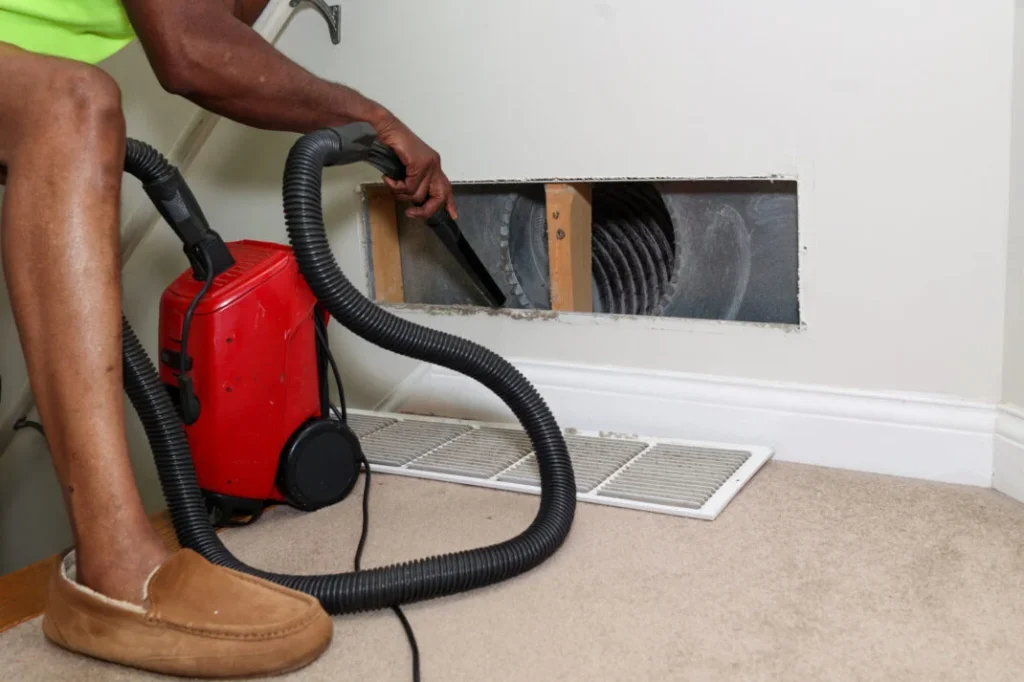
HVAC and Air Duct Mold Treatment
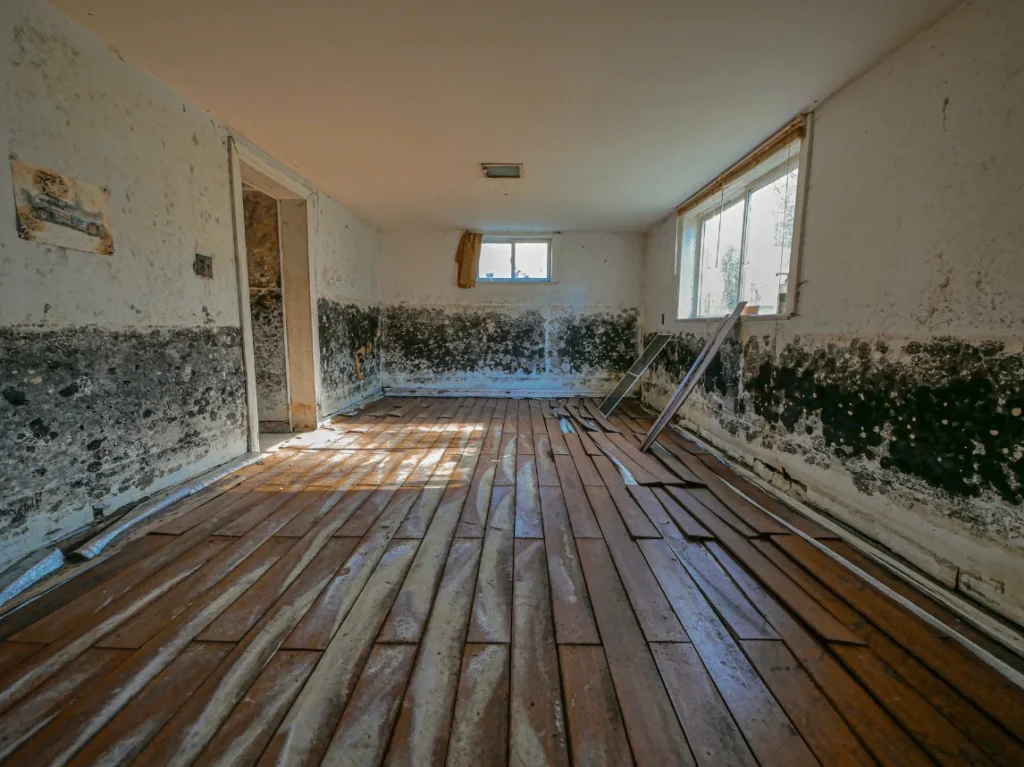
When mold establishes inside your ductwork, your central air system becomes a delivery mechanism distributing spores to every room in the house every time it cycles. This is especially concerning in Rock Hill’s long cooling season when HVAC units run for eight or more months continuously. We inspect, clean, and treat ductwork and air handling units using NADCA-approved methods and HEPA filtration equipment. We also address coil and drain pan mold, which is an extremely common source of indoor air quality complaints in South Carolina homes.
Mold Inspection and Testing in Rock Hill
Our certified mold inspectors conduct a comprehensive visual inspection of your entire property, using thermal imaging cameras and calibrated moisture meters to detect hidden moisture pockets that are invisible to the naked eye. Where warranted, we collect air samples and surface samples and submit them to an accredited independent laboratory. You receive a written report detailing every species identified, spore concentrations relative to outdoor baseline levels, and a clear remediation scope with honest, itemized pricing. There are no upsells and no pressure. If your situation does not require professional remediation, we will tell you that directly.
Black Mold Removal in Rock Hill, SC
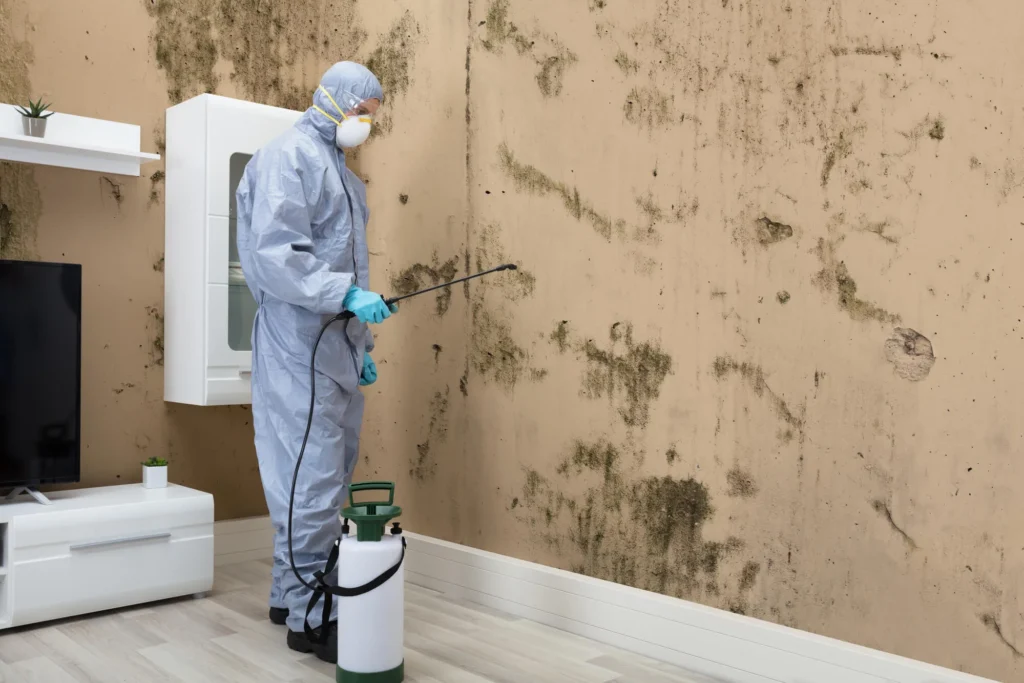
Stachybotrys chartarum, commonly referred to as black mold, is the most serious mold species found in South Carolina homes. It requires sustained wetness over an extended period to establish, which is why it is most commonly discovered in crawl spaces with failed vapor barriers, behind drywall adjacent to long-running plumbing leaks, and in attics beneath areas of chronic roof leakage. Black mold produces mycotoxins that can trigger respiratory inflammation, neurological symptoms, and immune suppression, particularly in children, the elderly, and individuals with existing health conditions. Our black mold removal process uses full negative air pressure containment, full PPE for every technician, complete physical removal of all contaminated porous materials, HEPA air scrubbing throughout the process, EPA-registered antimicrobial treatment of all remaining surfaces, and third-party post-remediation clearance testing.
Commercial Mold Remediation in Rock Hill, SC
Mold in a commercial property creates health liabilities for employees and customers, potential regulatory violations under OSHA indoor air quality guidelines, and business interruption risk. We serve property managers, business owners, building operators, healthcare facilities, schools, and multifamily housing providers across Rock Hill. Our commercial remediation team works around your schedule to minimize operational disruption and provides full written documentation of every step for insurance and compliance purposes.
Our Mold Remediation Process: What Happens From the First Call to Final Clearance?
Transparency matters when you are dealing with something as stressful as mold in your home. Here is exactly what to expect when you work with us:
Free On-Site Inspection
A certified technician arrives at your Rock Hill property, conducts a thorough visual inspection of all accessible areas, uses thermal imaging and moisture meters to identify hidden problem zones, and collects samples if needed.
Written Assessment and Itemized Estimate
You receive a detailed written report of findings with photographs, a specific remediation scope, an itemized cost estimate, and a realistic project timeline. No pressure, no vague pricing, no surprise charges.
Containment Setup
We seal off all affected areas with polyethylene sheeting and establish negative air pressure using commercial air scrubbers. This prevents mold spores from migrating to unaffected areas of the property during the work.
Continuous HEPA Air Filtration
Industrial HEPA air scrubbers run throughout the entire remediation process, capturing airborne spores and progressively improving indoor air quality in real time.
Physical Mold Removal
All contaminated porous materials including drywall, insulation, carpet, and wood that cannot be effectively cleaned are physically removed and double-bagged for proper disposal per South Carolina Department of Health and Environmental Control guidelines.
Antimicrobial Surface Treatment
Every affected surface receives an EPA-registered antimicrobial application that kills residual mold at the cellular level and creates a treated surface that inhibits future regrowth.
Moisture Source Correction
We address the underlying moisture problem, whether that is a plumbing repair, vapor barrier installation, ventilation improvement, or drainage correction. Without this step, mold returns regardless of how thorough the remediation is.
Post-Remediation Clearance Testing
An independent laboratory air sample confirms that mold spore concentrations in your home have returned to normal background levels. This gives you written documentation that the remediation is complete and successful.
Restoration
We repair or replace materials removed during remediation, returning your home to its pre-mold condition so you have a single point of contact from inspection through final restoration.
How Much Does Mold Remediation Cost in Rock Hill, SC?
The cost of professional mold remediation in Rock Hill depends on the affected area size, the mold species present, where in the property the mold is located, and how much structural material requires removal and replacement.
For small, isolated surface mold problems in bathrooms or under sinks affecting a few square feet of tile or drywall, costs typically range from $500 to $1,000. Mid-scale projects involving a crawl space, water-damaged wall cavities, or partial basement mold commonly fall between $1,500 and $5,000. Large-scale remediation involving multiple rooms, extensive black mold removal, complete crawl space treatment, or HVAC system remediation can range from $5,000 to $10,000 or more depending on the scope.
We provide free on-site inspections and itemized written estimates before any work begins. We work directly with homeowners insurance carriers, and mold remediation resulting from a covered water damage event is often partially or fully reimbursable through your homeowners policy.
South Carolina homeowners insurance policies vary considerably in what they cover for mold, and our team will help you document the damage, identify your coverage, and communicate with your adjuster so you are not navigating that process alone.

Why Do Rock Hill Homeowners Choose Us Over Other Mold Removal Companies Near Me?
There are several mold remediation companies serving Rock Hill and York County. Here is what consistently differentiates us from the field:
Post-Remediation Testing
We include third-party post-remediation verification testing on every job. Most competitors stop at their own visual inspection. We provide an independent laboratory clearance report you can keep for your records, share with your insurance company, or present to a future buyer of your home.
Transparent Pricing
Our pricing is genuinely itemized and transparent. We are aware that overquoting is a known problem in the restoration industry in South Carolina. You will receive a written breakdown of every line item before we begin, and you will not see a number on your final invoice that was not explained upfront.
Local Rock Hill Expertise
We are locally rooted in the Rock Hill area. We are not a national franchise dispatching crews from Charlotte who are unfamiliar with York County housing conditions. We know the crawl space profiles of homes near the Catawba River lowlands. We know what the clay soil around downtown Rock Hill does to foundation moisture levels. That local knowledge changes the quality of the work.
IICRC Mold Certification
Our technicians hold IICRC Applied Microbial Remediation Technician certification, which is the specialized credential specific to mold work. General water damage or fire restoration certification without this specific mold designation means a technician was not trained on the IICRC S520 mold standard that governs the industry.
Moisture Source Correction and Ventilation System Restoration
Following biological remediation of the attic space, every identified moisture source is corrected before any restoration work proceeds. Bathroom exhaust fans venting into the attic are properly re-routed to discharge through the roof or soffit to the exterior. Blocked soffit vents are cleared and baffles are installed to maintain the clear airflow channel between soffit intake and ridge exhaust. Damaged or inadequate ridge venting is repaired or augmented to restore design airflow capacity. Air sealing of ceiling penetrations is completed to reduce warm indoor air leakage into the attic. Any active roof penetrations contributing water intrusion are coordinated with roofing contractors for repair prior to restoration.
Insulation Replacement and Attic Restoration
With biological remediation complete, all moisture sources corrected, and the attic ventilation system restored to appropriate function, new insulation is installed in accordance with North Carolina energy code requirements for Charlotte's climate zone. The insulation type, depth, and installation method are selected to complement the corrected ventilation system rather than impair it. Proper baffles are installed in every rafter bay at the eaves to maintain the unobstructed airflow channel from soffit intake vents regardless of insulation depth.
Fully Insured Mold Company
We carry full general liability insurance, workers compensation coverage, and pollution liability coverage. The pollution liability policy specifically is essential for mold work because it protects you if spores are accidentally spread to an unaffected area during remediation. Not every company in Rock Hill carries this coverage. Always ask.
Mold in Rock Hill, SC: The Local Climate and Housing Reality
Rock Hill’s position along the Catawba River in York County creates a specific environmental context that shapes the mold risk profile for every property in the area. Average annual rainfall of around 48 inches, combined with summer humidity that regularly holds above 75 percent, means that any building envelope deficiency becomes a mold risk relatively quickly.
The historic downtown district of Rock Hill includes properties dating to the 1840s, many of which have been through multiple renovations without comprehensive moisture management upgrades. These properties often have original brick foundations with no waterproofing, minimal crawl space clearance, and wood framing that has accumulated decades of seasonal moisture cycling that slowly degrades the wood and creates an ideal mold substrate.
York County soil is predominantly Cecil sandy clay loam and Mecklenburg clay, both of which retain moisture for extended periods following rain events. For homes with crawl spaces, which represent a significant share of Rock Hill’s housing stock, this means ground moisture is pressing against the soil beneath the home almost continuously during the spring, summer, and early fall months. Without a proper continuous vapor barrier, that moisture evaporates directly into the crawl space air, raising humidity to levels that support active mold growth on floor joists and subfloor framing within a single season.
Newer developments around the India Hook Road corridor, near Ebenezer Road, and in master-planned communities toward Fort Mill are built to current code, but tight modern construction does not always mean dry construction. When builders enclose wood framing that was rained on before the roof and sheathing went up, mold growth can begin inside wall assemblies before a single resident moves in.

Mold Remediation Near Me: Areas We Serve Around Rock Hill, SC
Our certified mold remediation team serves Rock Hill and all surrounding communities throughout York County, Chester County, Lancaster County, and across the state line into Mecklenburg and Gaston Counties in North Carolina.
Rock Hill, SC (29730, 29731, 29732, 29733) — Fort Mill, SC — Tega Cay, SC — Indian Land, SC — Clover, SC — York, SC — Lake Wylie, SC — Chester, SC — Lancaster, SC — Blackstock, SC — Sharon, SC — Hickory Grove, SC — Waxhaw, NC — Pineville, NC — Ballantyne area of Charlotte, NC — Matthews, NC
If your location is not listed, call us. We serve a broad geographic area and will make accommodations to reach you.
Get Your Free Mold Inspection in Rock Hill, SC Today
Mold does not resolve on its own. Every week without intervention gives it more building material to consume, more area to spread into, and more time to affect the air everyone in your home or business is breathing.
The situation is fixable. With the right certified team and the right process, mold remediation in Rock Hill is a well-defined project with a clear, verifiable resolution at the end.
We offer completely free, no-obligation on-site inspections for all properties in Rock Hill and throughout York County. A certified technician will visit your property, assess the situation completely honestly, document every finding with photographs, and give you a written estimate with itemized pricing.
There is no charge for the inspection and no obligation to proceed. If your situation does not require professional remediation, we will tell you that, point you toward the right next step, and send you on your way.
We answer every call. We offer same-day and next-day inspection scheduling across Rock Hill, Fort Mill, Indian Land, Clover, Lake Wylie, and surrounding communities. Call us now or complete our online form to schedule your free mold inspection in Rock Hill, SC.