Residential Mold Remediation Charlotte, NC – Protecting Charlotte Families and Their Homes
Residential mold remediation in Charlotte, NC protects your home and family from harmful mold growth. Our certified experts perform detailed inspections to identify mold at the source.
We contain affected areas to prevent spores from spreading throughout your home.
Our team safely removes mold using proven, industry-standard methods. We improve indoor air quality and help prevent future mold problems. Restore a clean, safe, and healthy living environment with trusted professionals.
Why Residential Mold Remediation in Charlotte, NC Is a Problem Every Homeowner Needs to Take Seriously?
Charlotte is one of the fastest growing cities in the United States and its residential real estate market reflects that growth, with homes ranging from historic bungalows built in the early twentieth century in neighborhoods like Dilworth, Plaza Midwood, and NoDa to brand new construction subdivisions in Ballantyne, Huntersville, and Harrisburg. What every single one of these homes shares, regardless of age, price, or location, is exposure to the same humid subtropical climate that makes residential mold growth one of the most common and consistently underestimated problems facing Charlotte homeowners.
The North Carolina climate delivers average annual rainfall of approximately 43 inches in the Charlotte area, with high humidity persisting from late spring through early fall and moisture events occurring year round. These conditions mean that the structural components of Charlotte homes, particularly crawl spaces, basements, attics, and wall cavities in rooms with plumbing, are under constant moisture pressure that creates ideal mold growing conditions whenever a small leak, ventilation deficiency, or drainage problem goes unaddressed.
What makes residential mold particularly dangerous is the intimacy of the exposure. A family living in a mold affected home spends eight to twelve hours every day sleeping, eating, and breathing in an environment where mold spores, allergens, and in some cases mycotoxins are present in the indoor air.
Unlike a commercial building where an employee spends eight hours and then leaves, a Charlotte homeowner and their children are exposed around the clock. The cumulative health impact of that continuous exposure, particularly for young children whose respiratory and immune systems are still developing, is the reason the Centers for Disease Control and Prevention and the Environmental Protection Agency both prioritize residential mold as a serious public health concern.
Residential Mold Risks Specific to Charlotte, NC Home Types
One of the most important things that separates genuinely useful residential mold remediation guidance from generic information is understanding how mold risk varies across the specific types of homes that Charlotte families actually live in. Our team has worked in every residential property type across this market and understands exactly where mold hides in each one.
Ranch Style Homes With Crawl Spaces
Ranch style homes represent a significant portion of Charlotte's residential housing stock, particularly in established suburban neighborhoods built from the 1950s through the 1980s in areas like Eastland, Hickory Grove, University City, and South Charlotte communities predating the I 485 loop construction. These homes almost universally have crawl spaces that represent the single highest mold risk area in the residential property. Ground moisture vapor migrating upward through an un-encapsulated crawl space deposits itself on the coldest surfaces available, which are the wood floor joists, rim joists, and subfloor sheathing directly above. Over months and years this constant moisture loading creates widespread mold contamination in the structural floor system that affects indoor air quality throughout the entire home through natural air stack effect movement.
Two Story and Multi Story Homes
Charlotte's newer residential construction heavily favors two story and multi story homes throughout communities like Ballantyne, South Charlotte, and the Lake Norman area. These homes present unique residential mold scenarios involving second floor bathroom plumbing leaks that migrate into first floor ceiling assemblies, HVAC systems with multiple air handling units serving different floor zones that can develop independent mold problems, and complex roof lines with multiple valleys and penetrations that create multiple potential water intrusion points feeding attic mold growth.
Older Charlotte Homes Built Before 1980
Homes in Charlotte's established neighborhoods including Dilworth, Myers Park, Elizabeth, Fourth Ward, Wilmore, Enderly Park, Villa Heights, Belmont, and Optimist Park were largely built before modern moisture control standards existed. These homes frequently have unencapsulated dirt floor crawl spaces with inadequate ventilation, original plumbing that has experienced decades of slow leaks inside wall cavities, single pane windows that generate significant condensation during Charlotte's winter months, and older HVAC systems with ductwork that was never designed with modern indoor air quality standards in mind. Residential mold remediation in these older Charlotte homes requires particular attention to hidden wall cavity mold, subfloor mold from decades of crawl space moisture exposure, and attic mold from inadequate original roof ventilation design.
New Construction Homes in Charlotte Suburbs
Charlotte's rapid suburban expansion has produced enormous volumes of new construction in communities including Ballantyne, Steele Creek, Harrisburg, Marvin, Waxhaw, and Mooresville Road corridor communities. Mold in new construction is more common than most Charlotte buyers realize. Building materials including framing lumber, OSB sheathing, and drywall that were exposed to rain during construction and not properly dried before being enclosed inside wall assemblies can harbor active mold colonies from the day a family moves in. Inadequate grading around new construction that directs surface water toward the foundation, and spray foam insulation applied before structural moisture content was verified, are two additional sources of new construction mold that our residential remediation team identifies regularly in Charlotte's newest communities.
Condominiums and Townhomes
Charlotte's condominium and townhome market, particularly strong in Uptown, South End, NoDa, Plaza Midwood, and around the South Charlotte suburban commercial corridors, presents residential mold remediation challenges unique to attached housing. Mold originating in one unit from a plumbing leak or HVAC condensate line failure can migrate through shared wall assemblies, above ceiling plenum spaces, and common building mechanical systems to affect adjacent units. Condominium association governance, shared insurance coverage questions, and neighbor coordination requirements make residential mold remediation in Charlotte condos and townhomes more complex than single family home projects and require experience navigating those additional dimensions.
What Our Residential Mold Remediation Process Looks Like in Your Charlotte Home?
Every residential mold remediation project our team completes in Charlotte follows a structured process that begins with objective assessment and ends with verified independent clearance. Here is what that process looks like from your perspective as a Charlotte homeowner.
Your Initial Call and Free Assessment Scheduling
When you call us, you speak directly with a knowledgeable team member who asks the right questions to understand your situation and schedules your initial assessment promptly. We do not use call centers or answering services. The person who answers your call understands residential mold remediation in Charlotte and can answer your initial questions honestly before an inspector ever arrives at your home.
Thorough Home Assessment
Our certified inspector arrives at your Charlotte home and conducts a complete room by room assessment using moisture meters, thermal imaging cameras, and hygrometers to locate all areas of mold growth including hidden mold inside wall cavities, under flooring, in ceiling assemblies, and in crawl spaces and attics. We identify every moisture source contributing to the problem and document all findings with photographs. For a detailed explanation of everything our inspection process involves, visit our dedicated mold inspection page in Charlotte, NC.
Clear Written Scope and Honest Estimate
Before any work begins in your home, you receive a detailed written scope of work that explains exactly what areas are affected, exactly what remediation approach will be used in each area, what materials will be removed, how containment will be established to protect the rest of your home during the work, and the complete cost of the project with full line item transparency. We never begin work without your full understanding and written approval of the scope. We never recommend removal of materials that the inspection data does not justify removing, and we never upsell treatments that the evidence does not support.
Protecting Your Home and Family During Remediation
Before any mold is disturbed in your Charlotte home, our team establishes physical containment barriers that isolate the work area completely from the rest of your living space. We discuss occupancy recommendations with you based on the specific conditions of your home and the health profiles of your household members before work begins. For households with young children, pregnant women, elderly family members, or anyone with asthma or a compromised immune system, we provide specific guidance on whether temporary relocation during the active remediation phase is advisable for your specific situation.
The Remediation Work Itself
Our certified technicians execute the approved scope of work using commercial grade equipment, EPA registered antimicrobial products, and IICRC S520 compliant protocols throughout. All removed materials are bagged, sealed, and removed from your home in compliance with Mecklenburg County regulations. Your home is treated with the respect and care it deserves throughout the entire process. For a complete description of the technical execution of residential mold removal, visit our mold removal service page in Charlotte, NC.
Independent Clearance Testing
When remediation work is complete, we collect final air and surface samples and submit them to our independent accredited laboratory. You receive written clearance documentation when results confirm your home has returned to safe baseline mold spore levels. This is not a document we issue ourselves. It comes from a third party laboratory with no financial interest in the outcome, which is the only kind of clearance documentation that genuinely means something.
Areas of Charlotte Homes Where Residential Mold Remediation Is Most Commonly Needed
Rather than repeat content covered in detail on our other service pages, here is a focused summary of where residential mold problems most commonly occur in Charlotte homes and what makes each location unique.
Crawl Spaces
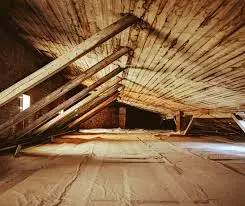
The most common location for serious residential mold in Charlotte by a significant margin. Ground moisture, inadequate ventilation, and exposed wood structural members combine to create advanced infestations that affect the entire home’s air quality through stack effect movement. Our crawl space mold remediation service in Charlotte, NC addresses this specific problem in full detail.
Basements
Charlotte basements face hydrostatic pressure, condensation, and flooding events that create persistent mold conditions. Our basement mold remediation service covers this area comprehensively.
Attics
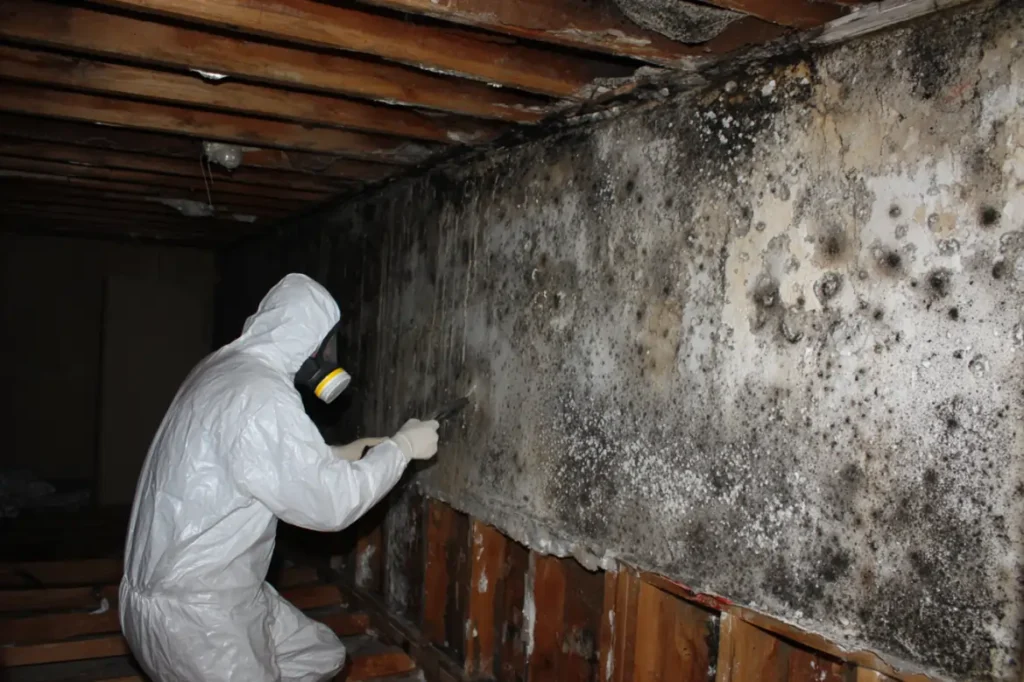
Poor ventilation, bathroom exhaust fans vented incorrectly into attic space, and roof leaks are the three primary drivers of attic mold in Charlotte residential properties. Attic mold is almost always discovered during a home inspection for a real estate transaction rather than by the homeowner, because most Charlotte homeowners never go into their attics.
HVAC Systems and Ductwork
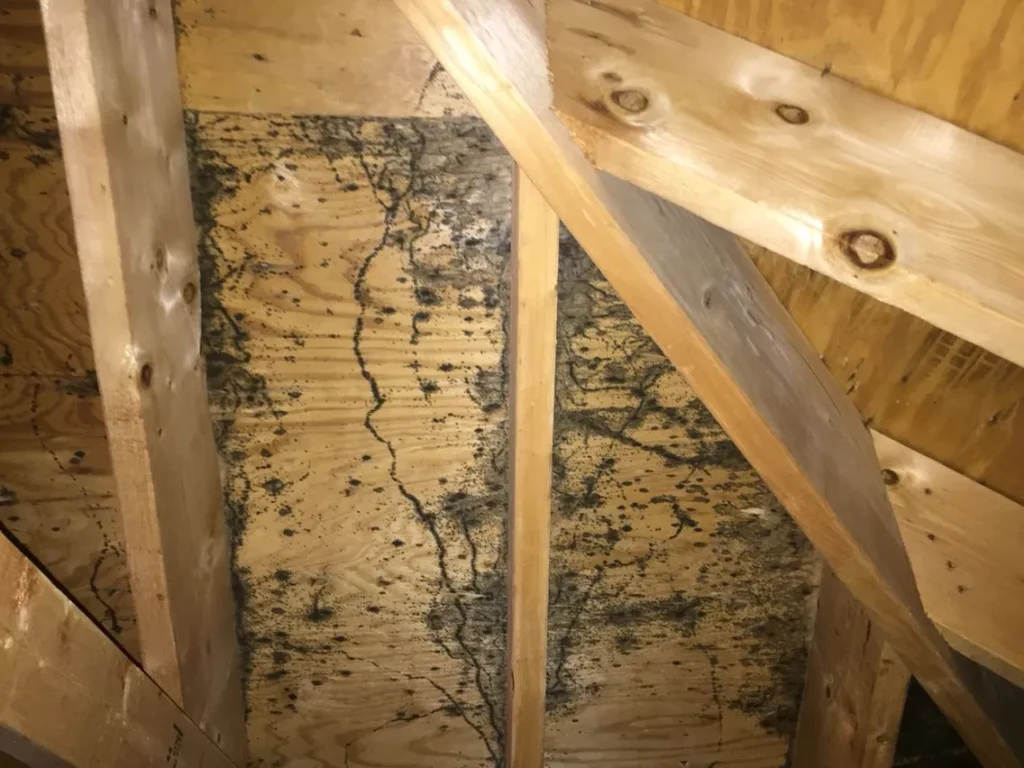
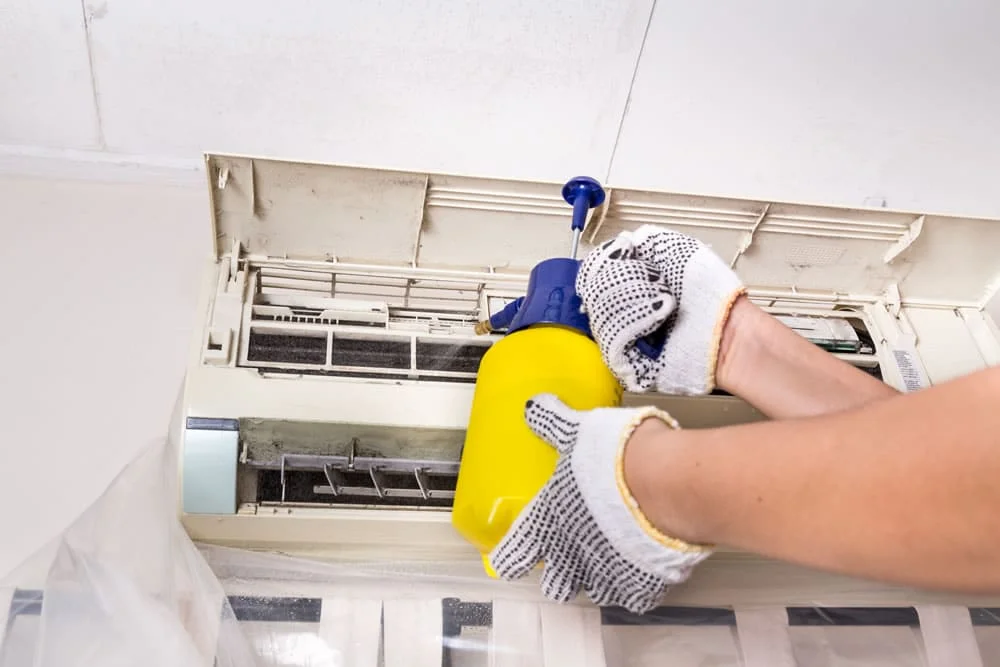
Residential HVAC systems in Charlotte are under enormous seasonal demand and develop mold on evaporator coils, in drain pans, and inside ductwork when condensate drainage is inadequate or when return air ducts pull from moisture rich crawl space or basement environments. Every room in the home is affected when the HVAC system distributes mold spores through the duct system.
Bathrooms
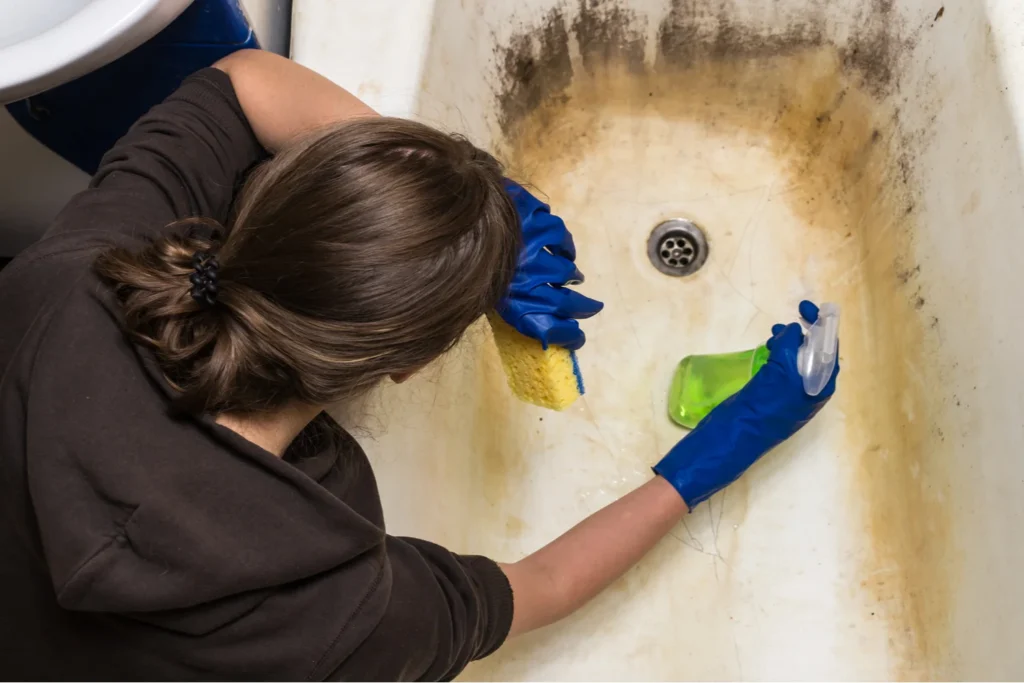
Chronic moisture, inadequate exhaust ventilation, and aging grout and caulk lines allow bathroom mold to develop behind tile walls, under flooring, and inside wall cavities around showers and tubs. Surface bathroom mold visible on grout and caulk is almost always a sign that deeper mold growth exists behind those surfaces.
Kitchens
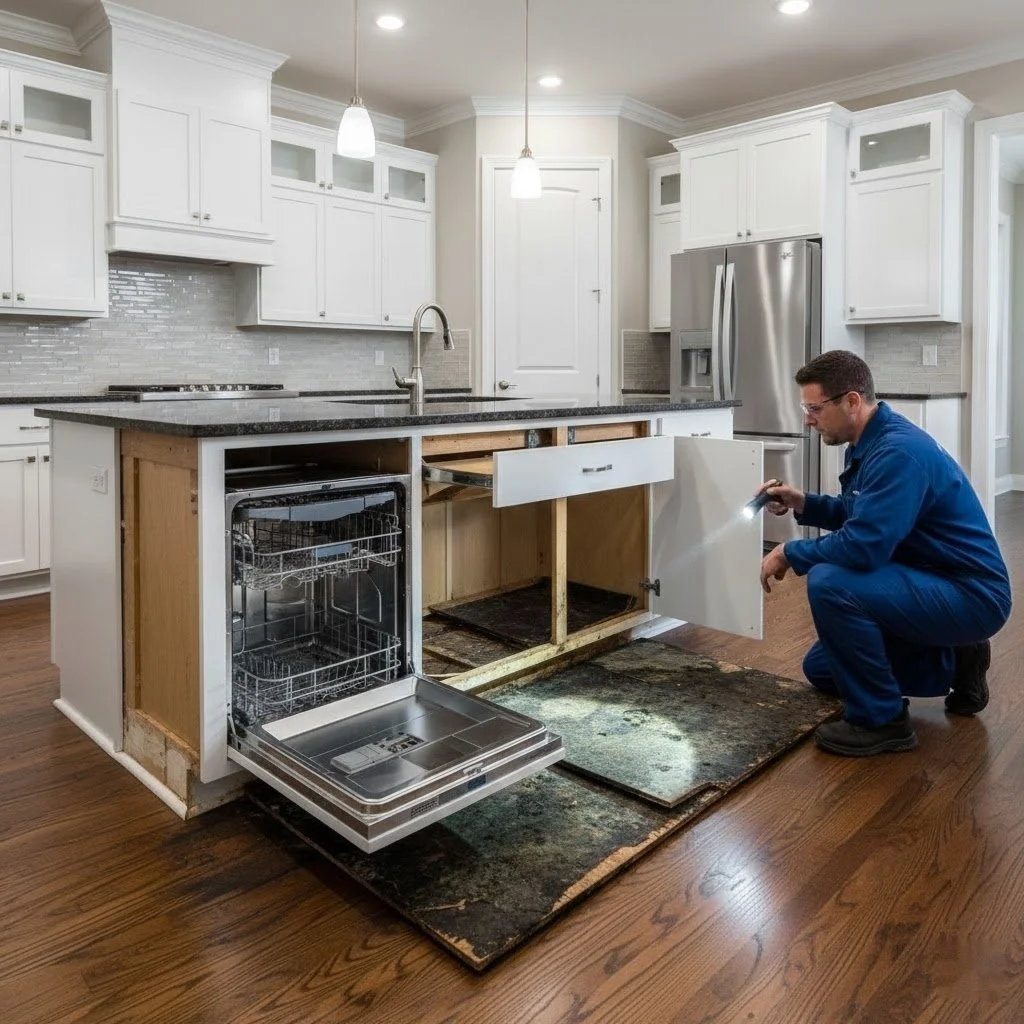
Dishwasher leaks, refrigerator ice maker line failures, under sink plumbing drips, and inadequate exhaust ventilation make kitchens a frequently overlooked source of residential mold in Charlotte homes. Mold behind kitchen cabinets and under kitchen flooring is extremely common following even minor plumbing events that were not immediately dried professionally.
Areas of Charlotte Homes Where Residential Mold Remediation Is Most Commonly Needed
The Charlotte residential real estate market is one of the most active in the Southeast and mold is a recurring issue in real estate transactions throughout the metro area. Understanding how residential mold remediation intersects with buying and selling a home in Charlotte is important for both parties.

For Charlotte Home Buyers
A standard home inspection in North Carolina does not include mold testing. Home inspectors are generalists who identify visible deficiencies in structural and mechanical systems but are not trained or equipped to locate hidden mold growth using moisture meters, thermal imaging, or air sampling. Purchasing a Charlotte home without a separate professional mold inspection means you may be inheriting a significant mold problem that was completely invisible during the standard inspection process.
If mold is discovered during a professional pre purchase mold inspection in Charlotte, NC, you have several options depending on the severity of the findings. You can negotiate with the seller to remediate the mold professionally before closing, negotiate a price reduction to cover remediation costs, request that funds be held in escrow until remediation is completed and independently cleared, or in serious cases, withdraw from the transaction entirely. Our team provides pre purchase mold inspection services and can deliver findings quickly enough to work within Charlotte real estate transaction timelines.
For Charlotte Home Sellers
Discovering mold during the due diligence period of a home sale in Charlotte creates a disclosure obligation under North Carolina real estate law. Sellers who are aware of mold in their property and fail to disclose it face significant legal exposure. Proactively remediating any known mold issues before listing your Charlotte home, and obtaining independent clearance documentation to share with buyers, is the most effective way to protect your transaction, your sale price, and your legal standing.
Our residential mold remediation team works regularly with Charlotte real estate agents, sellers, and buyers to provide the timely assessments, professional remediation, and verified clearance documentation that real estate transactions require. We understand Charlotte real estate timelines and work efficiently to meet them without cutting corners on the quality of the remediation work.

Residential Mold Remediation and Homeowners Insurance in Charlotte, NC
Homeowners insurance coverage for residential mold remediation in North Carolina is one of the most frequently misunderstood topics we encounter with Charlotte homeowners. Here is an honest summary of how coverage typically works.
Most standard homeowners insurance policies in North Carolina cover mold remediation when the mold resulted directly and recently from a covered water damage event such as a sudden pipe burst, appliance failure, roof damage from a covered storm, or similar sudden accidental water intrusion. The key words are sudden and accidental. Mold resulting from a slow undetected leak that built up over months, chronic high humidity, poor maintenance, or a flood in a property without flood insurance is typically excluded from standard homeowners policy coverage.
Coverage limits for mold under North Carolina homeowners policies vary significantly. Some policies include mold remediation within the standard dwelling coverage limits. Others impose specific mold sublimits that cap covered costs at amounts well below the total policy coverage. Reading your specific policy declarations and endorsements with your insurance agent before a mold event occurs is the most effective way to understand your actual coverage position.
When a covered mold event occurs in your Charlotte home, prompt professional response is critical for your claim. Insurance carriers in North Carolina expect policyholders to mitigate covered losses promptly. Delay in engaging professional remediation after a covered water damage event can give your carrier grounds to dispute the mold portion of the claim on the basis that the homeowner failed to take reasonable mitigation steps. Our team provides complete professional documentation from the first assessment through final clearance that supports your residential insurance claim at every stage.
Frequently Asked Questions About Residential Mold Remediation in Charlotte, NC
Can my family stay in our Charlotte home during residential mold remediation?
In many residential mold remediation situations, families can remain in unaffected areas of their Charlotte home during the work provided proper containment is established and those areas are genuinely separated from the remediation zone. However, for projects involving black mold removal, widespread contamination affecting multiple rooms or floors, or households with young children, pregnant women, or family members with respiratory conditions or compromised immune systems, temporary relocation during the active remediation phase is something we discuss honestly with every family based on their specific home and health situation. We never minimize a genuine health risk to make the project more convenient.
How do I know if the mold in my Charlotte home is dangerous?
All indoor mold should be taken seriously regardless of color or species because all mold types produce allergens and irritants that can affect sensitive individuals, and because the presence of any mold indicates a moisture problem that will continue to cause structural damage if left unresolved. That said, certain species including Stachybotrys chartarum, certain Aspergillus species, and Fusarium produce mycotoxins that create more serious health risks with prolonged exposure. Professional mold testing through an accredited laboratory is the only way to definitively identify mold species and concentration levels in your Charlotte home. You can learn more about our mold testing service in Charlotte, NC on the dedicated service page.
My Charlotte home had mold remediated before. Why has it come back?
Mold recurrence after previous remediation is one of the most frustrating situations Charlotte homeowners face and it almost always has one of three causes. The moisture source was not correctly identified and resolved during the original remediation. The original remediation was incomplete and left active mold in hidden areas that has now regrown and become visible. Or a new moisture event has occurred since the original remediation that has created conditions for fresh mold growth. Our team approaches every recurrence situation with a fresh comprehensive assessment to identify which of these scenarios applies and develop a remediation plan that genuinely resolves the underlying problem this time.
What is the difference between residential and commercial mold remediation in Charlotte, NC?
Residential mold remediation focuses on the specific mold risk profiles, structural configurations, and family health considerations of single family homes, townhomes, and condominiums. It requires sensitivity to the family’s living situation, occupancy recommendations during work, real estate transaction support when applicable, and homeowners insurance claim navigation. Our commercial mold remediation service in Charlotte, NC addresses the distinct regulatory compliance, business continuity, and commercial insurance dimensions that apply to business properties. While the core technical remediation protocols follow the same IICRC S520 standard, the surrounding context, communication approach, and documentation requirements differ significantly between residential and commercial projects.
How is a mold inspection different from a standard home inspection in Charlotte, NC?
A standard home inspection performed during a real estate transaction covers the general structural and mechanical condition of a property including roofing, electrical, plumbing, and HVAC systems. It does not include specialized mold detection equipment, air sampling, surface sampling, thermal imaging for moisture detection, or laboratory analysis. A certified mold inspection is a completely separate, specialized assessment focused exclusively on identifying mold growth and the moisture conditions that drive it. In Charlotte’s humid climate, having both a standard home inspection and a separate mold inspection before purchasing any property is strongly advisable.

Serving Charlotte Homeowners Across Every Neighborhood and Surrounding Community
Our residential mold remediation team serves homeowners throughout Charlotte and all surrounding Mecklenburg County communities. We work in homes across every Charlotte neighborhood from Uptown and South End to Plaza Midwood, Dilworth, Myers Park, Elizabeth, NoDa, University City, Eastland, Steele Creek, Ballantyne, and all communities in between. Our residential service area extends to Huntersville, Matthews, Concord, Kannapolis, Mint Hill, Gastonia, Mooresville, Indian Trail, Cornelius, Davidson, Monroe, and Rock Hill, SC.
Call Us for Residential Mold Remediation in Charlotte, NC Today
Your home is the most important investment you will ever make and the environment where your family spends the majority of their time. Mold growing anywhere inside that home is not a minor cosmetic issue and it is not something to monitor and address eventually. It is an active structural and health problem that grows worse every day it remains unaddressed.
Call us today to schedule your residential mold assessment in Charlotte, NC. Our certified specialists will inspect your home thoroughly, give you honest and objective findings, and provide a clear remediation plan with complete pricing transparency before any work begins. We serve all of Charlotte and Mecklenburg County with prompt scheduling and emergency response availability for urgent situations. Protect your home and protect your family. Call us today.