Mold Remediation in Matthews, NC – IICRC Certified Specialists
Mold Remediation Matthews , NC at home does not disappear on its own, and the conditions that allow it to grow in this part of southern Mecklenburg County are persistent, predictable, and rooted in the specific climate and soil characteristics of the area. If you have discovered visible mold growth, noticed a musty odor that cleaning does not resolve, or experienced health symptoms that improve when you leave your home, you are looking at a situation that requires professional assessment and certified remediation, not a surface treatment and a hope that it does not come back. Our IICRC certified mold remediation team serves Matthews and the surrounding communities throughout southern Mecklenburg County and northern Union County, including Mint Hill, Indian Trail, Stallings, Weddington, Ballantyne, and Pineville. We provide everything the remediation process actually requires: thorough inspection using professional moisture detection equipment, independent laboratory mold testing, strict containment before any material is disturbed, safe physical removal of all contaminated materials, EPA registered antimicrobial treatment, identification and correction of the moisture source driving the contamination, and third party post-remediation clearance testing that gives you laboratory-verified proof your property is genuinely safe. Call us today to schedule a free mold inspection in Matthews, NC and get straight answers from a certified local team.
Why Matthews, NC Has a Persistent and Well-Documented Mold Problem?
Matthews is a genuinely appealing community. The tree-lined streets, the established neighborhoods near downtown, the mix of older ranch homes and newer subdivision construction along the growing edges of the town toward Union County — all of it contributes to a real estate market that consistently attracts buyers looking for proximity to Charlotte without the intensity of urban living. But the same geography and climate that make Matthews desirable also create the conditions under which mold thrives in residential properties throughout the area.
Matthews, NC sits on hard clay soils that do not absorb water quickly. With nearly 45 inches of rainfall annually, water has nowhere to go but toward the home’s crawl space. This means water often gets trapped beneath the home, creating conditions for mold growth, wood rot, and pest infestations. That is not a worst-case scenario description. It is the baseline reality for the majority of crawl space configurations across Matthews, particularly in homes built before modern building science practices became standard in residential construction.
Average summer humidity levels in Matthews often exceed 70 percent, with temperatures regularly reaching the upper 80s and 90s. Combined with the area’s clay soil composition, this creates unique challenges for homeowners including mold growth, wood rot, and structural damage. What makes Matthews specifically different from adjacent communities is the combination of that climate load with a housing stock that spans from original construction dating to the mid-twentieth century all the way through aggressively built suburban development from the 1990s and 2000s, each era with its own distinct moisture management vulnerabilities.
Many homes built before the 1990s in Matthews still have vented crawl spaces, a now-outdated design that invites humidity, mold growth, and higher energy bills. Older Matthews neighborhoods that developed as the town grew outward from its historic core feature homes where original foundation venting was considered adequate under the building codes of the time but that pull warm, moisture-saturated outdoor air directly beneath the floor system during every summer month. The wood framing in these crawl spaces absorbs moisture continuously throughout the warm season, and mold colonizes that framing silently for months or years before any symptom reaches the living area above.
Newer construction in Matthews presents different but equally real vulnerabilities. Subdivision development built rapidly during periods of high buyer demand sometimes involved compressed construction schedules where framing moisture was not adequately managed before structures were closed in. Homes in communities east of NC-51 and throughout the corridors expanding toward Indian Trail and Weddington that were built during high-volume construction periods carry an elevated baseline risk for early-stage mold inside wall assemblies that owners typically do not discover until a subsequent inspection or renovation reveals it.
What Competing Mold Remediation Providers in Matthews Are Getting Wrong?
The Matthews mold remediation market currently has a mix of national franchise operations, regional providers, and smaller local companies competing for the same homeowners. After reviewing what these providers are actually offering, three consistent gaps emerge that directly affect whether a Matthews homeowner gets a lasting result or a temporary one.
The first and most significant gap is the absence of independent post-remediation clearance testing as a standard, non-negotiable project component. Most providers operating in this market complete the physical remediation work and issue clearance based on their own visual assessment of the work they just performed. This creates an obvious conflict of interest — the company assessing whether the remediation succeeded is the same company that completed it and has a financial interest in the answer being yes. The only objective verification available is independent laboratory clearance testing, meaning air and surface samples collected after work is complete and analyzed by an accredited laboratory with no relationship to the remediation company. The results either confirm that mold spore concentrations have returned to normal outdoor baseline levels or they do not. We make this step a standard, required component of every project we complete. It is not an optional add-on. It is the only way to know with certainty that the remediation worked.
The second gap is the failure to address moisture at the source. Every provider in the Matthews market describes a process for removing mold. Very few describe a process for identifying and eliminating the specific moisture condition that allowed the mold to establish. Mold is a biological response to moisture availability. Removing the mold without removing the moisture source is exactly equivalent to treating a symptom while leaving the disease that caused it untouched. The mold will return, and it will return in the same location within months because the conditions that enabled it have not changed. Every project we complete includes moisture source identification and resolution as a required, integral step not a separate service the homeowner can optionally purchase.
The third gap is genuine local specificity. National franchise brands serving Matthews apply standardized protocols developed for generalized market conditions. The specific moisture dynamics of Matthews's clay soil in proximity to residential drainage systems, the particular vulnerabilities of the housing types common in neighborhoods like Fullerton Place, Lawton Ridge, Sardis Woods, and the communities adjacent to McMullen Creek and Four Mile Creek, the way that Matthews's rainfall patterns interact with specific foundation configurations in different parts of the town — none of this granular knowledge is embedded in a standardized national franchise protocol. It is embedded in the experience of a team that works in this market every day and has inspected and remediated hundreds of properties throughout southern Mecklenburg County.
Where We Find Mold Most Consistently in Matthews Properties?
Crawl Spaces in Pre-2000 Construction
This is the most common location for serious, advanced-stage mold contamination in Matthews residential properties, and it is the location most likely to have been producing exposure for the household for a long period before anyone noticed. The stack effect in a residential structure continuously pulls air from the lowest point of the building upward through the floor system and into the living area. When that lowest point is a crawl space containing active mold colonies on wood framing, subfloor sheathing, or degraded insulation batts that have absorbed ground moisture and become a growth medium, the contaminated air from below is continuously distributed into the rooms where family members spend most of their time.
The consequence is that residents of Matthews homes with significant crawl space mold frequently report symptoms that appear to affect the entire house rather than localizing to a specific room. Ground-floor allergy symptoms that improve on upper levels, musty odors most noticeable in the morning before the day’s air movement through the house, and respiratory irritation that consistently improves when the family is away from the property for several days, all of these patterns point toward a crawl space contamination source rather than localized above-grade mold.
Attic Spaces With Compromised or Original Ventilation
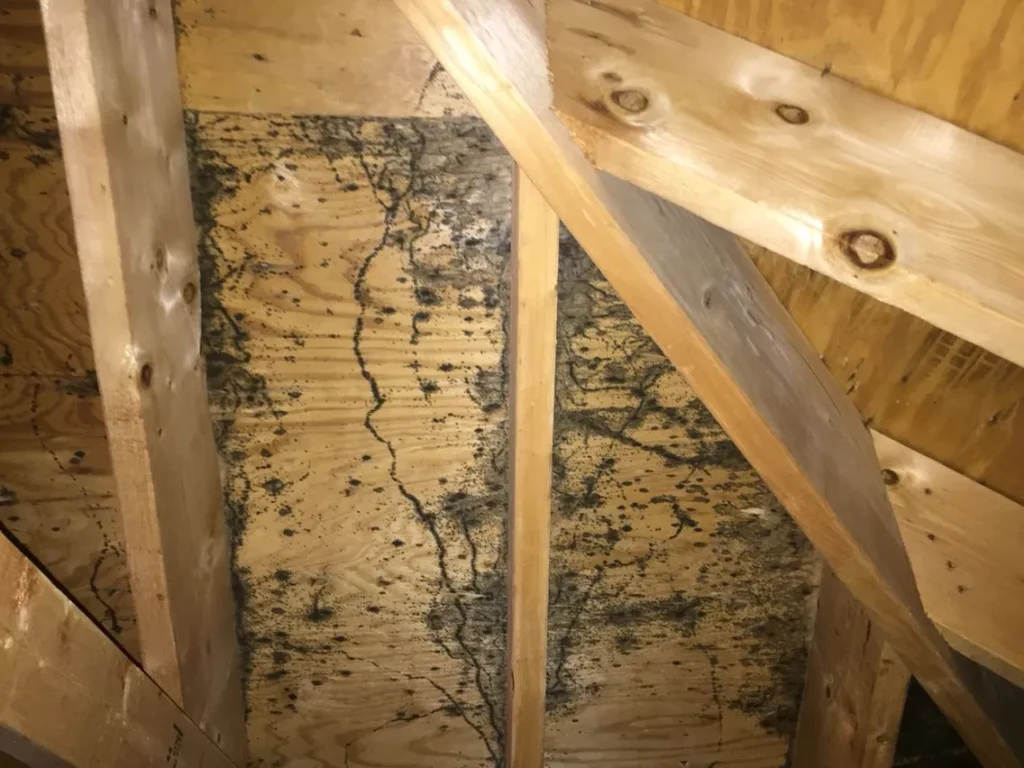
Outdated building codes used to require foundation vents and specific attic ventilation configurations, but today we know those approaches allow Matthews’ nearly 45 inches of rain and high humidity inside. In Matthews’s established neighborhoods, many homes still have original attic ventilation systems that were marginal even when installed and that have become further compromised by compressed insulation blocking soffit intake airflow, by sealed or painted-over ridge vents, and by the addition of bathroom exhaust fans that terminate into the attic space rather than through the roof to the exterior. When a bathroom exhaust fan discharges into the attic, it deposits a concentrated moisture load directly into what should be a dry, ventilated space. The result is mold colonization on roof sheathing and rafter surfaces that most Matthews homeowners never discover until a real estate inspection, a roofing replacement project, or a growing stain on the ceiling below finally makes the contamination visible.
Wall Cavities and Floor Systems After Water Events
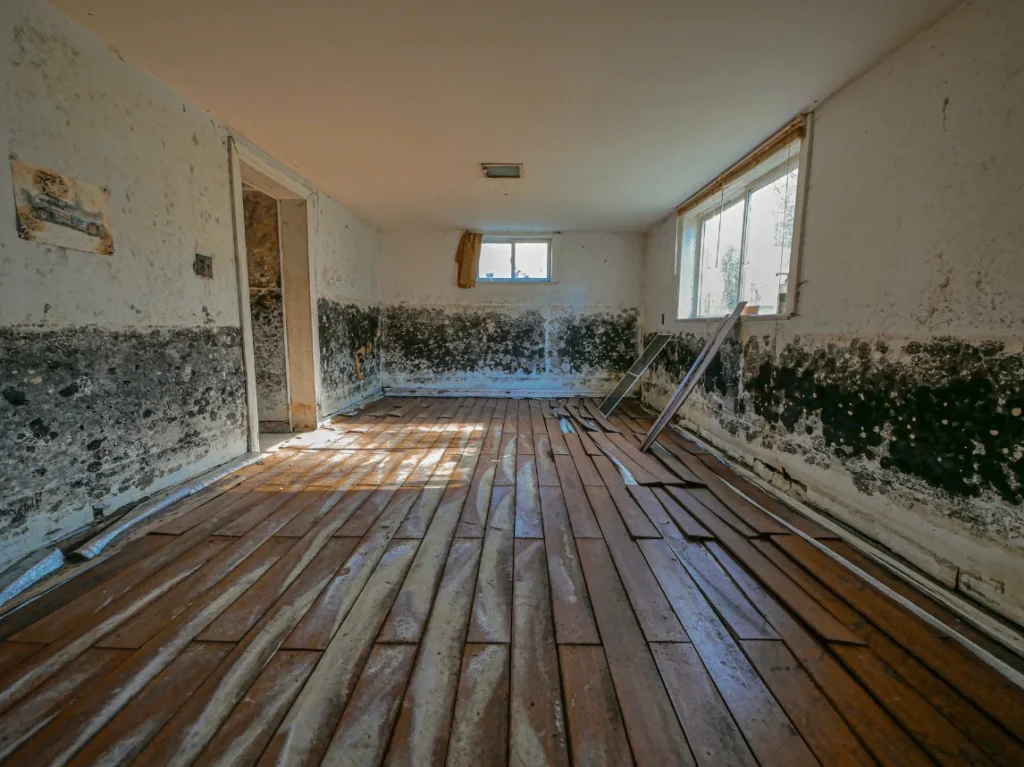
Matthews sits within a rainfall pattern that produces periodic high-intensity storm events, and the town’s clay soil creates drainage concentration at natural low points throughout established neighborhoods. When water enters a home through a roof flashing failure during a storm, a foundation crack, a slow-leaking supply line inside a wall cavity, or an appliance overflow that is not professionally dried within 24 to 48 hours, mold can establish inside wall assemblies and beneath floor systems before any surface evidence appears. The homeowners most likely to contact us after a prior remediation that did not hold are those who managed water events themselves with residential equipment, confirmed that visible surfaces appeared dry, and then found the mold returning in the same location within three to six months, because the interior of the wall assembly was never dried to a safe moisture content level.
HVAC Systems and Duct Runs
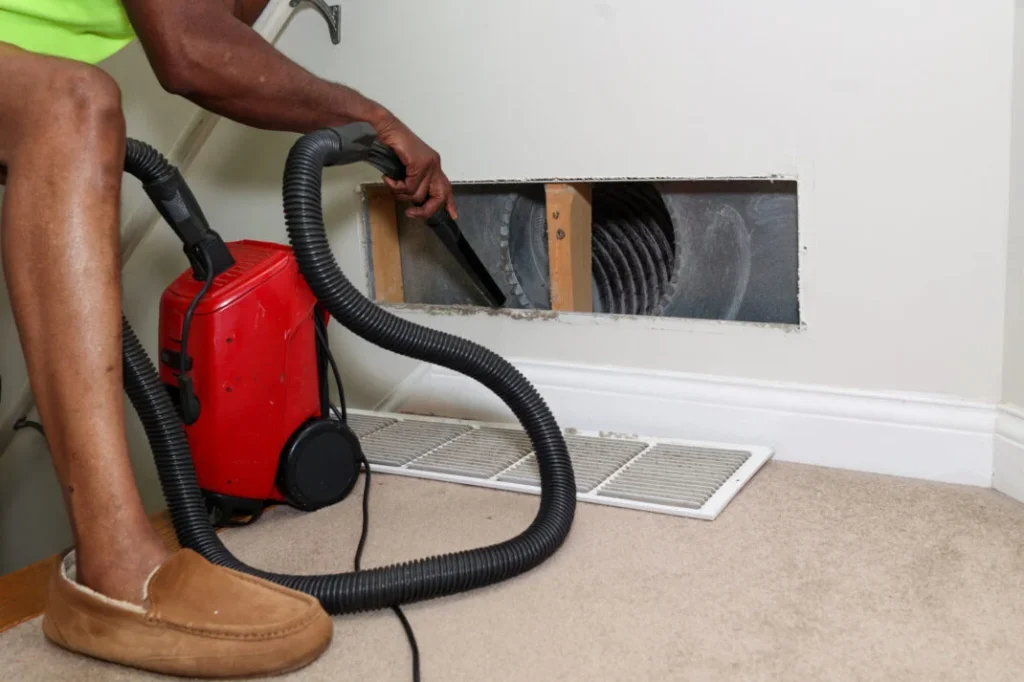
Matthews homes with aging HVAC systems or systems that have been improperly sized relative to the home’s current air-sealing characteristics face elevated risk of mold inside the air distribution system. Oversized systems that short-cycle produce excess condensation on evaporator coils. When condensate drain lines become partially blocked by biological growth or debris, standing water in the drain pan creates sustained moisture at a point in the system that is always warm and always accessible to airborne spores. Once mold colonizes the air handler or the duct liner adjacent to it, every time the system runs it distributes contaminated air throughout every connected room in the house. The diagnostic signal is a musty odor that is present specifically when the HVAC system cycles on and that fades when the system is off.
Bathrooms and Below-Sink Areas in Older Homes
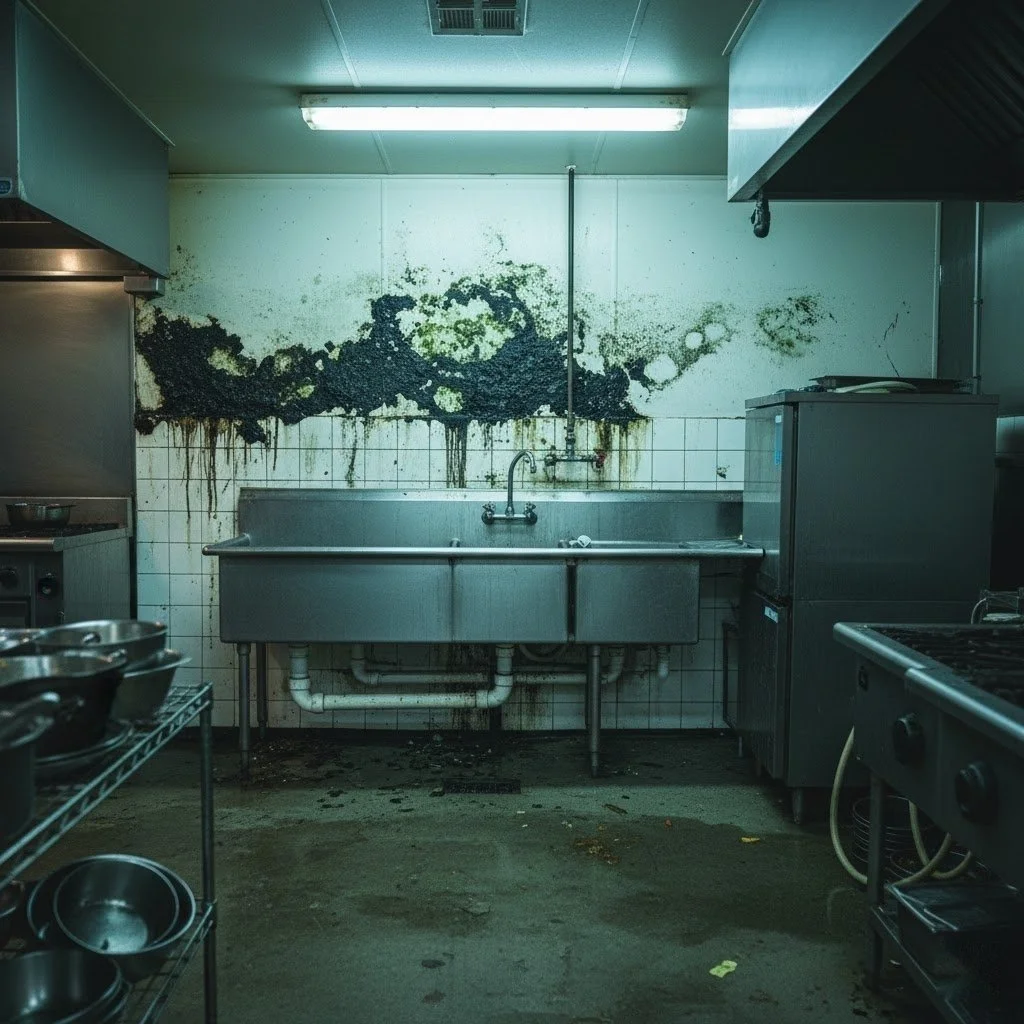
Tile grout failures, caulk deterioration around tub surrounds and shower bases, and slow supply line or drain fitting leaks inside vanity cabinetry are endemic to the Matthews housing stock from the 1970s through the early 1990s. These conditions allow sustained water penetration into wall cavities adjacent to plumbing where mold grows completely out of sight until it produces visible surface discoloration, deteriorating baseboard material, or a persistent bathroom odor that exhaust ventilation cannot resolve.
Our Complete Mold Remediation Process for Matthews Properties
We follow a rigorous, documented remediation protocol aligned with EPA guidelines, IICRC standards, and American Conference of Governmental Industrial Hygienists recommendations. Every project follows this sequence without abbreviation.
Professional Inspection With Advanced Detection Equipment
Our certified inspectors conduct a comprehensive assessment of the entire property using moisture meters to map moisture content in building materials and identify elevated readings in locations that show no visible surface symptoms, thermal imaging cameras to reveal hidden wet areas inside walls and ceilings through the temperature differentials produced by moisture evaporation, borescope cameras for inspection inside wall cavities and crawl space structural members without destructive access, and calibrated hygrometers to document ambient relative humidity throughout every area of the structure. We identify both the visible mold and the moisture source driving it before any remediation plan is written or any estimate is issued.
Independent Laboratory Mold Testing
Where species identification and quantitative spore concentration data are needed, our specialists collect air samples, surface swab samples, and tape lift samples from affected areas and submit them to an independent, accredited laboratory. The results identify precisely which species are present, at what concentrations relative to outdoor baseline, and how widely spores have distributed through the indoor air. This data guides the specific treatment approach and establishes the baseline that post-remediation clearance testing must demonstrate improvement upon to verify the project's success.
Strict Containment Before Disturbing Any Contaminated Material
Before any mold-infested material is touched, we seal the affected area completely using polyethylene sheeting adhered and sealed to all adjacent surfaces, and establish negative air pressure using HEPA-filtered negative air machines that exhaust to the building exterior. Disturbing mold growth without this containment sends spores airborne throughout the building and actively spreads contamination to previously clean areas, increasing both the health exposure of the occupants and the eventual remediation scope and cost. We do not skip or abbreviate this step.
Continuous HEPA Air Filtration Throughout the Project
Commercial grade air scrubbers with HEPA filtration capable of capturing particles at 0.3 microns and larger operate continuously from the start of physical work through the collection of final clearance samples. These machines maintain controlled air quality within the containment zone throughout the entire project duration.
Physical Mold Removal and Compliant Material Disposal
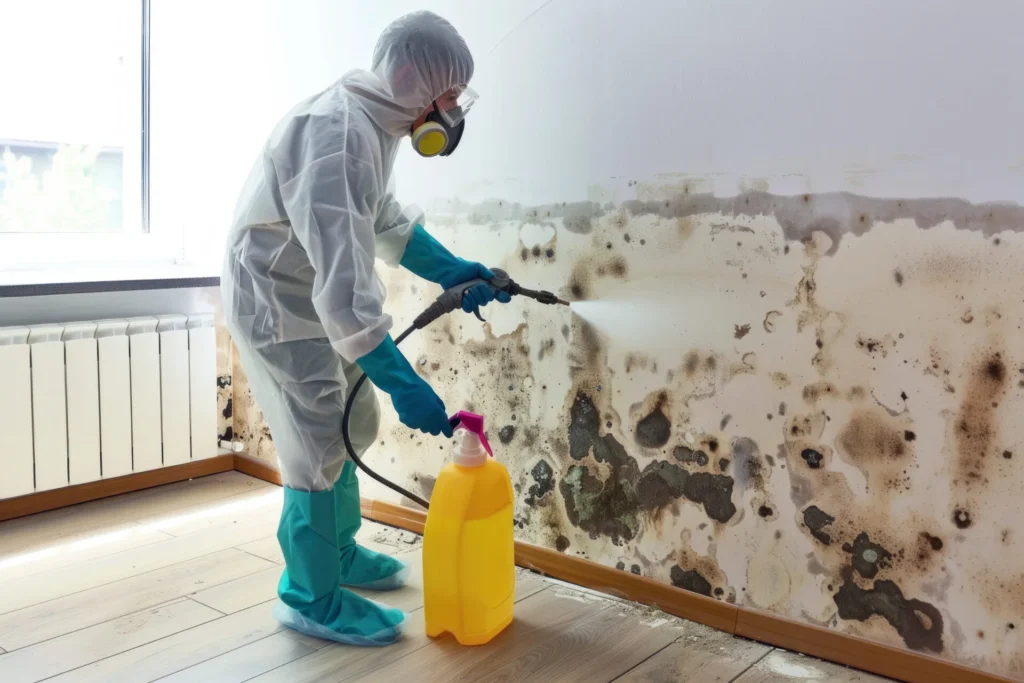
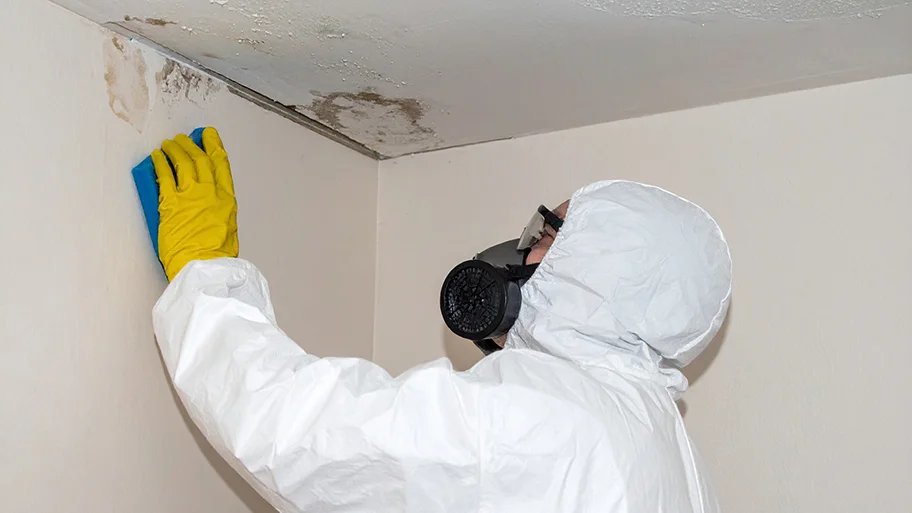
All mold-infested porous materials including drywall sections, insulation, wood framing where contamination has penetrated the surface layer, carpeting, and ceiling tile are carefully removed, double-bagged in heavy polyethylene, and disposed of in compliance with Mecklenburg County regulations. Non-porous surfaces including concrete, metal framing, and glass receive direct EPA registered antifungal treatment at this stage. Nothing that cannot be cleaned to a verifiable standard is left in place and treated over.
EPA Registered Antimicrobial Treatment
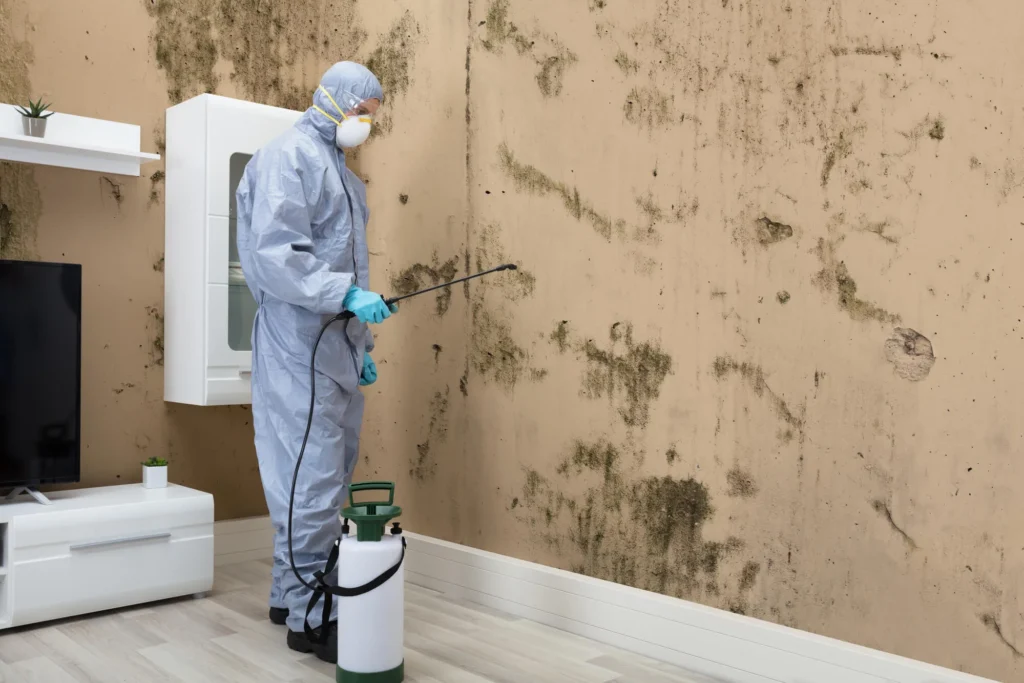
Following physical removal, every remediated surface receives EPA registered antifungal and antimicrobial solution applied by direct application or by fogging for enclosed areas including crawl spaces and duct systems. This treatment eliminates mold at the root structure level and provides a protective residual that inhibits future colonization at the treated surfaces.
Moisture Source Identification and Permanent Correction
This is the step that determines whether the remediation produces lasting results or whether the problem returns within months. We identify the specific moisture condition driving the contamination and resolve it as an integral part of the remediation project. Whether that is a plumbing supply line leak, an HVAC condensate management failure, an inadequate or failed crawl space vapor barrier, foundation wall seepage, a roof flashing failure, or chronic humidity from insufficient attic ventilation, we address it. We then use industrial dehumidifiers to reduce the relative humidity of the affected areas to the EPA-recommended range of 30 to 50 percent and verify it holds at that level before closing the project.
Third Party Post-Remediation Clearance Testing
When all physical work and moisture correction is complete, we collect final air and surface samples from the affected areas and from the adjacent living spaces and submit them to the independent laboratory. We issue clearance documentation only after laboratory results confirm that mold spore concentrations have returned to normal outdoor baseline levels and that no elevated concentrations of the identified target species remain. This third party verified result is the only objective evidence that the remediation achieved what it was designed to achieve. It is included in every project and it is the standard by which the work is measured.
Mold Remediation Services Throughout Matthews and Southern Mecklenburg County
Residential Mold Remediation
From original ranch homes in Matthews’s established historic core to newer construction in communities like Weddington Trace, Sedgewood, and the subdivisions extending toward the Union County line, every residential project receives the same complete inspection and remediation protocol. Property age and value do not determine the standard of the work.
Crawl Space Mold Remediation and Encapsulation
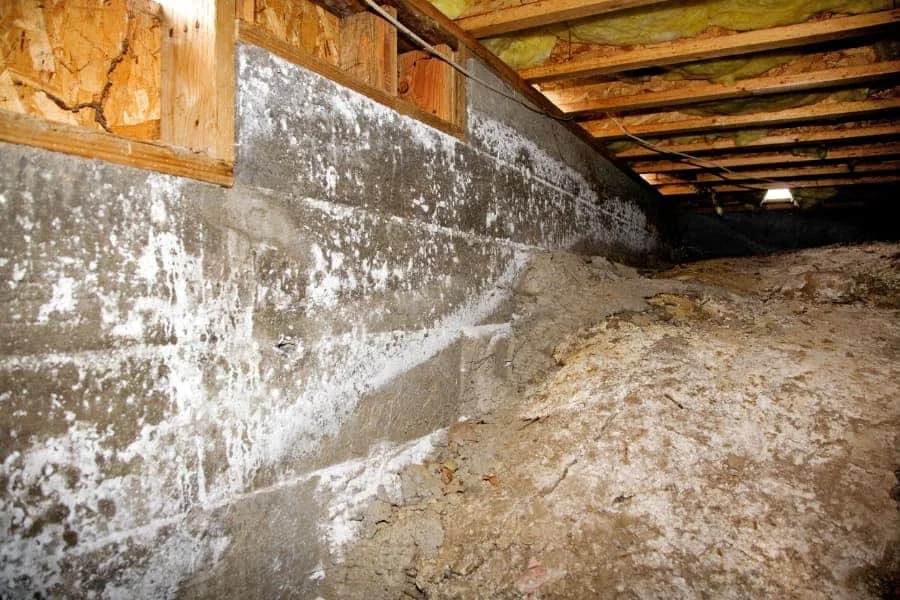
Given the frequency and severity with which crawl space mold affects Matthews properties, we treat this as a specialized service category. Full physical mold removal from all contaminated framing, subfloor, and foundation surfaces is followed by professional crawl space encapsulation, the installation of a heavy-duty reinforced polyethylene vapor barrier across the entire crawl space floor and up the foundation walls, sealed at all seams and penetrations — creating a closed conditioned environment that denies future mold the moisture conditions it requires to establish. For properties with significant ongoing ground moisture or drainage challenges, we integrate commercial grade crawl space dehumidifiers as part of a long-term moisture management solution.
Black Mold Removal
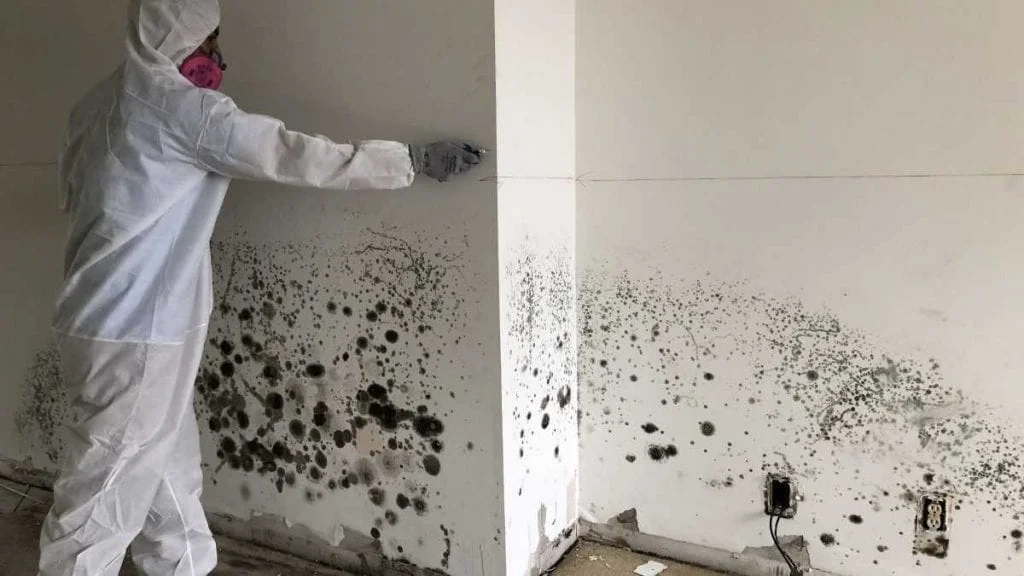
Stachybotrys chartarum remediation requires a heightened protocol applied without exception: full personal protective equipment for all technicians throughout the project, reinforced containment, careful material handling and double-bagging at the removal point, chain-of-custody documentation, and independent laboratory clearance testing before the project is closed. There is no abbreviated version of black mold remediation that produces reliable safe outcomes for the occupants.
Attic Mold Remediation
Complete physical removal of contaminated roof decking, rafter surfaces, and insulation, application of EPA registered antimicrobial treatment to all remediated surfaces, and a comprehensive evaluation and correction of the ventilation system deficiencies that allowed the mold to develop. Attic mold remediation without ventilation correction will produce the same result within one or two heating and cooling seasons.
HVAC and Ductwork Mold Remediation
Full system inspection covering the air handler, evaporator coil, condensate drain line and pan, and all accessible duct runs. Physical removal of contamination from all accessible surfaces, EPA registered antimicrobial fogging treatment throughout the system, repair of mechanical moisture management failures within the system, and post-remediation clearance testing to verify the system is genuinely clean before it returns to operation.
Commercial Mold Remediation
Office buildings, retail spaces, medical facilities, restaurants, schools, childcare facilities, and commercial properties throughout the Matthews commercial corridors along Matthews Township Parkway, Monroe Road, and the Sardis Road corridor. Commercial projects are managed to minimize operational disruption while meeting the full IICRC-aligned protocol and verified clearance standard that governs every residential project.
Emergency Mold Removal
Mold does not develop according to business hours. We provide emergency response for urgent situations throughout Matthews and southern Mecklenburg County with rapid deployment to assess and contain contamination before it spreads further.
Pre-Purchase Mold Inspections
Matthews has consistent real estate transaction volume across both its established and growing neighborhoods. A professional pre-purchase mold inspection provides buyers with objective information about a property’s actual condition that a general home inspection does not deliver at the level of detail that mold assessment requires. We provide written inspection reports and laboratory results suitable for real estate due diligence, negotiation, and disclosure documentation.
Mold Species We Commonly Identify in Matthews Homes
Cladosporium
is the most frequently detected species in Matthews properties across both crawl space and HVAC system inspections. It colonizes wood surfaces exposed to moderate sustained humidity, accumulated dust inside duct runs, and window frame areas where condensation is intermittent. Chronic elevated exposure contributes to persistent allergic rhinitis, sinusitis, and asthma exacerbation and is frequently found in homes where the occupants report feeling consistently worse indoors than outdoors without identifying a specific visible mold source.
Aspergillus
appears commonly in crawl space insulation that has absorbed ground moisture, in HVAC drain pan areas where standing water has been present, and in stored organic materials in below-grade or attic storage spaces. Certain Aspergillus species produce aflatoxins classified by the World Health Organization as human carcinogens. Elevated Aspergillus concentrations represent a health concern that extends well beyond typical seasonal allergy presentation.
Penicillium
grows aggressively on insulated duct liner material, drywall paper facing, and wood building materials that have experienced sustained moisture. It is a recognized trigger for hypersensitivity pneumonitis in susceptible individuals and is found consistently in Matthews homes where water intrusion events affected insulated wall or ceiling assemblies without subsequent professional drying.
Stachybotrys chartarum
requires sustained saturation of cellulose-containing materials to establish. In Matthews properties, it appears most frequently in crawl spaces with long-term ground moisture intrusion into wood framing, in wall cavities adjacent to chronic plumbing leaks, and in attic sheathing beneath areas of persistent roof leak. Its mycotoxins are associated with severe respiratory distress, chronic sinus infections, neurological symptoms, and immune system suppression with repeated exposure.
Chaetomium
is a frequently overlooked species that colonizes wet drywall paper aggressively and produces a distinctive musty odor. It is found consistently in Matthews homes where water intrusion events were managed without professional drying and material assessment. Its presence alongside Stachybotrys in sustained moisture scenarios is a common pattern in the southern Mecklenburg County market.
What Mold Remediation Costs in Matthews, NC?
The honest answer is that cost is determined by the scope of your specific property’s actual situation, and no provider who quotes a number before completing a thorough inspection is doing anything other than estimating without adequate information. What drives cost in Matthews specifically is worth understanding.
The size of the contaminated area is the primary variable. A contained mold problem limited to a single bathroom or a small section of drywall under a leaking sink costs substantially less to remediate than a widespread crawl space infestation involving wood framing across a full foundation footprint with degraded insulation that has absorbed years of ground moisture.
Location within the property affects labor complexity and the need for specialized equipment. Crawl space and attic remediations require working in physically demanding confined spaces with equipment configurations that differ from above-grade remediation.
The species present determines the required protocol. Black mold remediation carries additional requirements across every phase of the project that add to the overall cost. Knowing what species are present before pricing the project is part of why pre-remediation laboratory testing is important.


Whether structural material removal is required, and the extent of it, determines whether a general contractor needs to be involved for post-remediation restoration work. In Matthews’s real estate market, where property values support investment in complete restoration, most homeowners choose to address the full scope rather than accept a partially restored space.
Whether moisture source correction involves simple plumbing repairs or more substantial work such as full crawl space encapsulation, foundation waterproofing, attic ventilation correction, or HVAC system component repair affects the total investment. This component is not optional. It is the step that determines whether the remediation is permanent.
We provide written, itemized estimates after the initial inspection. You have complete pricing transparency before any work begins and no surprises when the project closes.
If your mold problem originated from a covered insurance event such as a burst pipe, appliance failure, or storm-related water intrusion, your homeowners policy may cover a significant portion of the remediation cost. We communicate directly with your adjuster and provide all required moisture readings, laboratory documentation, photographs, and scope summaries to support your claim.
Mold Prevention Guidance Specific to Matthews, NC Properties
The most valuable remediation is the one that never becomes necessary. These are the actions that produce the most meaningful long-term mold risk reduction for Matthews properties given the specific climate and housing characteristics of this community.
Have your crawl space professionally assessed if it has vented or partially vented configuration and has not been inspected in the past several years. In Matthews's clay soil and 45-inch annual rainfall environment, a properly encapsulated crawl space with a sealed vapor barrier and either conditioned air supply or dedicated commercial grade dehumidification is the single highest-impact structural improvement available for long-term mold prevention and indoor air quality. Matthews's warm, humid climate and dense Piedmont red clay make local homes especially prone to standing water, leaks, and persistent dampness. A sealed crawl space directly addresses the primary moisture source feeding mold in the majority of Matthews homes where it is found.
Maintain indoor relative humidity between 30 and 50 percent year-round. During Matthews's warm season, when outdoor humidity regularly exceeds 70 percent, supplemental dehumidification in lower-level living areas and any connected crawl space is a practical necessity rather than a comfort preference for homes without active moisture management systems already in place. Confirm that every bathroom exhaust fan in the home terminates to the exterior of the building rather than into the attic space. Pull back attic insulation around each fan housing access point and visually confirm where the exhaust duct goes. If it terminates inside the attic, that defect needs correction regardless of how long the home has operated that way.
Inspect your roof system and all penetration flashings after every significant storm event. In Matthews, wind-driven rain events during storm activity create opportunity for flashing failures and shingle displacement that allow water intrusion before the next interior symptom becomes visible. Identifying a roof leak within days rather than discovering it months later when attic mold is extensive is the difference between a minor repair and a major remediation project.
Address any plumbing leak immediately regardless of apparent severity. The combination of Matthews's ambient humidity and the enclosed moisture environment of a wall cavity means that even a slow supply line drip can produce significant Cladosporium or Penicillium growth inside that cavity within two to three weeks of the leak beginning.
Service your HVAC system annually with specific attention to the condensate drain line and drain pan. Ask the technician to flush the drain line, confirm the pan is clean and correctly sloped toward the drain outlet, and visually inspect the coil surfaces for any biological discoloration. These components are the most common origin point for HVAC-associated mold in Matthews properties.

Serving Matthews and All of Southern Mecklenburg County
Our certified remediation team serves Matthews and the surrounding communities throughout southern Mecklenburg County and northern Union County, including Mint Hill, Indian Trail, Stallings, Weddington, Marvin, Ballantyne, Pineville, and the communities along Providence Road and Monroe Road south of the Charlotte city boundary. We also serve north Charlotte neighborhoods adjacent to the Matthews boundary, providing the same certified, laboratory-verified remediation standard across the full territory.
Homeowners in Matthews who have previously had mold remediated by another provider and found it returning are among the most common situations we encounter. Returning mold after prior remediation is almost always the result of one of two failures: the moisture source was not correctly identified and resolved, or the remediation was not verified through independent post-remediation clearance testing. Both of these are problems we address from the very beginning of every project rather than discovering them after the fact.
Schedule Your Free Mold Inspection in Matthews, NC Today
Mold in a Matthews home does not resolve on its own. It spreads through the building materials it colonizes, degrades the indoor air quality your family breathes every day, and in cases involving structural framing, progressively compromises the integrity of the materials that hold your floor system together. The cost and disruption of remediation grows proportionally with the amount of time the contamination is left unaddressed.
Call us today to schedule your free professional mold inspection in Matthews, NC. Our IICRC certified specialists will assess your property thoroughly, explain exactly what they find without pressure or exaggeration, and give you an honest itemized remediation plan with complete pricing transparency before any work begins. Same day and emergency appointments are available for situations that cannot wait.
Matthews families deserve to live in a home where the air quality is real and verified, not just assumed. That is what we deliver, and we have the laboratory documentation to prove it every time.