Signs of Mold in Your Home in Charlotte, NC

The most common signs of mold in your home include a persistent musty odor, visible dark or discolored patches on walls and ceilings, unexplained allergy or respiratory symptoms that improve when you leave the house, peeling paint or warped surfaces, and condensation or water stains that keep coming back.
In Charlotte’s humid subtropical climate, these signs are more common than most people realize, and ignoring them can cost you your health, your air quality, and thousands of dollars in structural repairs. This guide will walk you through every warning sign, explain why Charlotte homes are especially at risk, and tell you exactly what to do when you spot the problem.
Why Charlotte, NC Homes Are Especially Vulnerable to Mold?
Before diving into the signs, it helps to understand why Charlotte is practically a paradise for mold spores. Charlotte sits in a humid subtropical zone, meaning homes here face unique moisture challenges that differ from other parts of the country.
Most Charlotte homes are built on crawl spaces, and without proper encapsulation, these areas pull in humid North Carolina air, leading to wood rot, fungal growth, and mildew formation under your floorboards. New builds in areas like South End are designed for energy efficiency, but if the HVAC is not balanced, they can trap moisture indoors. Heavy spring rains and muggy autumns also create seasonal spikes that push outdoor spores into residential ductwork.
In short: the heat, the rain, and the way Charlotte homes are built all work together to create an environment where mold does not just survive. It thrives.
10 Signs of Mold in Your Charlotte Home
1. A Musty or Earthy Smell That Will Not Go Away
This is almost always the first clue, and Charlotte homeowners tend to dismiss it as “old house smell” or blame it on the weather. Do not make that mistake.
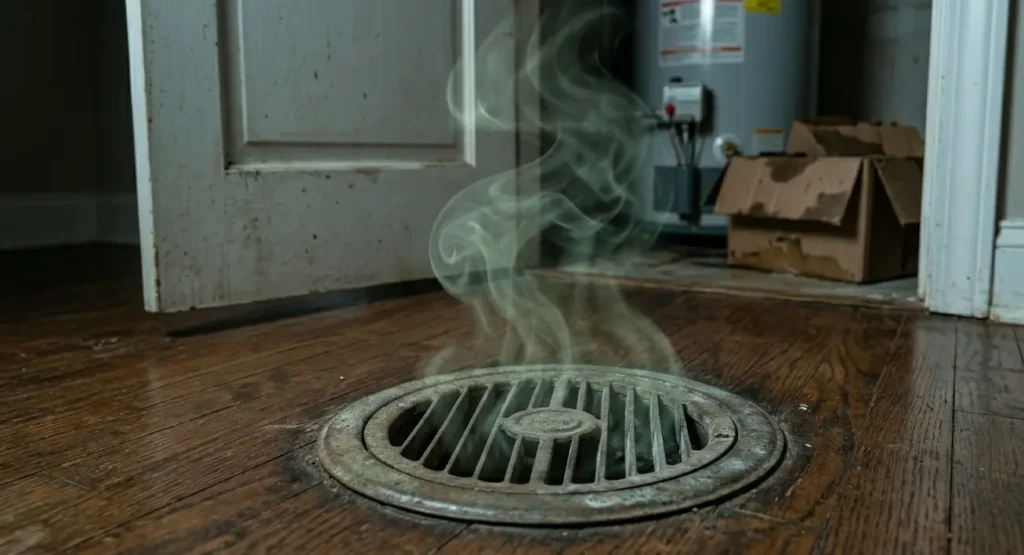
A persistent musty or earthy odor, especially in areas like basements, bathrooms, or attics, is one of the earliest and most reliable indicators of hidden mold growth. What makes this tricky is that the smell often appears long before anything is visible. Mold can be actively colonizing behind your drywall, underneath carpeting, or deep inside your HVAC ductwork while your living space looks completely clean.
Pay attention to when the smell intensifies. If it gets stronger after heavy rain or right when your air conditioning switches on, that is a strong signal that mold has established itself in your crawl space or ductwork and is being carried into your living areas through your ventilation system.
Charlotte crawl spaces are especially prone to this because warm, humid outdoor air enters through foundation vents, cools against the floor joists, and deposits moisture on wood surfaces repeatedly throughout the warmer months.
Do not reach for an air freshener. Track the odor to its source instead.
Related: Mold Remediation Process Steps: Complete Process Explained
2. Visible Spots, Patches, or Discoloration on Surfaces
Mold does not always look like the classic black fuzzy growth you have seen in photos. It can appear green, white, gray, brown, or even orange, and it often starts small enough to be dismissed as a water stain, dust, or simple grime.
Even a small patch of discoloration on walls, ceilings, or floors deserves serious attention. Because mold feeds on organic and porous materials and can penetrate the cellulose layer of drywall and wood, the visible surface growth you see is frequently just a fraction of the actual colony. The bulk of it may be spreading inside your wall cavity, under your flooring, or behind your tile.
In Charlotte homes, the spots most commonly appear around window corners, bathroom grout lines, the ceiling directly above showers, under-sink cabinet bases, and along baseboards in rooms that experience frequent humidity swings.
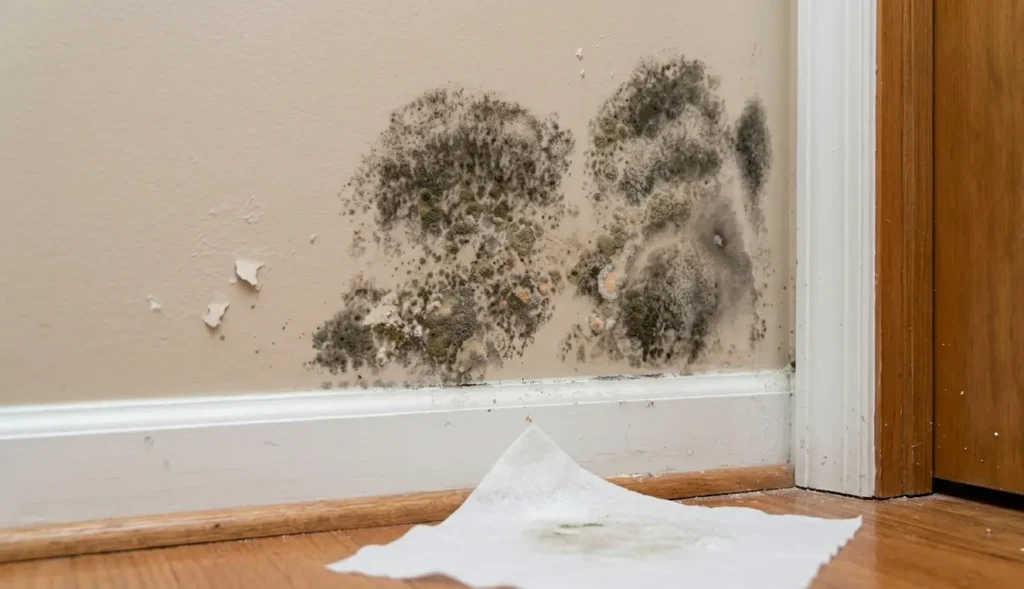
If you wipe a spot away and it returns within a week or two, you are not dealing with surface dirt. You are looking at an active mold colony with a live moisture source feeding it.
3. Unexplained Allergy or Respiratory Symptoms
This sign is one of the most important, and it is also the most misunderstood. Many Charlotte residents spend months treating what they believe are seasonal allergies without realizing their home environment is the actual problem.
Mold spores are microscopic and become airborne easily. Once inhaled, they can trigger sneezing, coughing, itchy or watery eyes, nasal congestion, and throat irritation. For people with asthma, the reactions can be significantly more severe. Some mold species also produce mycotoxins, chemical compounds that can cause headaches, fatigue, brain fog, and worsening respiratory conditions with prolonged exposure.
The pattern to watch for is the location test. If your symptoms reliably worsen when you are at home and improve noticeably when you spend time outside or away from the house, mold is a very likely contributor.

Symptoms that are worse at night or first thing in the morning, when you have been indoors the longest, are also a telling pattern. Children, elderly residents, and anyone with a compromised immune system tend to react more acutely and should be evaluated by a physician if indoor mold exposure is suspected.
4. Peeling Paint, Bubbling Wallpaper, or Warped Surfaces
When moisture accumulates inside a wall or behind a surface, it has to go somewhere. One of the most visible ways it announces itself is through your home’s finishes.
Paint that is bubbling, cracking, or peeling away from the wall without any obvious cause is typically responding to moisture pressure from behind the surface. Wallpaper that is lifting at the seams or buckling in the middle tells a similar story.
Warped drywall, wood trim that has bowed or separated from the wall, and floors that feel soft or slightly spongy underfoot are all signs that moisture has been sitting in one place long enough to do structural damage, and where there is persistent moisture in a Charlotte home, mold almost always follows.
In older Charlotte neighborhoods like Dilworth, Plaza Midwood, and Elizabeth, aging plumbing and original construction materials make these warning signs even more common. If you notice surface changes that cannot be explained by normal seasonal expansion and contraction, investigate the moisture source before repainting or repairing the surface. Treating the cosmetic damage without addressing the moisture will only delay the same problem returning.
5. Water Stains on Ceilings or Walls That Keep Coming Back
A water stain that appears after a heavy storm and then fades away is frustrating but fairly common. A stain that reappears consistently in the same location, even without a recent rain event, tells a very different story.
Recurring water stains indicate an ongoing moisture source, whether from a slow roof leak tracking along rafters, a plumbing line that sweats or drips behind a wall, or condensation that forms and collects repeatedly in the same area. Charlotte’s summer thunderstorms and the freeze-thaw cycles during winter create ongoing stress on roofing materials, flashing around chimneys and vents, and exterior caulking. Any of these can allow water to enter a wall cavity gradually, never enough at once to cause obvious flooding, but more than enough to sustain mold growth over months or years.
Yellow or brown staining with a ring-shaped border is particularly worth investigating. That ring pattern forms as water dries repeatedly, concentrating minerals at the edge each time, and it almost always indicates chronic moisture exposure rather than a single isolated event.
6. High Indoor Humidity Levels Even with the AC Running
Charlotte summers routinely push outdoor relative humidity above 80 percent. Your HVAC system is supposed to manage that, but when something is wrong with your home’s moisture balance, the indoor air stays uncomfortably damp no matter how long the AC runs.
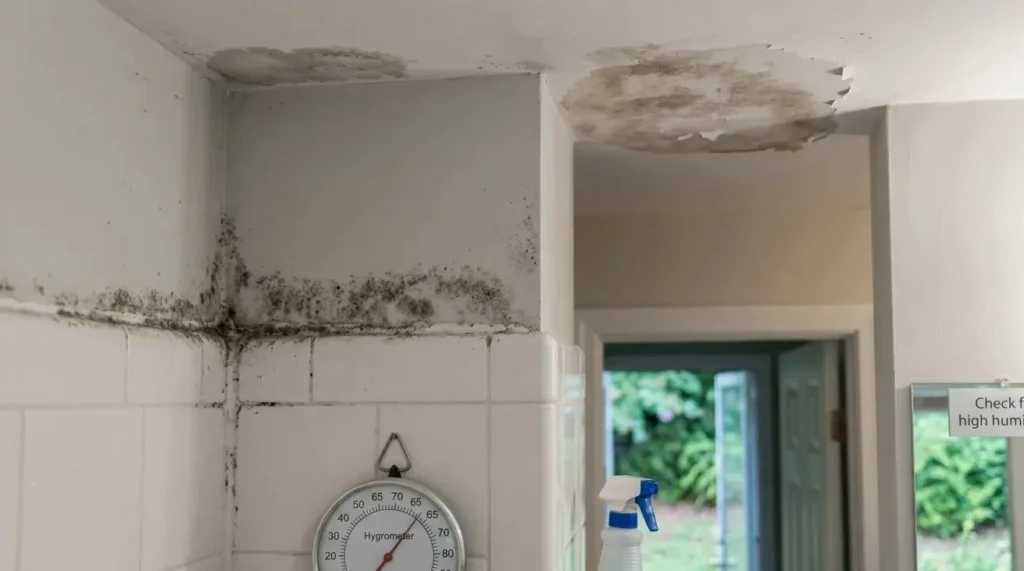
Mold grows most aggressively when indoor relative humidity stays consistently above 60 percent. If your home feels sticky and heavy even with the air conditioning on, if condensation forms on your windows or around cold air supply vents, or if fabrics and papers feel slightly damp, your indoor humidity is likely too high. A basic digital hygrometer, available at any hardware store, can confirm this in seconds.
The underlying cause matters. Sometimes it is a crawl space that is pulling ground moisture up through the stack effect, where warm moist air rises from below and circulates through the living space. Sometimes it is a bathroom exhaust fan that vents into the attic rather than outside, or ductwork that is sweating because it runs through an unconditioned space.
Solving the humidity problem permanently requires finding and correcting the moisture source, not just running the AC harder.
7. Sagging, Soft, or Discolored Ceilings
A ceiling that has developed a soft spot, a slight sag, or an unexplained yellowish or grayish stain is a serious warning sign that should not be deferred. Ceiling drywall absorbs moisture readily, and once it has been wet long enough, it loses structural integrity and becomes a prime surface for mold colonization.
In Charlotte two-story homes, this often originates from an upstairs bathroom where caulking around the tub or shower has cracked, allowing water to seep into the subfloor and travel through the ceiling below.
In single-story homes or top-floor rooms, a compromised roof is often the culprit. Water does not always drip straight down. It frequently travels along rafters or framing members before dropping, which means the visible stain may be several feet away from the actual entry point.
If pressing lightly on a stained ceiling area produces any give or softness, or if the discoloration has a dark or greenish tint, mold remediation rather than simple cosmetic repair is almost certainly needed.
8. Condensation That Forms Regularly on Windows or Pipes
Occasional condensation on a cold glass during a warm morning is normal. Condensation that forms on your interior window surfaces regularly throughout the day, or that collects at pipe fittings under your sinks and in utility closets, indicates that your home’s indoor moisture levels are chronically elevated.
Pipes that sweat leave the surrounding area perpetually damp. Cabinet bases under sinks are typically made from particleboard, which absorbs moisture quickly and provides ideal conditions for mold growth. Because these spaces are dark, enclosed, and rarely inspected, mold colonies can develop and spread for months before being discovered.
In Charlotte, HVAC ductwork running through unconditioned crawl spaces and attics is another frequent condensation source. When cool conditioned air moves through ducts surrounded by hot humid air, the exterior surface of the duct can drop below the dew point and collect moisture droplets. Over time, this localized dripping saturates nearby insulation, wood framing, and subfloor materials.
9. Deterioration in Your Crawl Space
Given that the majority of Charlotte homes rest on vented crawl spaces rather than slab foundations, this is one of the most important and most overlooked signs of mold that homeowners encounter.
The traditional logic behind crawl space vents was that outside air would ventilate moisture away. In North Carolina’s humid climate, the opposite frequently happens. Warm, humid outdoor air enters through the foundation vents, contacts the cooler surfaces inside the crawl space, and releases its moisture directly onto the wood joists, insulation, and HVAC components below your home.
Over time, that repeated moisture exposure leads to fungal growth on the structural lumber, white powdery residue on joist surfaces, blackened or greenish staining on wood framing, and insulation that sags, discolors, or falls away from between the joists.
Because crawl spaces are rarely visited, this deterioration can continue for years. The first sign many homeowners notice is not the crawl space itself, but a musty odor in the first-floor rooms above it, floors that feel slightly soft or springy in certain areas, or higher than expected heating and cooling bills as compromised insulation loses its effectiveness.
An annual crawl space inspection, either yourself with a flashlight and proper respiratory protection or by a professional, is one of the most valuable things a Charlotte homeowner can do.
10. Mold Odor or Visible Growth in and Around HVAC Components
Your HVAC system circulates air throughout your entire home. If mold takes hold anywhere in that system, it gains direct access to every room you live in.
Growth inside air handler units is particularly common in Charlotte because the evaporator coil in a central AC system gets very cold and collects condensation during normal operation. If the condensate drain line is partially clogged, that moisture pools and sits in a dark, enclosed metal cabinet, which is exactly the kind of environment mold favors.
Signs of HVAC-related mold include a musty smell that begins immediately when the system starts, visible dark residue or streaking around air supply vents, and unexplained worsening of allergy symptoms throughout the home simultaneously.
Flex ductwork, which is common in Charlotte-area homes, can also harbor mold if it has been damaged, disconnected at a joint, or if condensation has been dripping onto it from an HVAC component above.
An HVAC technician who inspects the interior of your air handler and ductwork during an annual tune-up can catch these problems before they spread.
Types of Mold Commonly Found in Charlotte Homes
Not all mold is the same, and knowing what you might be dealing with helps you understand the urgency of the situation.
Cladosporium is one of the most frequently found mold types in Charlotte homes. It typically appears on wood surfaces and fabrics and is known for triggering allergic reactions. Penicillium tends to colonize water-damaged building materials and has a distinctive blue or green coloration.
Alternaria prefers damp shower areas and spaces under sinks and can provoke asthma-like symptoms. Aspergillus thrives in the warm, humid conditions that Charlotte provides for much of the year, and some species produce compounds that are harmful with prolonged exposure. Stachybotrys chartarum, commonly called black mold, is the species that raises the most concern.
It produces mycotoxins that are associated with more serious health effects and tends to colonize materials that have been chronically wet, such as water-damaged drywall and ceiling tiles.
Identifying the exact mold species in your home requires professional air sampling and laboratory analysis. Visual identification alone is unreliable because many mold types look similar and multiple species can coexist in the same location.
Where Mold Hides Most Often in Charlotte Homes?
Understanding where to look helps you catch problems before they grow into major remediation projects. The most common locations where mold takes hold in Charlotte homes include bathroom ceilings and walls, particularly in poorly ventilated bathrooms where exhaust fans are undersized or vented improperly.
Under-sink cabinets in kitchens and bathrooms are another frequent location, especially where slow plumbing drips have gone unnoticed.
Attics where bathroom or kitchen exhaust fans terminate improperly provide warm, moist air directly to wood decking and framing. Crawl spaces, as discussed throughout this guide, represent the most widespread hidden mold problem in the Charlotte market.
Air handler closets and the areas immediately around HVAC components round out the most common locations.
Outside the obvious high-moisture zones, mold is also frequently discovered behind refrigerators where ice maker water lines have developed slow leaks, around the perimeter of windows where exterior caulking has deteriorated, inside washing machine door gaskets in front-loading models, and beneath flooring materials in rooms that experienced any past water intrusion even if that intrusion was dried and seemingly resolved.
What To Do When You Spot the Signs?
Knowing the signs is only half the battle. Acting quickly and correctly is what determines whether you end up with a minor cleanup or a significant remediation project.
The first step when you notice any of these warning signs is to stop and locate the moisture source before attempting any cleanup. Mold is a symptom of a moisture problem, and removing visible growth without fixing the underlying cause will result in regrowth within weeks.
If you can identify a clear, contained source such as a leaking supply line under a sink, repair it immediately and dry the affected area thoroughly within 24 to 48 hours.
If you cannot identify the source, or if the affected area is larger than about 10 square feet, professional assessment is the appropriate next step.
For small, hard surface areas where mold is clearly visible and the moisture source has been corrected, careful cleaning with appropriate products can be effective. However, porous materials like drywall, insulation, carpet, and wood framing that have been colonized cannot be cleaned effectively and typically require removal and replacement.
Do not rely on bleach as your primary mold treatment on porous surfaces. Bleach is a surface disinfectant and does not penetrate into the material where mold roots itself. It may remove the visible discoloration while leaving the underlying colony intact.
When To Call a Professional in Charlotte>
There are situations where professional mold inspection and remediation is not just advisable but necessary. Call a qualified mold remediation professional if the visible growth covers an area larger than 10 square feet, if you suspect mold inside your walls, HVAC system, or crawl space but cannot confirm it visually, if anyone in your household is experiencing persistent health symptoms that correspond to time spent at home, if you are buying or selling a home and want documented air quality testing for the transaction, or if you have attempted to clean visible mold and it has returned in the same location within a few weeks.
Charlotte has a number of certified mold inspection and remediation companies that use professional tools including moisture meters, infrared thermal cameras, and air sampling equipment.
A proper inspection will not only identify where mold is present but will also trace the moisture pathway that is feeding it, which is the only way to develop a repair plan that actually holds long term.
How To Prevent Mold in Your Charlotte Home?
Prevention is significantly less expensive and disruptive than remediation. The most effective steps Charlotte homeowners can take include keeping indoor relative humidity between 30 and 50 percent year-round, using dehumidifiers in basements, crawl spaces, and any area that feels persistently damp, ensuring all bathroom and kitchen exhaust fans vent directly to the exterior rather than into attic spaces, inspecting crawl spaces annually and considering professional encapsulation if moisture is a recurring issue, keeping gutters clean and grading soil away from the foundation so that rainwater drains away from the home, and scheduling annual HVAC tune-ups that include inspection of the evaporator coil, drain pan, and condensate line.
Addressing minor leaks immediately rather than deferring repairs is one of the highest-impact habits a homeowner can develop. The vast majority of serious mold problems in Charlotte homes trace back to a slow, quiet moisture source that was noticed and dismissed rather than investigated and fixed.
Final Thoughts
The signs of mold in your Charlotte home range from obvious to subtle, but they share one thing in common: they are all pointing to a moisture problem that will not resolve itself.
Charlotte’s climate makes this a year-round concern rather than a seasonal one, and the way most homes in the region are built means the most serious mold growth is often the hardest to see.
Trust what your nose tells you. Take surface changes seriously. Pay attention to how your body feels at home compared to away.
And when something does not add up, investigate it rather than explain it away. The earlier mold is identified and addressed in a Charlotte home, the less it costs in every sense of the word.
