Why is Charlotte’s Summer Humidity a Breeding Ground for Attic Mold?

Charlotte’s summer humidity creates the exact conditions attic mold needs to grow, and homeowners across Mecklenburg County are seeing the results firsthand. When outdoor relative humidity routinely climbs past 70% between June and September, that moisture-heavy air works its way into attic spaces that were never designed to handle it.
The result is condensation on roof decking, damp insulation, and the kind of environment where mold colonies establish themselves within days, not weeks.

Understanding Mecklenburg County’s Humidity Pattern
The Charlotte area sits in a humid subtropical climate zone, and summer is when that classification shows its full effect. Average relative humidity in the region frequently exceeds 70%, with early morning readings sometimes pushing even higher after overnight cooling. This isn’t an occasional spike tied to a single storm system.
It’s a sustained seasonal pattern that repeats month after month, which is exactly why attic moisture problems in Charlotte tend to be chronic rather than one time events.
Warm air holds more water vapor than cool air. That’s basic atmospheric science, but it has a direct consequence for homes: as outdoor temperatures rise through the afternoon, the air pulls in and holds significant moisture.
Once that warm, saturated air enters an attic space, either through soffit gaps, poorly sealed hatches, recessed lighting fixtures, or bathroom exhaust vents that were never properly routed outside, it meets cooler surfaces like roof sheathing, rafters, or HVAC ductwork. That temperature difference is where condensation forms.
How Condensation Turns Into Mold Growth?

Condensation is the tipping point. When humid attic air contacts a surface that’s cooler than the surrounding dew point, water droplets form directly on wood framing, sheathing, and insulation. Charlotte’s summer air conditioning use actually intensifies this effect.
As central AC systems cool the living space below, ductwork and connected surfaces in the attic can drop several degrees below the ambient attic temperature, creating a condensation zone that stays active for hours at a time, even on sunny afternoons.
Mold spores are already present in nearly every home’s air, waiting for the right combination of moisture and organic material to activate.
Attic sheathing, wood framing, and paper faced insulation all qualify. Once relative humidity in the attic space holds above roughly 60% for an extended period, spore activation and colony growth can begin.
Poorly ventilated attics, especially those with blocked soffit vents, insufficient ridge ventilation, or an insulation to ventilation ratio that doesn’t meet North Carolina building code, trap that moisture instead of letting it escape.
Why Does Poor Ventilation Make Everything Worse?
A properly balanced attic ventilation system relies on intake at the soffits and exhaust at the ridge, allowing continuous airflow that carries moisture out before it can settle.
When homeowners add insulation without accounting for this airflow path, or when older Charlotte homes were built with outdated ventilation ratios, the attic essentially becomes sealed. Humid air enters, has nowhere to exit, and cycles between condensing and reabsorbing moisture day after day through the summer season.
This is compounded by insulation coverage issues. Too little insulation lets conditioned air and humidity from the living space below rise directly into the attic.
Too much insulation, particularly when packed against the roof deck or stuffed into eave spaces, blocks the very airflow paths that were supposed to carry moisture out.
Either scenario, common in homes throughout Charlotte, Matthews, Huntersville, and Ballantyne, sets the stage for sustained attic humidity and eventual mold colonization.
Warning Signs Charlotte Homeowners Should Watch For
Attic mold rarely announces itself with something obvious. Instead, homeowners typically notice a few consistent indicators:
A persistent musty smell in upstairs rooms or near the attic hatch, particularly noticeable on humid days or when the AC first kicks on.
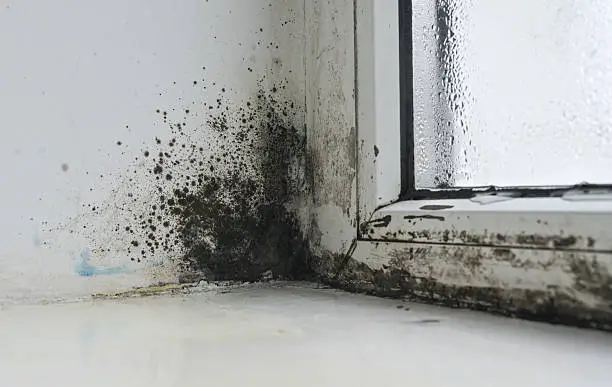
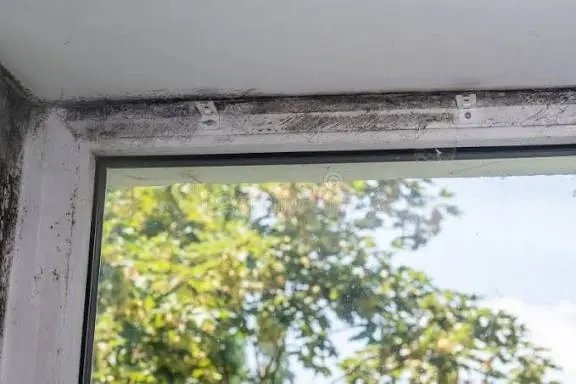
Dark staining on roof sheathing or rafters, which is frequently mistaken for dirt or soot but is actually surface mold growth.
Rising energy bills as mold affected insulation loses its effectiveness, forcing the HVAC system to work harder to maintain indoor temperature.
Visible moisture or water droplets on the underside of the roof deck during or after high humidity stretches.
Increased allergy or respiratory symptoms among household members, especially in bedrooms located directly beneath the attic space.
The Charlotte Specific Factors That Make This Worse
A few local conditions push Charlotte homes toward higher attic mold risk compared to drier climates. The region’s combination of hot, saturated summer air and heavy afternoon thunderstorms means humidity levels rarely get a chance to drop for extended stretches.
Older housing stock throughout neighborhoods like NoDa, Dilworth, and Plaza Midwood was often built before current ventilation standards, meaning many attics simply don’t move enough air to keep pace with today’s humidity levels.
And because Charlotte’s mild winters don’t fully halt biological activity, attic moisture problems that start in summer can continue developing quietly through the cooler months rather than resetting each year.
Related: Mold Remediation Process Steps: Complete Process Explained
What Actually Prevents Attic Mold in a Humid Climate?
Addressing this issue starts with balancing intake and exhaust ventilation to the ratio required by code, which allows continuous airflow to carry moisture out before condensation has a chance to form.
Sealing air leaks around recessed lighting, attic hatches, and duct penetrations stops conditioned indoor air from feeding humidity into the attic in the first place.
Verifying that bathroom and kitchen exhaust fans vent completely outside the building envelope, rather than dumping into the attic itself, removes another major moisture source.
Maintaining correct insulation depth and placement keeps the assembly working as designed instead of trapping moisture against the roof deck.
Routine inspection matters just as much as any single fix. Attic conditions change with the seasons, and a space that looks fine in spring can develop significant humidity buildup by the peak of summer.
When to Call a Professional?
Attic mold is easy to underestimate because the space is out of sight and rarely visited. By the time a musty smell reaches the living areas below, the growth has often been developing for a while. If you notice a musty smell upstairs, it is critical to call a professional for mold removal in Charlotte, NC before it spreads.
A qualified inspection can determine whether the issue is limited to surface growth or connected to a larger ventilation, insulation, or moisture intrusion problem that needs to be corrected at the source.
