DIY vs Professional Mold Removal – An Expert’s Guide

If the mold in your Charlotte home covers less than 10 square feet, sits on a non-porous surface, and you can identify the moisture source causing it, DIY removal is a reasonable option.
For anything larger, anything hidden inside walls or your crawl space, any involvement of your HVAC system, or any case involving black mold, you need a licensed professional. In Charlotte’s climate specifically, the second scenario is far more common than homeowners expect.
That is the direct answer. Everything below explains why, what it costs either way, what genuine DIY looks like when done correctly, and what Charlotte homeowners are up against that homeowners in drier parts of the country simply are not.
Why Charlotte Is a Different Mold Problem Than Most Cities?
Before comparing DIY versus professional options, you need to understand the environment you are working in. Charlotte is not the same mold risk as Denver or Phoenix. The climate here actively works against you year-round.
Charlotte has an average annual humidity of 67%. Mold needs moisture above 70% relative humidity to thrive and spread, which means Charlotte spends a significant portion of the year at or near that threshold. Mold thrives when humidity levels exceed 60%, a common occurrence in untreated crawl spaces.
This matters because most DIY guidance is written for general audiences. General audiences are not contending with the Southeast’s heat load, the region’s high-pressure storms, or the crawl space construction that is standard in Charlotte’s housing stock. Mold is usually found in basements and crawl spaces thanks to Charlotte’s hot and humid environment. Common causes of high humidity in the crawl space include failed waterproofing, leaky plumbing, and blocked airflow through vents.
What starts as a small patch can turn into a full-blown crawl space mold project within weeks, especially in Charlotte’s humid climate where moisture levels stay elevated for months at a time.
In short: act faster here than you would anywhere else, and be more skeptical of surface-level cleaning solving the underlying problem.
Related: Mold Remediation Process Steps: Complete Process Explained
The Real Difference Between DIY and Professional Mold Removal
Most homeowners assume the difference is just equipment. Professional companies have better sprays, better vacuums, better gear. That is true but it misses the deeper issue.
The reason why mold remediation companies do not recommend DIY cleanup is not that they want to make more money. They know, from experience, that a mold problem is usually far more invasive than can be seen with the naked eye.
If you are able to remove surface mold, you are only removing a small portion of a much bigger problem. Typically, visible mold is just a small portion of an underlying issue.
Over-the-counter sprays and homemade solutions typically address mold on surfaces but do not get to the root of the problem, which is moisture control and deep spore removal. Handling mold without proper protective gear and removal techniques can exacerbate health issues and spread spores throughout the home.
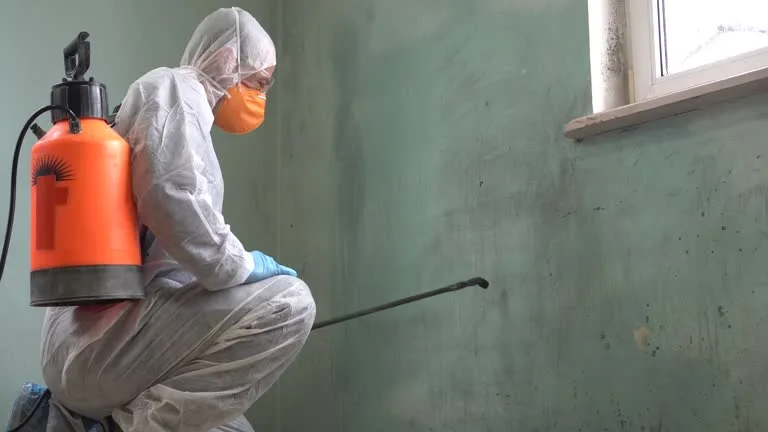
The containment piece is where this gap becomes most visible. Before any removal begins, professionals seal off the affected area using plastic sheeting and set up negative air pressure with HEPA filtration units. This prevents mold spores from traveling to clean areas of your Charlotte home during the remediation process. Containment is one of the most important steps and one that separates professional remediation from a DIY cleanup.
A homeowner scrubbing a moldy wall with bleach and a sponge is not containing anything. Every wipe, every disturbance of the colony sends spores airborne. Without negative pressure equipment pulling contaminated air out of the space and HEPA filtration capturing those spores, they settle on surrounding surfaces and begin a new colony within 24 to 48 hours.
Related: How to Prevent Mold in Charlotte, NC?
When DIY Mold Removal Is Genuinely Appropriate in Charlotte?
This section matters because the professional mold industry has every financial incentive to tell you to always hire a professional. That is not an honest answer. There are legitimate scenarios where a Charlotte homeowner can and should handle mold themselves.
The EPA’s threshold for DIY: The EPA gives homeowners the greenlight to clean mold areas that are less than 10 square feet, provided they are not uncomfortable working with mold and do not have health risks.
Ten square feet is roughly a three-foot by three-foot patch. If you can see the whole affected area, it fits within that boundary, and you know what caused the moisture, you are in DIY territory.
Surfaces matter enormously. The same sized mold colony on bathroom tile is a completely different job than on drywall. Tile is non-porous, meaning the mold sits on the surface and can be physically removed. Drywall is porous, meaning the mold has grown into the material itself and no surface spray will kill what is embedded inside.
If the mold is on drywall, carpet, insulation, or wood in any quantity worth worrying about, section replacement is required and professional execution is strongly advised.
Correct DIY mold removal on surfaces under 10 sq ft:
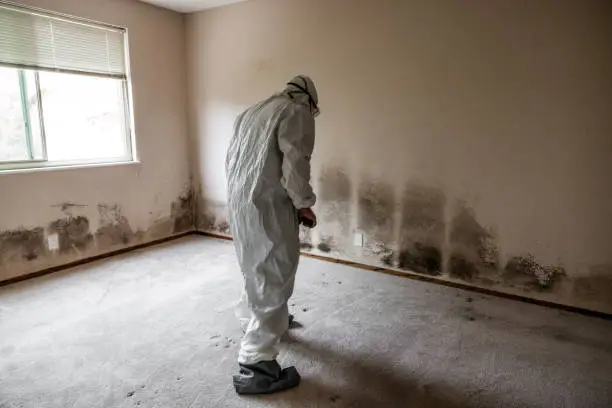
Wear an N-95 respirator or higher, not a basic dust mask. Add rubber gloves, safety goggles, and old clothing you will discard or immediately wash in hot water. N-95 respirator masks protect lungs from breathing mold spores during cleanup.
Rubber gloves prevent skin contact with contaminated materials. Safety goggles protect eyes from cleaning solution splashes. Disposable coveralls prevent spore contamination on regular clothing.
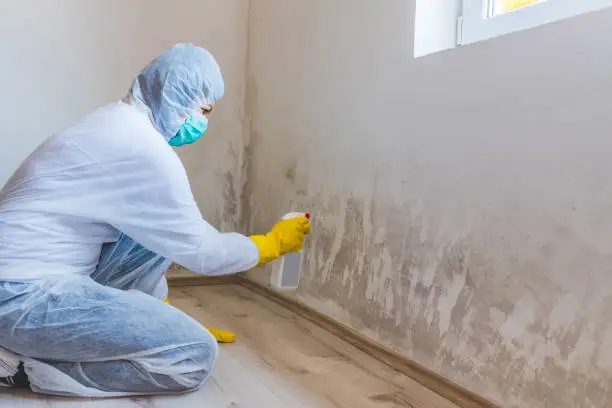
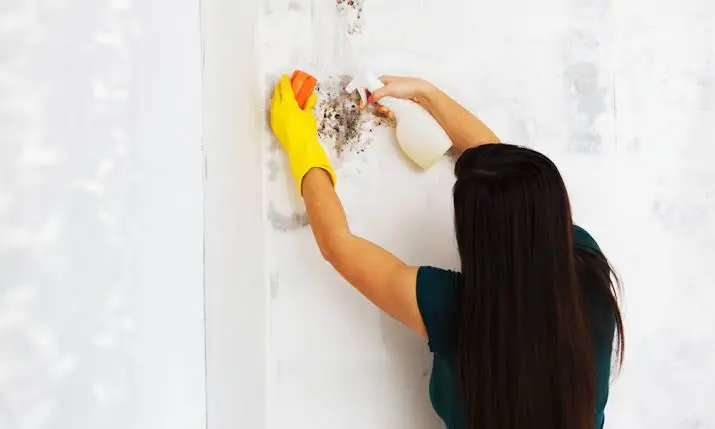
A simple cleaning solution, either store-bought or a homemade mix of 1 cup bleach to 8 cups water, can work on hard non-porous surfaces. Apply it to the affected areas, let it soak, and then scrub thoroughly.
Seal any removed materials in heavy plastic bags before carrying them through the house. Fix the moisture source before considering the job complete. If you cannot identify and correct what caused the mold, the cleaning is temporary.
When is DIY appropriate in Charlotte specifically?
A small tile grout patch in your bathroom. Surface mold on a sealed concrete floor in your basement where a pipe dripped briefly and was repaired. A small window sill with visible surface growth where condensation has been collected.
When it is not appropriate, regardless of size?
Any mold in your crawl space. Any mold you can smell but cannot see. Any mold that has returned after a previous cleaning.
Any mold that appeared after flooding or a major leak rather than a drip. Any situation involving people in your household with asthma, compromised immunity, or respiratory conditions.
When You Need a Professional Mold Removal Company in Charlotte?
The line is clearer than most DIY guides admit. Here are the situations where professional intervention is not optional.
The area exceeds 10 square feet.
This is the EPA’s stated threshold. If you are not comfortable working with mold or the area is larger than 10 square feet, it is highly recommended to hire a mold remediation professional. Beyond this size, containment requires equipment that consumers cannot access, and the scope of material removal exceeds what is safely manageable without HEPA air scrubbers running.
Mold is in your Charlotte crawl space.
This deserves its own category because it is so common here and so frequently mishandled. Air movement inside a home generally travels upward. This means crawl space conditions can influence indoor air quality on the main living levels.
Musty odor originating below can move into rooms through floor penetrations, ductwork, and the natural stack effect. Crawl space mold in Charlotte is not a surface problem.
It is a structural problem embedded in joists, subfloor framing, and insulation in a confined space with poor access. Household cleaning supplies are not guaranteed to actually remove mold effectively. Spores may be released into other areas of your home as you clean.
The mold involves your HVAC system.
This is the scenario with the highest spread potential in any home. Once mold colonies establish inside ductwork or on air handler components, every time the system runs it distributes spores to every room with a register. In Charlotte, professionals use air sampling pumps, moisture meters, and thermal imaging cameras to pinpoint hidden mold, and vapor barriers to prevent future mold growth in Charlotte’s humid climate.
The mold is black.
Black mold always needs professional removal due to health risks. Stachybotrys chartarum requires specific safety protocols beyond what consumer-grade PPE provides, and the confirmation that you are actually dealing with Stachybotrys versus another dark-colored species requires lab testing.
The mold has returned after a previous cleaning.
Recurrence is evidence that the moisture source was never properly corrected or that the original remediation missed contamination. Neither problem is solved by repeating the same surface cleaning.
Anyone in the household is vulnerable.
Mold exposure may cause respiratory issues, allergies, skin irritation, and headaches, especially for individuals with asthma or weakened immune systems.
For households with children, elderly family members, or immunocompromised individuals, the risk calculus changes. Even a job that might technically qualify for DIY should go to a professional when occupants cannot tolerate any additional spore exposure during the process.
What Charlotte Professional Mold Remediation Actually Includes?
Understanding what you are paying for helps you evaluate quotes and spot contractors cutting corners.
A legitimate professional job in Charlotte covers assessment with moisture readings and air sampling where indicated, full containment with plastic barriers and negative air pressure before any demolition begins, HEPA air scrubbing running throughout the entire project, removal and proper disposal of all porous contaminated materials, physical cleaning and treatment of salvageable structural surfaces with EPA-registered fungicides, drying to confirmed moisture content levels using commercial dehumidifiers and air movers, and independent post-remediation clearance testing.
Professional mold remediation teams will come to your location, assess the extent of the mold problem, identify and rectify all water leaks and sources of dampness, identify all mold sources both visible and hidden, use specialized equipment to contain and prevent migration of mold spores, safely remove contaminated materials, treat infested areas with approved antimicrobial sprays, dehumidify and dry the appropriate areas, and seal areas as needed.
The clearance test matters as much as any earlier step. DIY methods are generally ineffective for complete and lasting removal, often leaving spores behind to regrow. A clearance test is the only objective verification that the job achieved what it was supposed to achieve. Ask for independent third-party clearance testing, not a sign-off from the same company that did the work.
What Does Mold Removal Cost in Charlotte?
This is the number most Charlotte homeowners are really asking when they search DIY versus professional. Here is what the data shows.
DIY cost in Charlotte: Supplies for a legitimate small-scale DIY job including proper PPE, cleaning solutions, bags, and replacement materials typically run $50 to $200. The real cost of doing it wrong is the recurrence and the professional remediation you eventually pay for anyway on a more extensive problem.
Professional remediation in Charlotte: The average mold remediation cost in Charlotte is $2,382, but it can range from $1,103 to $3,821. Per square foot, mold remediation cost in Charlotte ranges from $9 to $19 per square foot.
For larger jobs: remediation for 500 square feet runs $4,700 to $9,300, and remediation for 1,000 square feet runs $9,300 to $18,600.
For the initial assessment alone, the average cost that homeowners paid for mold testing in Mecklenburg County is between $232 and $3,723, with the range reflecting the difference between a basic visual inspection and a full air and surface sampling protocol with lab analysis.
The cost of doing nothing: Mold infestation can decrease a home’s value by 20% to 37%. For a Charlotte home at the median value, that is a six-figure hit on your equity. A $2,500 professional remediation job today is a financially sound decision against that exposure.
Charlotte-Specific Mold Risks by Location in the Home
Not every room in a Charlotte home carries equal risk. Here is where the city’s climate creates elevated vulnerability.
Crawl Spaces
This is Charlotte’s most common mold problem location. Mold issues develop in crawl spaces with high humidity and moisture. The soil from the earth already provides the moisture. Consequently, homes with a dirt floor or poor vapor barriers are ripe spaces for mold growth and poor indoor air quality.
High humidity from foundation leaks, condensation and damp outside air provide a constant supply of moisture to help mold grow quickly and abundantly. The mold has an almost unlimited food supply including the wood and other organic building materials that make up your home.
DIY crawl space mold removal is not recommended under any circumstance in Charlotte. The confined access, the structural materials involved, the ongoing moisture challenge, and the direct pathway those spores travel upward into your living space all argue against a consumer-level approach.
Basements
Many Charlotte homes with basements deal with hydrostatic pressure pushing moisture through foundation walls, particularly after the region’s heavy seasonal storms. Surface cleaning without addressing the water infiltration pathway is cosmetic at best.
Bathrooms and Kitchens
These are the most DIY-appropriate locations when growth is minor and confined to surfaces. The caveat for Charlotte is that bathroom mold frequently hides behind shower surrounds and under vanity cabinets where humidity has been seeping into drywall for years. If the visible mold on your tile grout comes back within weeks of cleaning, there is growth behind the wall that no surface spray will reach.
HVAC Systems
In Charlotte’s humid climate, vapor barriers are essential to prevent future mold growth, and professionals use thermal imaging cameras to pinpoint hidden mold in ductwork and air handler components. HVAC mold is a professional-only scenario without exception.
How to Choose a Mold Removal Company?
The mold industry is less regulated than it should be. North Carolina requires licensing for mold contractors, but verification matters. Here is how to evaluate who you are hiring.
Ask specifically for IICRC certification. The Institute of Inspection, Cleaning and Restoration Certification’s S520 standard is the industry benchmark. A contractor who cannot reference it during a consultation is a concern.
Ask how they handle containment. A legitimate company will describe negative air machines, polyethylene barriers, and decontamination protocols before you bring it up. If they describe spraying and wiping, that is not a remediation company.
Ask who does the clearance test. The answer should be an independent third party. Any company that offers to do its own clearance testing has a direct conflict of interest in the result.
Ask for a written scope of work before any contract is signed. The scope should specify containment method, HEPA filtration details, which materials will be removed versus cleaned, drying protocol and target moisture readings, and whether clearance testing is included or quoted separately.
Get at least two written estimates using the same scope. Price differences usually come from scope differences, and comparing them line by line shows you exactly what each company is actually proposing to do.
Prevention: Keeping Mold Out of Your Charlotte Home Long Term
The best mold remediation is the one you never need. In Charlotte’s climate, prevention is an active year-round effort rather than a set-and-forget fix.
Keep indoor humidity between 30% and 50% consistently. Always keep humidity levels in your house between 30% and 60%, clean up water spills and damp areas right away, and ensure you have exhaust fans in your kitchen and bathroom.
In Charlotte specifically, a properly sized whole-home dehumidifier is not a luxury item for most homes. It is functional moisture management in a climate that regularly pushes indoor humidity above safe thresholds from late spring through early fall.
Address crawl space moisture with vapor barriers and a dedicated crawl space dehumidifier. To prevent mold return after remediation, fix water leaks, improve drainage, and install a vapor barrier or encapsulation system. Maintaining proper ventilation and using a dehumidifier can also control humidity levels.
Inspect your crawl space twice a year, ideally after winter and after the heaviest part of storm season. Most Charlotte homeowners never look under their home until a musty smell forces the issue. The problem is always worse and more expensive by then.
Run bathroom exhaust fans for at least 20 minutes after every shower, and verify those fans vent to the exterior of the house rather than into the attic. Attic mold from improperly routed bathroom fans is one of the more common remediation calls in Charlotte.
The Bottom Line for Charlotte Homeowners
DIY mold removal is appropriate for a narrow set of circumstances: small, visible, surface-level growth on non-porous materials where the moisture source is known and fixable. In those cases, doing it yourself with proper PPE and correct technique is a legitimate option that saves money.
For almost every other scenario a Charlotte homeowner faces, including anything in the crawl space, anything involving drywall or wood, anything larger than a small patch, and anything that has returned after a previous cleaning, professional remediation is not an upsell. It is the only approach that actually resolves the problem rather than temporarily reducing its visibility.
The sooner you address the problem, the less it costs and the less damage your home takes. In Charlotte’s climate, every week of delay is a week of active growth in conditions that are nearly ideal for mold to spread.
