Air Conditioning and Mold: Why Your Charlotte HVAC System Might Be Spreading Spores

Your air conditioning system can absolutely spread mold spores through your home, and in Charlotte’s hot, humid climate this happens far more often than most homeowners realize.
We provide mold remediation services throughout the Charlotte metro, and one of the most common sources we trace indoor mold problems back to is the HVAC system itself, specifically dirty coils and clogged condensation lines that quietly turn your air conditioner into a mold delivery system.
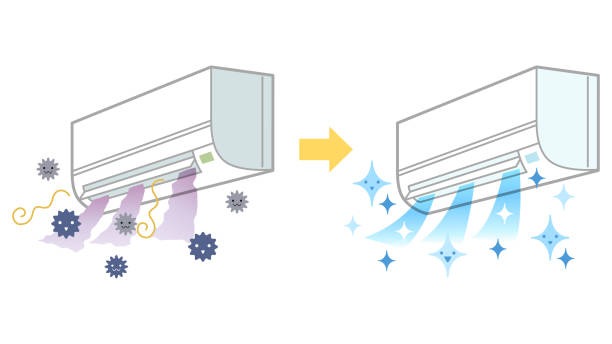
If you have noticed a musty smell the moment your AC kicks on, dark spots forming around your vents, or allergy symptoms that seem to flare up indoors and calm down outside, your HVAC system is worth a closer look.
Below, we explain exactly how this happens, why Charlotte’s climate makes it so common, and what you can do to stop it before it spreads further through your home.
Why Air Conditioners Create the Perfect Environment for Mold?
Mold needs three things to grow: moisture, a food source, and a comfortable temperature. An air conditioning system, by design, checks every one of those boxes without you ever realizing it.
As your AC pulls warm, humid air from inside your home across a cold evaporator coil, that coil condenses moisture out of the air, similar to how a cold glass of tea sweats on a summer afternoon.
This condensation is completely normal and is supposed to drain away safely. The problem starts when it does not.
Dust, dirt, and organic debris settle on evaporator coils over time, especially in a system that runs constantly through Charlotte’s long cooling season.
That dust becomes a food source, the coil’s moisture provides the water mold it needs, and the dark, enclosed interior of your air handler provides ideal growing conditions away from light.
Once mold establishes itself on a dirty coil, your system’s own airflow becomes the mechanism that carries spores out through the ductwork and into every room the air reaches.
How Charlotte’s Climate Makes This Worse?
Charlotte’s combination of high summer humidity and long stretches of AC use creates conditions that are especially favorable for HVAC mold growth.
When outdoor humidity stays elevated for weeks at a time, your air conditioner works overtime pulling moisture out of the air, which means more condensation forming on the coil and more water moving through the condensation line on a daily basis.
A system that might handle occasional moisture just fine in a drier climate can become overwhelmed here, especially if maintenance has been skipped for a season or two.
Indoor humidity above roughly 60 percent creates conditions where mold can establish itself quickly, and Charlotte summers regularly push indoor humidity into that range if a system is not performing efficiently.
The longer a coil stays wet and dirty, or the longer a condensation line stays partially blocked, the more time mold has to take hold and begin spreading.
The Role of Dirty Evaporator Coils
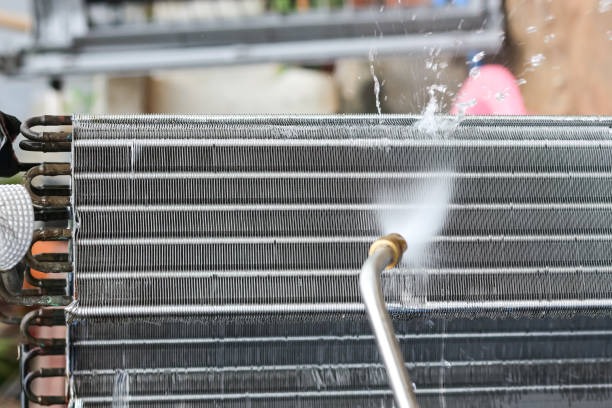
Your evaporator coil is one of the most common starting points for HVAC mold, and it makes sense why. This coil is constantly wet during operation, sits inside a dark enclosed cabinet, and collects dust and debris pulled in from your home’s air over months of use. When a coil is clean, condensation drains off efficiently and the surface dries between cycles.
When a coil is coated in dust and grime, moisture clings to that buildup instead of draining away, giving mold exactly the damp surface it needs to establish a colony.
Once mold is present on the coil, every cycle of your air conditioner becomes an opportunity for spores to release into the airstream and travel through your ductwork.
This is part of why a musty smell specifically when the AC turns on is such a common early warning sign, since the odor is often coming directly from a contaminated coil.
The Role of Clogged Condensation Lines
The condensation line, also called the condensate drain, is responsible for carrying the water your coil produces safely out of your home.
This line typically needs a clear path and a slight downward slope toward its outlet, but over time algae, biofilm, and debris can build up inside it, especially in a system that runs for months without a break during Charlotte’s cooling season.
When that line becomes partially blocked, water backs up instead of draining properly. The drain pan beneath the coil can overflow, sending moisture into surrounding insulation, ductwork, or even nearby drywall and framing.
This creates a secondary moisture source that can support mold growth well outside the air handler itself, sometimes inside wall cavities where it stays hidden until the smell or the health symptoms become impossible to ignore.
Signs Your HVAC System May Be Spreading Mold
A few warning signs tend to show up consistently in Charlotte homes dealing with this issue. A musty or earthy odor that appears specifically when your air conditioning runs is one of the clearest indicators, since it often points directly to the coil or ductwork.
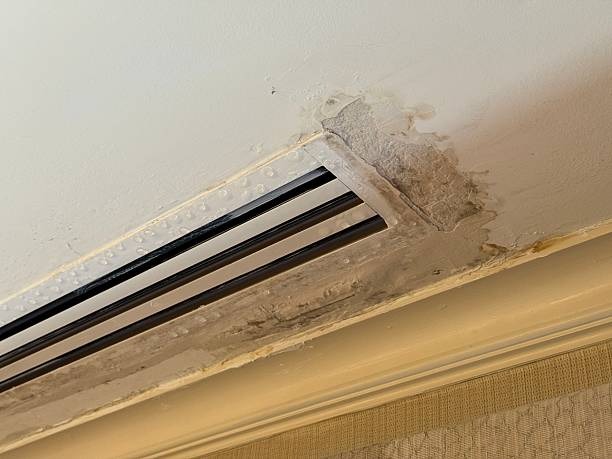
Dark spots or discoloration around supply vents and return grilles can mean spores are settling and accumulating right where the air exits the system. Visible moisture, dampness, or standing water anywhere near your air handler, drain pan, or condensate line signals that drainage is not working the way it should.
Allergy-like symptoms that worsen indoors and improve once you leave the house, including sneezing, congestion, or irritated eyes, can point to mold spores circulating through your air rather than a seasonal allergy. Reduced airflow from your vents can also indicate a coil coated in enough buildup to restrict normal air movement.
What You Can Do to Prevent HVAC Mold Growth?
Routine HVAC maintenance is the single most effective way to prevent mold from establishing itself in your system in the first place.
Changing air filters on a regular schedule, generally every one to three months, keeps dust from accumulating on the coil where it can trap moisture. Scheduling annual professional service that includes coil cleaning and a check of your condensate line and drain pan catches early buildup before it becomes a larger problem.
Keeping indoor humidity in the recommended range of roughly 30 to 50 percent, using your AC or a dedicated dehumidifier as needed, removes the excess moisture mold depends on.
Addressing any musty odor or visible spots around vents right away, rather than waiting to see if it resolves on its own, keeps a small issue from spreading further into your ductwork and living spaces.
If mold has already established itself inside your system, cleaning alone is often not enough. Spores can spread throughout ductwork and settle in places a standard filter change or coil wipe down cannot reach, which is when a professional mold inspection becomes the right next step.
Related: How Heating Your Charlotte Home Can Trigger Window Mold: Winter Condensation
Why Professional Inspection Matters?
HVAC mold is difficult to fully assess without the right tools, since much of the affected area, including ductwork, the interior of the air handler, and the space around the condensate line, is hidden from view during a routine glance.
A professional inspection looks at airflow patterns, checks for hidden moisture around ducts and drain pans, and identifies whether mold has spread beyond the coil into insulation, wall cavities, or connected ductwork. This gives you a clear, accurate picture of what is actually happening inside your system rather than a guess based on smell alone.
Related: How Sudden Summer Thunderstorms Cause Hidden Crawl Space Mold
Local Expertise You Can Rely On
We are the most experienced mold remediation service provider in Charlotte, NC, and our team has spent years identifying and resolving HVAC related mold issues across homes throughout this region.
We understand how Charlotte’s humidity, long cooling seasons, and common HVAC setups combine to create conditions that are different from what homeowners in drier climates deal with, and we build every inspection and remediation plan around your home’s specific system and airflow rather than a generic checklist.
If you are noticing musty odors, visible spots around your vents, or symptoms that seem to track with your air conditioning running, our team can inspect your HVAC system, identify exactly where moisture and mold are coming from, and walk you through a remediation plan built for your home.
Related: Why is Charlotte’s Summer Humidity a Breeding Ground for Attic Mold?
Frequently Asked Questions
Can my air conditioner really spread mold through my whole house?
Yes. If mold establishes itself on a dirty evaporator coil or inside ductwork, your system’s normal airflow can carry spores through the supply vents into every room the air reaches.
Why does my house smell musty specifically when the AC turns on?
This is a common sign that mold or mildew has developed on your evaporator coil or somewhere inside your ductwork, since the odor releases into the airstream as air passes over the contaminated surface.
What causes a condensate line to clog?
Algae, biofilm, dust, and debris can build up inside the condensate line over time, especially during long cooling seasons, gradually narrowing the path until water cannot drain properly.
Can HVAC mold cause health symptoms?
Circulating mold spores can trigger allergy-like symptoms including sneezing, congestion, and irritated eyes or throat, particularly for household members with asthma or existing sensitivities, especially when symptoms improve after leaving the house.
How often should I have my HVAC system checked for mold in Charlotte’s climate?
An annual professional inspection and coil cleaning is generally recommended, though homes with a history of high humidity, past leaks, or previous mold issues may benefit from checking more frequently.
