The Crawl Space Crisis: Why Red Clay Soil Traps Moisture Under Charlotte Homes

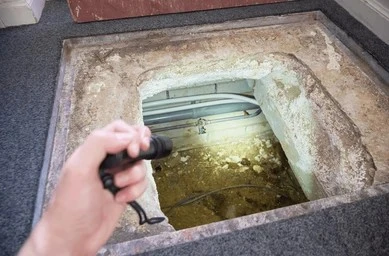
Piedmont red clay traps moisture under Charlotte homes because its tightly packed, fine grained particles drain far slower than sandy or loamy soil, so instead of water moving away from a foundation after rainfall, it lingers close to the surface and seeps into the crawl space below.
As a team that works in mold remediation throughout Charlotte, NC, we see this pattern in homes across nearly every neighborhood, and understanding the soil itself is the first step to understanding why so many crawl spaces here stay damp long after a storm has passed.
What Makes Piedmont Red Clay Different from Other Soils?
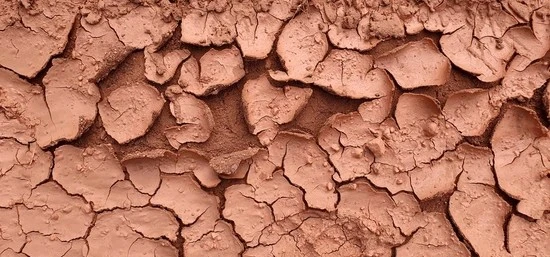
The red clay found throughout the Piedmont region, including all of Charlotte and Mecklenburg County, gets its color from iron oxide content, but its real defining trait is structural.
Clay particles are microscopic and compact together so tightly that water has very little room to move through them. Sandy soil lets rainwater pass through relatively quickly and continue downward.
Red clay does the opposite. It holds water at or near the surface, absorbing it slowly and releasing it even more slowly, which means the ground surrounding and beneath a home can stay saturated for days after a single heavy rain.
How This Soil Behaves During Charlotte’s Rainy Season?
Charlotte receives more than 43 inches of rain in a typical year, often arriving in short, intense downpours rather than steady, gentle rainfall.

When that volume of water meets red clay, the soil becomes saturated and expands, building up hydrostatic pressure against foundation walls and footings.
This pressure doesn’t just sit still. It pushes moisture through small cracks, gaps, and porous points wherever it can find them, including directly into the crawl space beneath a home’s floor system.
Why Vented Crawl Space Design Makes the Problem Worse?
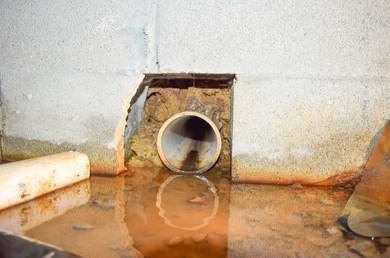
Most homes across Charlotte were built with vented crawl spaces rather than full basements, a design choice that made sense decades ago but works against homeowners today.
Vents were originally intended to let air circulate and dry out the space, but in a humid climate like Charlotte’s, they often do the reverse.
Warm, moisture heavy outside air enters through the vents and meets cooler soil and framing underneath the home, causing condensation to form on floor joists, ductwork, and subfloor material.
Combine that with red clay soil that’s already holding groundwater close to the surface, and the crawl space becomes a space where moisture has very few ways to escape.
The Path Moisture Takes from the Soil to Your Floorboards
Many older and even some newer Charlotte crawl spaces still have exposed, unsealed earth as their floor. Bare soil allows continuous evaporation into the crawl space air through a natural process called capillary rise, where moisture is drawn upward from the ground the same way water climbs through a paper towel.
That evaporated moisture doesn’t just stay near the ground. It rises, settles into wood framing, and gradually works its way into the subfloor and floorboards above, which is why homeowners often notice effects at floor level long before they ever look underneath the house.
Signs This Process Is Already Underway
A few patterns tend to show up before the issue becomes obvious. A persistent musty smell, especially noticeable near ground floor rooms, often points to moisture and early mold activity beneath the floor.
Floors that feel slightly springy, or hardwood that appears to cup or buckle along the seams, can indicate that subfloor material has been absorbing moisture over time.
Visible condensation on ductwork or metal fixtures inside the crawl space, along with insulation that looks sagging or discolored, are additional signs that the space underneath the home isn’t managing moisture the way it should.
Why This Reaches Beyond the Crawl Space Itself?
Air inside a crawl space doesn’t stay contained. Through a natural process known as the stack effect, air from beneath a home rises into the living space above, carrying whatever moisture, particles, or spores it contains along with it.
This is part of why crawl space moisture in Charlotte is treated as more than a structural detail. It connects directly to indoor air quality, wood integrity, and the long term condition of flooring and framing throughout the home, not just the small area underneath it.
Related: Is Black Mold Dangerous? Myth vs Fact for NC Homeowners
Why Local Soil Knowledge Changes the Outcome?
Not every moisture solution designed for a different climate or soil type performs well against Charlotte’s clay. Drainage systems, vapor barriers, and grading adjustments all need to account for how slowly this soil releases water and how much pressure it can build against a foundation during the region’s heaviest rain events.
As the most experienced team in mold remediation Charlotte, NC has available, we’ve spent years tracing exactly how red clay, humidity, and vented crawl space design interact beneath local homes, and that soil specific understanding is what separates a lasting solution from one that only addresses what’s visible on the surface.
Related: New Construction Mold? Why Fast Built Homes in South End Can Have Moisture Traps
Does a Standard North Carolina Home Insurance Policy Cover Mold Remediation?
Frequently Asked Questions
Does every home in Charlotte sit on red clay soil?
Not universally, but red clay is the dominant soil type across most of Mecklenburg County and the broader Piedmont region, so the majority of Charlotte homes deal with its slow drainage characteristics to some degree, especially those on older or lower lying lots.
Can red clay soil actually cause structural problems, or is it just a moisture issue?
Both. Beyond trapping moisture, clay soil expands when saturated and contracts as it dries, and that repeated movement can put stress on foundations and contribute to settling over time, which is why soil behavior and structural health are often connected in Charlotte homes.
If my crawl space has vents, shouldn't that already prevent moisture buildup?
Vents were designed with that goal in mind, but in a humid climate like Charlotte's, they often let in more moisture than they release, since warm outside air condenses when it meets the cooler soil and framing underneath the home.
How can I tell if crawl space moisture is affecting my living space?
A musty smell on the ground floor, slightly springy or uneven flooring, and higher than expected indoor humidity are common indicators, since air from the crawl space naturally rises into the home above through small gaps and shared duct systems.
Is sealing the crawl space floor enough to solve the problem, or does drainage matter too?
Both matter, and addressing only one often leaves the other issue unresolved. Sealing the floor limits evaporation from bare soil, but if the surrounding grading and drainage aren't also managed, water can still build up around the foundation and eventually find its way in through cracks or gaps regardless of what's covering the ground inside.
